
Br. Luca Mi-Perletti
The Ministers of the Infirm (Camillians) have come to Sierra Leone in September 2014 with the intention to collaborate with the Diocese of Makeni in the fight against Ebola. The Camillians are a Religious Order founded by St. Camillus de Lellis in 1591. The Camillians are present in 40 Countries and comply with their charism of “serving the sick” through various activities both institutional (hospitals, nursing homes, hospices ….) and home based (medical care): prevention and poverty eradication; rehabilitation and counselling and formation of medical professional and health care providers.
Through its office for the relief work in natural and human made calamities, Camillian Task Force (CTF), the Order has sent personnel and invested financial resources to implement a project with three fold areas. The project comprises medical, preventive and psycho social components. These programs are carried out in the name and with the collaboration of the Diocese of Makeni and with the great support of other religious Congregations such as the Xaverian Fathers, the Murialdo Fathers and the Sisters of Cluny. Collaborating with like-minded Congregations and civil Organizations pertains to the modus operandi of CTF.
Without going into the details of the activities, this report attempts to focus on the psychosocial area often neglected in most of the disasters that bring poverty, misery and despair in so many Countries.
Psychosocial area
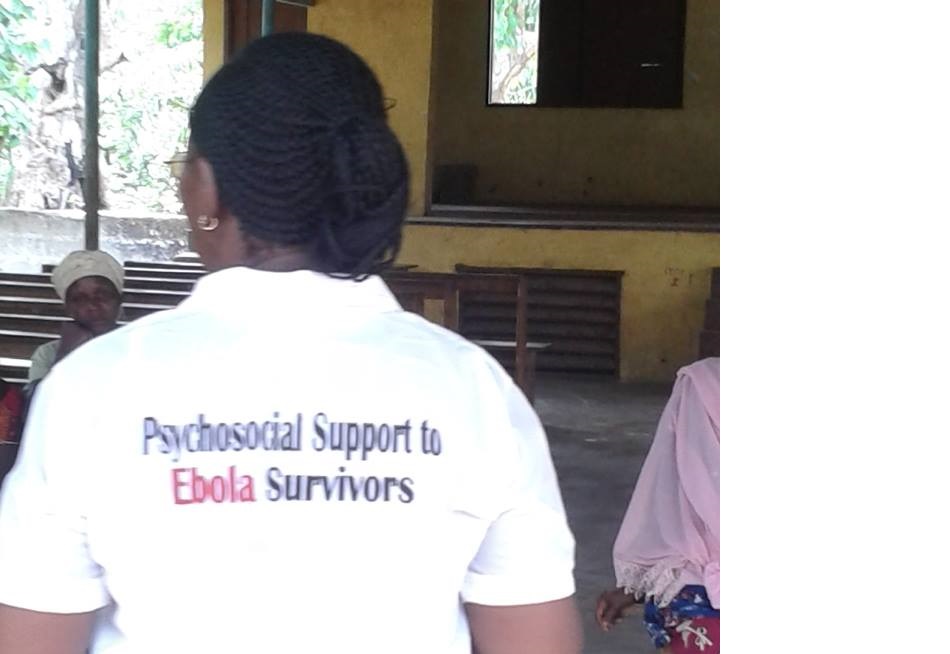
Disasters leave scars in the mind and the hearts of affected individuals and populations. Nonetheless, this area is often the most neglected since it requires patience, continuity and determination and its fruits are often hard to be seen. CTF has got experience in dealing with trauma related to disasters and can count on 18 Centers of Formation in the world that train people in counselling. In the Diocese of Makeni, the CTF has envisioned an intervention based on the formation of 25 Community Based Psycho Social Facilitators (CBPSF) through formal and residential training (three week long program, facilitated by the formation staff of Madrid and Nairobi), followed by a nine month supervised actualization of which will benefit 400 households selected among those with greatest vulnerability. The CBPSF are tasked with the emotional support to 400 families through individual counselling and group sessions.
Issues such as grief and bereavement; separation and acceptance; anger and coping are some of the emotions the CBPSF learn to deal with so as to support the vulnerable households in the process of recovery. As the Ebola infections has impoverished most of the victims, the emotional accompaniment goes along with financial support in the form of conditional cash transfer that promotes education and health seeking behaviors among its beneficiaries. The conditional cash transfer owes a lot to the support of the Xaverian Fathers who have encouraged this program.
The formation and exposure program will be over in December with the graduation program and projects to continue in the next years with the establishment of a formal counselling centre.
Resilience
One of the the activities in the psychosocial area is the self-help group, that has a long tradition in the west. The participation at these group meetings offers an opportunity to gauge the extent of suffering: stories marked by sadness and trials are countless! Like the story of Kamara Sheka who – at the age of 16 – has lost 23 family members! His young face cannot hide his inability to get a reason out of so great devastation! Similarly, the stories of many mothers who have lost a great number of children! The many stories could compile a book and give a human face to the dry numbers of this epidemic! The rain that has just started symbolizes the many tears shed in these meetings. As the rain softens the soil before it is ploughed, the many tears prevent the heart from getting hardened and instill renewed hope!
Suffering is normal in this land! It is revealed without any shame since it is part of life, it is life in its essence: unlike other places, suffering is not a mystery to hide or a behavior to conceal as “politically incorrect”. Suffering and death pair joy and life without opposition and are the dual face of the same coin. Life contains death in a way of continuity and without break! Life goes on, in a continuous flow of birth and return to the earth, where deaths are natural events!
The concern for children is, perhaps, the most striking face of resilience. Ebola has created many orphans, but has left no child homeless, abandoned in the streets. Every child belongs to a family and always there will be someone to care for an orphaned child! It is the most moving (for me) aspect of Ebola epidemic! Uncles and distant relatives turn up to take care of children who have lost their parents; mothers make space in their families for the children of late sisters and brothers, who succumbed to Ebola. And they do so naturally, going beyond mere calculations such as the increased number of mouths to be fed and the meagre resources available. To me, this is the sign of resilience in the midst of tragedies and failures!
The Ministers of the Infirm (Camillians) have come to Sierra Leone in September 2014 with the intention to collaborate with the Diocese of Makeni in the fight against Ebola. The Camillians are a Religious Order founded by St. Camillus de Lellis in 1591. The Camillians are present in 40 Countries and comply with their charism of “serving the sick” through various activities both institutional (hospitals, nursing homes, hospices ….) and home based (medical care): prevention and poverty eradication; rehabilitation and counselling and formation of medical professional and health care providers.
Through its office for the relief work in natural and human made calamities, Camillian Task Force (CTF), the Order has sent personnel and invested financial resources to implement a project with three fold areas. The project comprises medical, preventive and psycho social components. These programs are carried out in the name and with the collaboration of the Diocese of Makeni and with the great support of other religious Congregations such as the Xaverian Fathers, the Murialdo Fathers and the Sisters of Cluny. Collaborating with like-minded Congregations and civil Organizations pertains to the modus operandi of CTF.
Without going into the details of the activities, this report attempts to focus on the psychosocial area often neglected in most of the disasters that bring poverty, misery and despair in so many Countries.
Psychosocial area
Disasters leave scars in the mind and the hearts of affected individuals and populations. Nonetheless, this area is often the most neglected since it requires patience, continuity and determination and its fruits are often hard to be seen. CTF has got experience in dealing with trauma related to disasters and can count on 18 Centers of Formation in the world that train people in counselling. In the Diocese of Makeni, the CTF has envisioned an intervention based on the formation of 25 Community Based Psycho Social Facilitators (CBPSF) through formal and residential training (three week long program, facilitated by the formation staff of Madrid and Nairobi), followed by a nine month supervised actualization of which will benefit 400 households selected among those with greatest vulnerability. The CBPSF are tasked with the emotional support to 400 families through individual counselling and group sessions.
Issues such as grief and bereavement; separation and acceptance; anger and coping are some of the emotions the CBPSF learn to deal with so as to support the vulnerable households in the process of recovery. As the Ebola infections has impoverished most of the victims, the emotional accompaniment goes along with financial support in the form of conditional cash transfer that promotes education and health seeking behaviors among its beneficiaries. The conditional cash transfer owes a lot to the support of the Xaverian Fathers who have encouraged this program.
The formation and exposure program will be over in December with the graduation program and projects to continue in the next years with the establishment of a formal counselling centre.
Resilience
One of the the activities in the psychosocial area is the self-help group, that has a long tradition in the west. The participation at these group meetings offers an opportunity to gauge the extent of suffering: stories marked by sadness and trials are countless! Like the story of Kamara Sheka who – at the age of 16 – has lost 23 family members! His young face cannot hide his inability to get a reason out of so great devastation! Similarly, the stories of many mothers who have lost a great number of children! The many stories could compile a book and give a human face to the dry numbers of this epidemic! The rain that has just started symbolizes the many tears shed in these meetings. As the rain softens the soil before it is ploughed, the many tears prevent the heart from getting hardened and instill renewed hope!
Suffering is normal in this land! It is revealed without any shame since it is part of life, it is life in its essence: unlike other places, suffering is not a mystery to hide or a behavior to conceal as “politically incorrect”. Suffering and death pair joy and life without opposition and are the dual face of the same coin. Life contains death in a way of continuity and without break! Life goes on, in a continuous flow of birth and return to the earth, where deaths are natural events!
The concern for children is, perhaps, the most striking face of resilience. Ebola has created many orphans, but has left no child homeless, abandoned in the streets. Every child belongs to a family and always there will be someone to care for an orphaned child! It is the most moving (for me) aspect of Ebola epidemic! Uncles and distant relatives turn up to take care of children who have lost their parents; mothers make space in their families for the children of late sisters and brothers, who succumbed to Ebola. And they do so naturally, going beyond mere calculations such as the increased number of mouths to be fed and the meagre resources available. To me, this is the sign of resilience in the midst of tragedies and failures!