
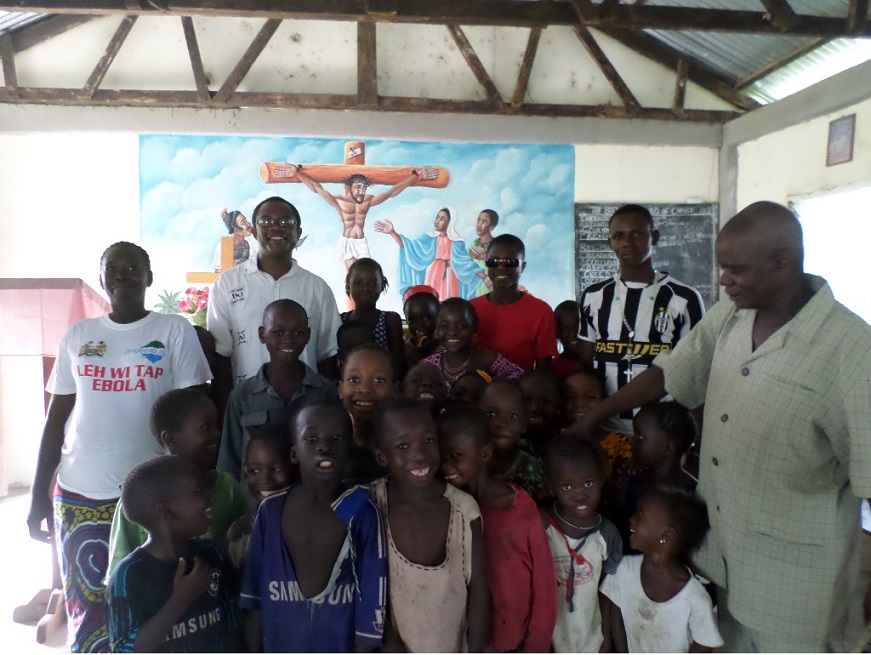
Fr. Louis Birabaluge sx
Although Africa is a continent formed by 54 countries, it is quite common to hear foreigners speak about “Africa” as if it were a single big country. Expressions like: “Africans are... in Africa... African culture...”are always used referring to Africa as one single country. This paper aims to discuss this reference to Africa as a homogeneous reality.
Of course, my point of view is not to move from one extreme to another, i.e. from undistinguished unity to scattered diversity. Both visions of Africa must be kept in balance. As it is obvious to imagine Africa as a single cultural reality, I try to challenge this dominant image, arguing that there are serious reasons in favour of the diversity of Africa. Africa is wide, with many languages, cultures and races. Therefore, it is a mistake to consider it as a huge village, where people live, think and behave in a similar way.
- Africa as a “whole”?
It is not fair to accuse only foreigners of being blind to African diversity. There are some African scholars who are convinced of Africa being a single reality, especially in regard to ethics or moral issues. The first African scholar who supported this view was the Senegalese Cheikh Anta Diop. His arguments are more developed in some of his books like: Black nations and culture (1954) and Cultural unity of black Africa (1960).
According to Anta Diop, the background of African ethical unity is to be found in the “Pharaonic Egypt”, during the reign of different Pharaohs in Egypt. Studying the Egyptian myth of Isis and Osiris, Anta Diop discovered that the main concern of this myth was the ‘struggle about life’, the permanent fight between life and death and the subsequent victory of life over death.
From this research, Anta Diop concluded that when one observes carefully African people, particularly black Africans, he may notice that the concern for life is their main aspiration. That is why they attach much importance to everything that promotes and preserves life. Issues like marriage, family and community life, the care for relatives...express this strong attachment to life. Of course, someone from Libya, Algeria, Tunisia, Egypt...will not find his culture in this vision; just because he is more close to Arabic culture than to black African culture.
Anta Diop has some supporters among African scholars such as: Kä Mana from Congo (DRC), Theophile Obenga (Congo Brazza-ville), Engelbert Mveng from Cameroon...There may be some truth in this position that claims the cultural unity of black Africa. Anta Diop and his followers are known as defenders of “black African identity”, summarized in the word “negritude” or “authenticity”. This challenge was at the top in the 60’s and 70’s. But when someone moves from one country to another in Africa, and if he is aware of this vision of Africa as a united ethical area, the question which might rise immediately to his mind is: “Where is the unity of black Africa?” He will see that Africa is not a united cultural reality, as we are used to hear.
For example: people who have been in Congo (DRC), Rwanda and Burundi can easily think that African people are at “home” with Christianity. They may say: African people agree with the teaching of the church about marriage. If the same people visit Sierra Leone, Cameroon and Chad...they will review their position. And there are so many examples like this which prove the plurality of Africa.
- Learning diversity of Africa on the border
I was brought up on the border between Congo (DRC) and Rwanda. As a youngster, I came to discover that although there were some linguistic similarities between my tribe (Bashi) and Rwandese people, there were also many differences among us. For example, when facing a problem, one from my tribe would speak openly about it. Whereas a Rwandese would keep quiet and seem not to be troubled at all. There are many cases that prove the diversity existing in these neighbouring countries. If this is the case for two instances as quoted, what about countries like Liberia, for example, in regard to countries like South Africa, Angola, Gabon and so on?
I had the chance to live for four years in Cameroon. I visited Chad. I have been in Burundi several times. Now I am living in Sierra Leone. From my experience, I am more and more convinced that Africa is not just one country. When people speak of Africa as a single reality, I feel ready to shout at them. But, then I excuse them, because I believe that if they travel throughout Africa, they will acknowledge the wrong they do to African peoples when they speak about them as a homogeneous people.
- A balanced vision of Africa
In a book published in 2005, The challenges of evangelization in Africa today, Leonard Santedi (a congolese priest and a member of the International Theological Commission) clearly stresses that Africa is not just a big village, but a continent with diverse situations. In this way, he says, it is possible to reach a balance when dealing with African situations. If not, one may miss the goal because of his quick and easy generalization. In his view, this attitude is a lack of respect to the peoples of the African continent and their different cultures.
Santedi suggests that one should learn from social, economic, political studies because, in his opinion, these studies help everyone to become aware of the diverse situations in Africa. Then in case he has to speak about Africa in general, he may do so in a more balanced way. Though Santedi rejects the vision of Africa as a whole, he thinks that it is possible to identify some challenges which are common to the whole of Africa today. According to him, there are seven: 1. the challenge of sects or new religious movements; 2. the challenge of health problems and spiritual healings; 3. the challenge of divisions (tribalism); 4. the social and economical challenge; 5. the political challenge; 6. the ethical or moral challenge; 7. the challenge of the media.
Therefore, when dealing about Africa, one should be aware of these common challenges. Probably, there are differences from one country to another, but in general they are common to the whole Africa, especially sub-Saharan Africa or black Africa. It is clear that Santedi’s aim is the evangelization of Africa today. In this way, his opinion should interest those who are in Africa to preach the Good News with competence and respect for African people.
- Missionaries in Africa to serve the global world
Despite what we believe today, our world called global village is full of illiteracy and ignorance, even in its western side. Though the world is highly connected nowadays, many people continue to ignore african realities. That is why they imagine it as a big homogeneous country. As missionaries have the chance to be directly in touch with african realities, it is their duty to help their compatriots to understand that Africa is not what they imagine.
African people may forgive members of NGOs for ignoring their diverse cultures. But this kindness may not be extended to missionaries, unless they want to appear merely as tourists or humanitarian people. Missionaries are disciples of the Word made flesh (Jn 1: 14). Therefore they have an obligation to live close to the people. They have to share their joys and sorrows with them (Vatican 2, The church in modern world. Gaudium et spes, n°1). In their sharing and closeness, the knowledge of local culture is an essential part. This is what the challenge of incarnation means.
In his time, the Founder of the Xaverian missionaries, St Guido M. Conforti (1865-1931) wrote these wise words: “Missionaries so inclined and without detriment to their ministry, should be encouraged to gather material concerning the customs, places, history, flora and fauna of the mission. Such material will be of use and interest to their fellow missionaries and others” (Fundamental Rule, n.17). This piece of advice remains still meaningful today. It is even more useful than it was in the past.
For the respect of the people to whom the Gospel is addressed, Conforti’s wisdom has to be treasured. But in a global world like ours, the purpose of learning local culture has to be widened. It should not be practised only for internal use, only for the sake of the mission of the church. The knowledge of local culture and tahe desire to make it known are to be considered as a service to the whole world. This service to the global world recalls what the same Founder meant by: “useful to others”. Indeed, the breaking down of prejudices among people may come about thanks to the experience of the missionaries who are working abroad today.
Being aware of this task and the commitment to learn from others never come to an end. Furthermore, they are extremely demanding. What has become easy today about intercultural encounter is the fruit of the experience of many years. In Africa, if a foreigner wishes to become acquainted with local cultures, he has to search, to study and try to understand. But all these skills are not enough. The best school to learn culture is meeting with people. This meeting requires patience and the ability to “waste” time with people. That is why this challenge is really hard and demanding, especially for western people, for whom time is always wanting.
In most african cultures, time does not matter. Time spent in encountering is never wasted. Time is always there. That is what this idiom means: “Western people have watches, but we (African people) have time”. If a foreigner understands this, he can be proud of knowing much about Africans.
Although Africa is a continent formed by 54 countries, it is quite common to hear foreigners speak about “Africa” as if it were a single big country. Expressions like: “Africans are... in Africa... African culture...”are always used referring to Africa as one single country. This paper aims to discuss this reference to Africa as a homogeneous reality.
Of course, my point of view is not to move from one extreme to another, i.e. from undistinguished unity to scattered diversity. Both visions of Africa must be kept in balance. As it is obvious to imagine Africa as a single cultural reality, I try to challenge this dominant image, arguing that there are serious reasons in favour of the diversity of Africa. Africa is wide, with many languages, cultures and races. Therefore, it is a mistake to consider it as a huge village, where people live, think and behave in a similar way.
- Africa as a “whole”?
It is not fair to accuse only foreigners of being blind to African diversity. There are some African scholars who are convinced of Africa being a single reality, especially in regard to ethics or moral issues. The first African scholar who supported this view was the Senegalese Cheikh Anta Diop. His arguments are more developed in some of his books like: Black nations and culture (1954) and Cultural unity of black Africa (1960).
According to Anta Diop, the background of African ethical unity is to be found in the “Pharaonic Egypt”, during the reign of different Pharaohs in Egypt. Studying the Egyptian myth of Isis and Osiris, Anta Diop discovered that the main concern of this myth was the ‘struggle about life’, the permanent fight between life and death and the subsequent victory of life over death.
From this research, Anta Diop concluded that when one observes carefully African people, particularly black Africans, he may notice that the concern for life is their main aspiration. That is why they attach much importance to everything that promotes and preserves life. Issues like marriage, family and community life, the care for relatives...express this strong attachment to life. Of course, someone from Libya, Algeria, Tunisia, Egypt...will not find his culture in this vision; just because he is more close to Arabic culture than to black African culture.
Anta Diop has some supporters among African scholars such as: Kä Mana from Congo (DRC), Theophile Obenga (Congo Brazza-ville), Engelbert Mveng from Cameroon...There may be some truth in this position that claims the cultural unity of black Africa. Anta Diop and his followers are known as defenders of “black African identity”, summarized in the word “negritude” or “authenticity”. This challenge was at the top in the 60’s and 70’s. But when someone moves from one country to another in Africa, and if he is aware of this vision of Africa as a united ethical area, the question which might rise immediately to his mind is: “Where is the unity of black Africa?” He will see that Africa is not a united cultural reality, as we are used to hear.
For example: people who have been in Congo (DRC), Rwanda and Burundi can easily think that African people are at “home” with Christianity. They may say: African people agree with the teaching of the church about marriage. If the same people visit Sierra Leone, Cameroon and Chad...they will review their position. And there are so many examples like this which prove the plurality of Africa.
- Learning diversity of Africa on the border
I was brought up on the border between Congo (DRC) and Rwanda. As a youngster, I came to discover that although there were some linguistic similarities between my tribe (Bashi) and Rwandese people, there were also many differences among us. For example, when facing a problem, one from my tribe would speak openly about it. Whereas a Rwandese would keep quiet and seem not to be troubled at all. There are many cases that prove the diversity existing in these neighbouring countries. If this is the case for two instances as quoted, what about countries like Liberia, for example, in regard to countries like South Africa, Angola, Gabon and so on?
I had the chance to live for four years in Cameroon. I visited Chad. I have been in Burundi several times. Now I am living in Sierra Leone. From my experience, I am more and more convinced that Africa is not just one country. When people speak of Africa as a single reality, I feel ready to shout at them. But, then I excuse them, because I believe that if they travel throughout Africa, they will acknowledge the wrong they do to African peoples when they speak about them as a homogeneous people.
- A balanced vision of Africa
In a book published in 2005, The challenges of evangelization in Africa today, Leonard Santedi (a congolese priest and a member of the International Theological Commission) clearly stresses that Africa is not just a big village, but a continent with diverse situations. In this way, he says, it is possible to reach a balance when dealing with African situations. If not, one may miss the goal because of his quick and easy generalization. In his view, this attitude is a lack of respect to the peoples of the African continent and their different cultures.
Santedi suggests that one should learn from social, economic, political studies because, in his opinion, these studies help everyone to become aware of the diverse situations in Africa. Then in case he has to speak about Africa in general, he may do so in a more balanced way. Though Santedi rejects the vision of Africa as a whole, he thinks that it is possible to identify some challenges which are common to the whole of Africa today. According to him, there are seven: 1. the challenge of sects or new religious movements; 2. the challenge of health problems and spiritual healings; 3. the challenge of divisions (tribalism); 4. the social and economical challenge; 5. the political challenge; 6. the ethical or moral challenge; 7. the challenge of the media.
Therefore, when dealing about Africa, one should be aware of these common challenges. Probably, there are differences from one country to another, but in general they are common to the whole Africa, especially sub-Saharan Africa or black Africa. It is clear that Santedi’s aim is the evangelization of Africa today. In this way, his opinion should interest those who are in Africa to preach the Good News with competence and respect for African people.
- Missionaries in Africa to serve the global world
Despite what we believe today, our world called global village is full of illiteracy and ignorance, even in its western side. Though the world is highly connected nowadays, many people continue to ignore african realities. That is why they imagine it as a big homogeneous country. As missionaries have the chance to be directly in touch with african realities, it is their duty to help their compatriots to understand that Africa is not what they imagine.
African people may forgive members of NGOs for ignoring their diverse cultures. But this kindness may not be extended to missionaries, unless they want to appear merely as tourists or humanitarian people. Missionaries are disciples of the Word made flesh (Jn 1: 14). Therefore they have an obligation to live close to the people. They have to share their joys and sorrows with them (Vatican 2, The church in modern world. Gaudium et spes, n°1). In their sharing and closeness, the knowledge of local culture is an essential part. This is what the challenge of incarnation means.
In his time, the Founder of the Xaverian missionaries, St Guido M. Conforti (1865-1931) wrote these wise words: “Missionaries so inclined and without detriment to their ministry, should be encouraged to gather material concerning the customs, places, history, flora and fauna of the mission. Such material will be of use and interest to their fellow missionaries and others” (Fundamental Rule, n.17). This piece of advice remains still meaningful today. It is even more useful than it was in the past.
For the respect of the people to whom the Gospel is addressed, Conforti’s wisdom has to be treasured. But in a global world like ours, the purpose of learning local culture has to be widened. It should not be practised only for internal use, only for the sake of the mission of the church. The knowledge of local culture and tahe desire to make it known are to be considered as a service to the whole world. This service to the global world recalls what the same Founder meant by: “useful to others”. Indeed, the breaking down of prejudices among people may come about thanks to the experience of the missionaries who are working abroad today.
Being aware of this task and the commitment to learn from others never come to an end. Furthermore, they are extremely demanding. What has become easy today about intercultural encounter is the fruit of the experience of many years. In Africa, if a foreigner wishes to become acquainted with local cultures, he has to search, to study and try to understand. But all these skills are not enough. The best school to learn culture is meeting with people. This meeting requires patience and the ability to “waste” time with people. That is why this challenge is really hard and demanding, especially for western people, for whom time is always wanting.
In most african cultures, time does not matter. Time spent in encountering is never wasted. Time is always there. That is what this idiom means: “Western people have watches, but we (African people) have time”. If a foreigner understands this, he can be proud of knowing much about Africans.