
Louis Birabaluge sx
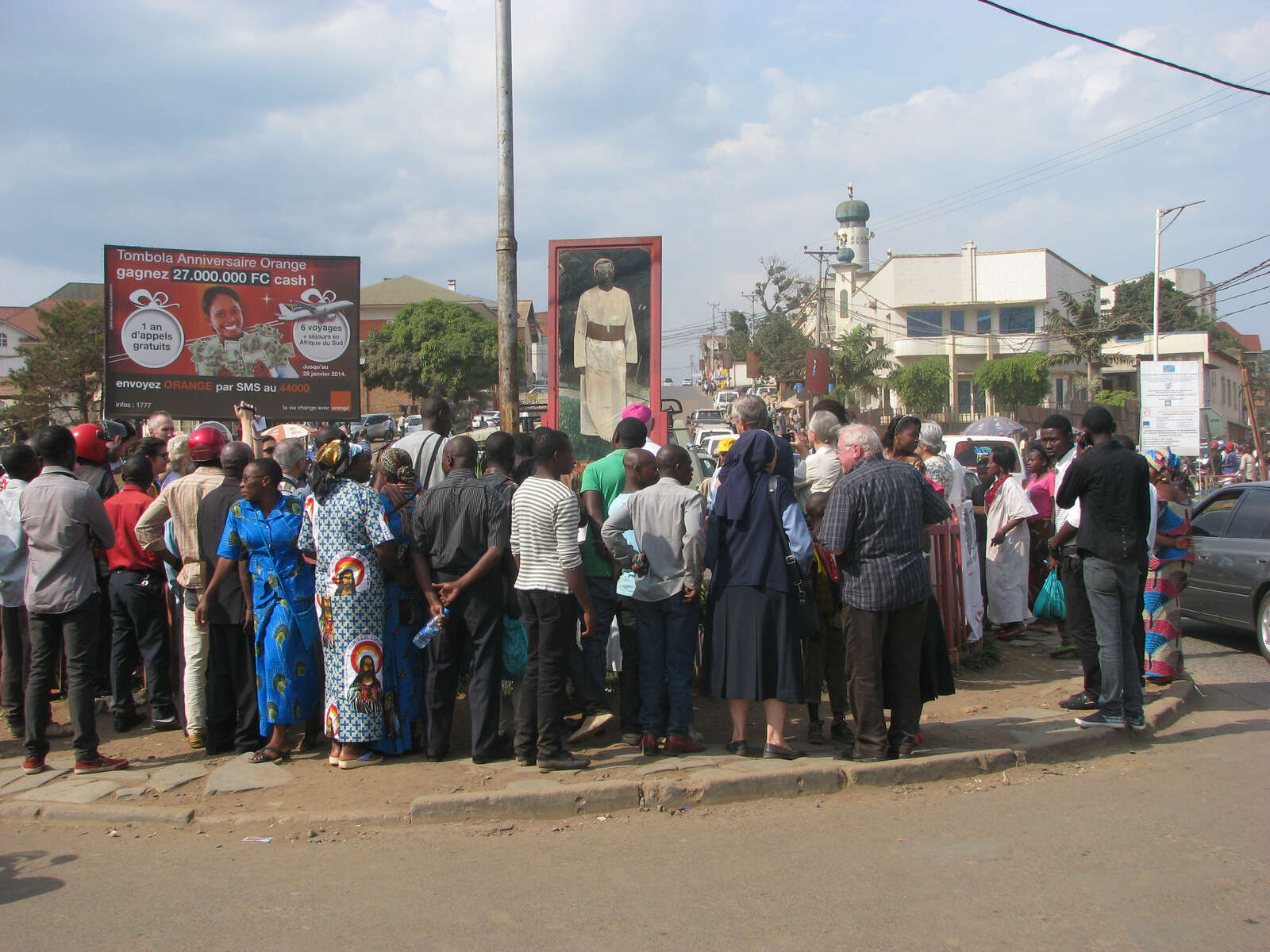
October 29, 1996 - October 29, 2022, 26 years have passed since the murder of the Archbishop of Bukavu Mzee Christophe Munzihirwa Mwene Ngabo. It has become a tradition in Bukavu/DR Congo to commemorate his martyrdom on this day with a procession from the place where he was killed, followed by a eucharistic celebration and the laying of a wreath at his grave. This year, the celebration happens as the eastern part of the country is still under fire and bloodshed. This scenario reproduces the same as when Mzee and many other anonymous victims were brutally killed. And the executioners of yesterday are very similar to those of today. These are indeed some Congolese in collusion with neighboring countries, Rwanda and Uganda; according to several reliable reports.
Since time passes and the East of the DRC has remained a field of desolation for the populations, will we not have to think of how else to pay tribute to Mzee Munzihirwa and the other victims of these proxy wars?
Memory and Truth
In 2010, United Nations experts published a document called: Report of the Mapping Project concerning the most serious violations of human rights and international humanitarian law committed between March 1993 and June 2003 in the territory of the Democratic Republic of Congo. This document is available at this link
In this report with shocking revelations, the story of the murder of the Archbishop of Bukavu is told in these terms: “During the fighting to take Bukavu on October 29 and 30, 1996, AFDL/APR elements killed more than 450 civilians. On October 29, they fired at the heavy weapon on the city, killing indiscriminately civilians and soldiers. After the when the FAZ left, they opened fire on the population who were trying to flee. They killed many civilians at close range, including the Archbishop of the catholic church, Munzihirwa, killed in his vehicle with his driver and his bodyguard. Beginning October 30, the military searched systematic destruction of houses, indiscriminately killing and torturing dozens of people, both civilians and soldiers. (Mapping Report, p. 141).
This report reveals that Mzee was not killed alone. There were his driver, his bodyguard, 450 civilians and dozens of other people, anonymous deaths. A first work of truth would be to name these dead and commemorate them together with the archbishop. And why not erect a joint memorial monument to them? Then, the perpetrators of the crime are mentioned: the AFDL/APR (Alliance of Democratic Forces for the Liberation/Rwandan Patriotic Army), a generic group. However, it is historically established that at the time of the crime, the commanders of this armed force were indeed those of the RPA. Since after their conquest of the city of Bukavu, they came out of the shadows, it is then possible to identify them and all their Congolese collaborators. What we don't do.
There is a silence here that does not do justice to the dead. A work of truth to be done would be to name these executioners. Here is a field here that remains to be explored if we want to continue to celebrate in truth the memory of victims in the DRC. Remembering victims of conflict is an exercise in justice. However, we must be careful not to draw a line under history in the name of a false peace. Congolese politicians, their foreign collaborators and donors do not like this work. Whoever engages in it is quickly accused of stirring up hatred and therefore of awakening the demons of inter-ethnic violence. The many NGOs that abound in South Kivu work well in this logic. By doing so, they believe to prevent conflicts. In fact, that is false. Because they refuse to establish the facts and to name the executioners. Catholics should not support this lie.
Indeed, a justice-loving society needs people who do not forget the memory of the victims of past conflicts. To forget them is to nest other conflicts and offer a white check to the executioners. Even while rejoicing for Jesus' victory over death, Christians have never lost sight of the fact that their Savior was crucified "under Pontius Pilate." Each day the profession of faith is proclaimed, the executioner of Jesus is clearly named. This prevents Pontius Pilate and his collaborators causing more victims in the future than Jesus. Celebrating the memory of the victims is therefore both an exercise of truth and an invitation to conversion of the executioners.
If we cannot reach the foreign executioners of our victims, their collaborators during and after the crimes are indeed with us. They are found in the army and in business, sometimes occupying or having occupied important political positions in our province and country. As Christians, we can and must forgive them. But we must never forget what has been forgiven and constantly remind the executioners of it with the hope that they will convert.
Memory as an imitation challenge
Since the assassination of Mzee in 1996, several initiatives have emerged in the Archdiocese of Bukavu: embellishment of Munzihirwa Square in Nyawera, construction of the mausoleum, publication of books on his life and his messages, process of his beatification... so many laudable actions! At the same time, crimes, corruption and bad governance have not disappeared in the country. We can even think that they have become normal political practices. In this context, shouldn't we think that the country needs more Munzihirwa today? The answer is yes. This means that to truly pay homage to this murdered prophet, it is appropriate to ask that God raises up in our church more men and women who have the courage of Munzihirwa and his high sense of self-sacrifice. The celebration of the memory of the martyrdom of Mzee thus poses the challenge of “imitation”. Because Mzee is not a magnificent monument to contemplate. He is an example to imitate. Imitate him as a true leader, courageous and servant of all; this is our challenge today, we his heirs; if we do not want our celebrations on this day to turn into mere folklore.
October 29, 1996 - October 29, 2022, 26 years have passed since the murder of the Archbishop of Bukavu Mzee Christophe Munzihirwa Mwene Ngabo. It has become a tradition in Bukavu/DR Congo to commemorate his martyrdom on this day with a procession from the place where he was killed, followed by a eucharistic celebration and the laying of a wreath at his grave. This year, the celebration happens as the eastern part of the country is still under fire and bloodshed. This scenario reproduces the same as when Mzee and many other anonymous victims were brutally killed. And the executioners of yesterday are very similar to those of today. These are indeed some Congolese in collusion with neighboring countries, Rwanda and Uganda; according to several reliable reports.
Since time passes and the East of the DRC has remained a field of desolation for the populations, will we not have to think of how else to pay tribute to Mzee Munzihirwa and the other victims of these proxy wars?
Memory and Truth
In 2010, United Nations experts published a document called: Report of the Mapping Project concerning the most serious violations of human rights and international humanitarian law committed between March 1993 and June 2003 in the territory of the Democratic Republic of Congo. This document is available at this link
In this report with shocking revelations, the story of the murder of the Archbishop of Bukavu is told in these terms: “During the fighting to take Bukavu on October 29 and 30, 1996, AFDL/APR elements killed more than 450 civilians. On October 29, they fired at the heavy weapon on the city, killing indiscriminately civilians and soldiers. After the when the FAZ left, they opened fire on the population who were trying to flee. They killed many civilians at close range, including the Archbishop of the catholic church, Munzihirwa, killed in his vehicle with his driver and his bodyguard. Beginning October 30, the military searched systematic destruction of houses, indiscriminately killing and torturing dozens of people, both civilians and soldiers. (Mapping Report, p. 141).
This report reveals that Mzee was not killed alone. There were his driver, his bodyguard, 450 civilians and dozens of other people, anonymous deaths. A first work of truth would be to name these dead and commemorate them together with the archbishop. And why not erect a joint memorial monument to them? Then, the perpetrators of the crime are mentioned: the AFDL/APR (Alliance of Democratic Forces for the Liberation/Rwandan Patriotic Army), a generic group. However, it is historically established that at the time of the crime, the commanders of this armed force were indeed those of the RPA. Since after their conquest of the city of Bukavu, they came out of the shadows, it is then possible to identify them and all their Congolese collaborators. What we don't do.
There is a silence here that does not do justice to the dead. A work of truth to be done would be to name these executioners. Here is a field here that remains to be explored if we want to continue to celebrate in truth the memory of victims in the DRC. Remembering victims of conflict is an exercise in justice. However, we must be careful not to draw a line under history in the name of a false peace. Congolese politicians, their foreign collaborators and donors do not like this work. Whoever engages in it is quickly accused of stirring up hatred and therefore of awakening the demons of inter-ethnic violence. The many NGOs that abound in South Kivu work well in this logic. By doing so, they believe to prevent conflicts. In fact, that is false. Because they refuse to establish the facts and to name the executioners. Catholics should not support this lie.
Indeed, a justice-loving society needs people who do not forget the memory of the victims of past conflicts. To forget them is to nest other conflicts and offer a white check to the executioners. Even while rejoicing for Jesus' victory over death, Christians have never lost sight of the fact that their Savior was crucified "under Pontius Pilate." Each day the profession of faith is proclaimed, the executioner of Jesus is clearly named. This prevents Pontius Pilate and his collaborators causing more victims in the future than Jesus. Celebrating the memory of the victims is therefore both an exercise of truth and an invitation to conversion of the executioners.
If we cannot reach the foreign executioners of our victims, their collaborators during and after the crimes are indeed with us. They are found in the army and in business, sometimes occupying or having occupied important political positions in our province and country. As Christians, we can and must forgive them. But we must never forget what has been forgiven and constantly remind the executioners of it with the hope that they will convert.
Memory as an imitation challenge
Since the assassination of Mzee in 1996, several initiatives have emerged in the Archdiocese of Bukavu: embellishment of Munzihirwa Square in Nyawera, construction of the mausoleum, publication of books on his life and his messages, process of his beatification... so many laudable actions! At the same time, crimes, corruption and bad governance have not disappeared in the country. We can even think that they have become normal political practices. In this context, shouldn't we think that the country needs more Munzihirwa today? The answer is yes. This means that to truly pay homage to this murdered prophet, it is appropriate to ask that God raises up in our church more men and women who have the courage of Munzihirwa and his high sense of self-sacrifice. The celebration of the memory of the martyrdom of Mzee thus poses the challenge of “imitation”. Because Mzee is not a magnificent monument to contemplate. He is an example to imitate. Imitate him as a true leader, courageous and servant of all; this is our challenge today, we his heirs; if we do not want our celebrations on this day to turn into mere folklore.