
Fr. Louis BIRA sx
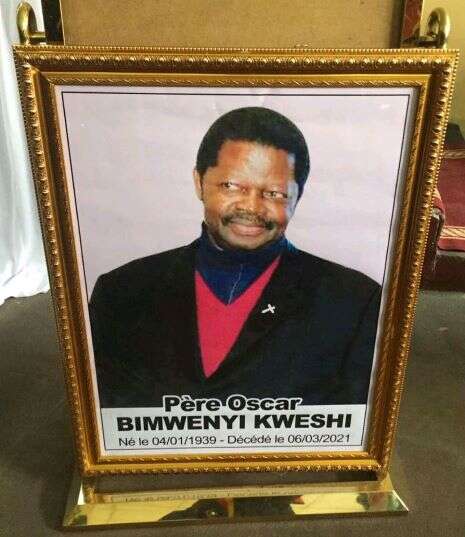
Born on 04 December 1939 in Bena-Monyo in DRC, the famous theologian Oscar Bimwenyi-Kweshi died on 06 March 2021 in Belgium. Beside the giants like Vincent Mulago, Cardinal Joseph-Albert Malula, Tharcisse Tshibangu, Alphone Ngindu Mushete... he will always be remembered as a true father of the Church in Africa. This honour is due to him for his substantial contribution to the advent of African Christianity. The following lines intend to pay tribute to him by going back on some elements of his theological work.
1. The End of a Unique Speech about God
O. Bimwenyi-Kweshi spoke in a context where western discourse on God was the only supposed discourse true and valid. His work and that of his colleagues were able to put an end to this hegemonic claim. They then showed that God could be named in all languages. Their work has given rise to what we know today as African theology. Practically, the contribution of O. Bimwenyi-Kweshi to African Christian thought we find it in his thesis presented at the Catholic University of Leuven in 1977. It was published under the title: Negro-African Theological Speech. Fundamental problems[1]. It is an inescapable work in African theology[2], believes the Nigerian Spiritan theologian Bede Ukwuije. For his part, Claude Ozankom speaks of this work as one of the centerpieces of contemporary African theology[3].
What can we learn from his work? According to B. Ukwuije, O. Bimwenyi-Kweshi's theological thesis can be summed up in these terms: "The African human being is, in his existential experience, open to the absolute and, therefore, the African religious language - the thematic religious experience - is a theological discourse, regardless of the contribution of Christianity." In other words, African religious language is a precomprehension of God[4]. From this perspective, the task of African theology is not to adapt or inculturate the visions of God that come from elsewhere, but to seek to understand the God who is already present in the African religious language[5].
To argue, O. Bimwenyi-Kweshi used Heidegger's philosophy, through the mediation of Bultmann. The great merit of O. Bimwenyi-Kweshi is to have made an epistemological rupture within African theology when he suggests that the discourse on God must take seriously the limit experience of the human being as a place of openness to God[6].
To think of the advent of the God of Jesus Christ in Africa, O. Bimwenyi-Kweshi relied on the concrete religious experience, that of the peoples living in the provinces of Kasai in the DRCongo[7]. To do this, he was led to study the cultures of his land through oral and written narratives, symbols and traditional institutions. His conviction was that to be authentic, any discourse about God in Africa can only succeed insofar as it takes into account the socio-religious experience of the Muntu, to whom God spoke, before the arrival of the Christian missionary, through his ancestors. This assumption of African spiritual heritage is essential if theology is to lead in Africa to more life and freedom and not to alienation[8].
In his work, O. Bimwenyi-Kweshi has been able to honour the Negro-African cultural heritage by showing its relevance and vitality. He was able to value and promote his culture. Indeed, incorporating cultural symbols of the land into theological discourse allows the culture of the people to be better known. This gesture is not insignificant. If the fathers of the Church of yesterday created a dialogue between the Latin world and the Greek world, this worthy son of black Africa has established a bridge between the West and black Africa. He made theology the place of intercultural dialogue where the European cultural model whose imprint "Western" Christianity imported into Africa bears the imprint learns to confront other cultural models. In this sense, his theological work proved on the one hand, as a public service to the Congolese people, insofar as it allowed its culture, at least in its discursive dimension, to emerge from the shadow in which the first evangelization tended to relegate it. On the other hand, he served the Western people in teaching about another way of being human and believing in God.
2. Work of a great, but a limited work
The work of Father O. Bimwenyi-Kweshi is certainly one of the cornerstones of African theology. As such, it deserves respect and admiration. However, as great as it is, it remains a human work and therefore limited. Indeed, our father of the Church of Africa faced criticism. I just mention two of his detractors. The Cameroonian Dominican Eloi Messi Metogo believes that although he denies it, Bimwenyi is still too preoccupied with proving to the Western world that Africa can produce its own theological discourse. His theology is thus a theology of negritude, an ethno-theology that keeps Africans asleep and opens the door to all manipulations and dictatorship[9]. O. Bimwenyi-Kweshi is criticized here for not being sufficiently critical of the African traditions which he used as premises of his theology.
For his part, Father B. Ukwuije believes that while he thinks of the African religious experience as a precomprehension of Revelation, Bimwenyi has failed to show how the God who comes to expression in Jesus Christ actually renews and surpasses this understanding[10]. He adds: "His theology was ultimately limited to the study of the religious language of traditions as a condition of possibility of God's revelation, running the risk of reducing God's revelation to conditions of possibilities founded in human beings. Of course he refers to Christ as the Word of God, but the author has not dared to deepen the identification of God with the Crucified[11]." According to the Nigerian theologian, he failed to explain to his Congolese elder the novelty of the condition of the African human being when he encounters the God of Jesus Christ. For in fact, he says, if the human being is "the second pole of revelation" it is not by virtue of his abilities and his existential and ethical openness, but to the extent that this human being attains the obedience of faith in Jesus Christ. And he concludes: "A Christian theology must not be content to show harmony between revelation and human traditions, it must be able to designate the place of rupture that ushers in a new history, a rupture caused by God's coming towards humanity.[12]"
3. The task of the heirs
To recall the critics of O. Bimwenyi-Kweshi, as I have just done, does not diminish the greatness of the thought of this great seeker of God. On the contrary, it is to indicate the challenge that awaits the heirs of his thought. If Christ who comes to Africa is the same, yesterday, today and for eternity (He 13: 8), it is not true that the Africa of O. Bimwenyi-Kweshi is ours today. The Christian faith is no longer seen as an imported suspicious product. It is now an integral part of Africa's religious heritage. We are in the age of integration. The time of adaptation or assimilation of Christian faith in Africa is over.
Since God has revealed his face in Jesus Christ and made the land of Africa his home, it is up to the African theologians of our time to help their brothers and sisters answer the question without pretexts: "What do you Africans say? For you, Who am I? Mc 8: 29. In this process, God's current scholars in Africa do not go there empty-handed. They have the life and work of their elder. For them these words from the letter to the Hebrews are a life project: " Remember your leaders who spoke the word of God to you. Consider the outcome of their way of life and imitate their faith " He 13, 7.
Father O. Bimwenyi-Kweshi was not an intellectual working from a quiet office. In addition to his teaching work at the Kinshasa Faculty of Theology until 1986, he was also a committed man of faith. This can be seen in his work as a pastor in parishes and in his participation in the Episcopal Conference of Congo, first as a member of the dogmatic commission (1979-1981) and then as secretary general (1981-1984). As if all this were not enough, he entered the monastery in 1986[13]. Pastor, theologian and monk, his itinerary now offers itself as a paradigm to any seeker of God in Africa. For it reminds us that God's intellectual love cannot be separated from a life of faith lived in and at the service of the Church.
[1] Paris, Présence africaine, 1981. All the translations are mine since the materials I use are only available in French.
[2] Bede UKWUIJE, Trinité et Inculturation, Paris, DDB, Coll. Théologie à l’Université, 2008, p. 175.
[3] Claude OZANKOM, « Oscar Bimwenyi-Kweshi. Fin d’une période de discussion sur la possibilité d’une théologie africaine”, in Bénezet BUJO et Juvénal ILUNGA MUYA (éd.), Théologie africaine au XXIe siècle. Quelques figures, vol. 1, Fribourg, Editions universitaires Fribourg-Suisse, 2002, p. 90.
[4] Bede UKWUIJE, op. cit., p. 9.
[5] Ibid., p. 177.
[6] Ibid., p. 185.
[7] Claude OZANKOM, op. cit., 96.
[8] Ibid., op. cit., 99.
[9] Eloi MESSI METOGO, Théologie africaine et ethnophilosophie, Paris, 1985, p. 57, cité par Claude OZANKOM, op. cit., p. 89.
[10] Bede UKWUIJE, op. cit., p.9.
[11] Ibid., p. 186.
[12] Ibid., p. 186-187.
[13] Ibid., p. 175.
Born on 04 December 1939 in Bena-Monyo in DRC, the famous theologian Oscar Bimwenyi-Kweshi died on 06 March 2021 in Belgium. Beside the giants like Vincent Mulago, Cardinal Joseph-Albert Malula, Tharcisse Tshibangu, Alphone Ngindu Mushete... he will always be remembered as a true father of the Church in Africa. This honour is due to him for his substantial contribution to the advent of African Christianity. The following lines intend to pay tribute to him by going back on some elements of his theological work.
1. The End of a Unique Speech about God
O. Bimwenyi-Kweshi spoke in a context where western discourse on God was the only supposed discourse true and valid. His work and that of his colleagues were able to put an end to this hegemonic claim. They then showed that God could be named in all languages. Their work has given rise to what we know today as African theology. Practically, the contribution of O. Bimwenyi-Kweshi to African Christian thought we find it in his thesis presented at the Catholic University of Leuven in 1977. It was published under the title: Negro-African Theological Speech. Fundamental problems[1]. It is an inescapable work in African theology[2], believes the Nigerian Spiritan theologian Bede Ukwuije. For his part, Claude Ozankom speaks of this work as one of the centerpieces of contemporary African theology[3].
What can we learn from his work? According to B. Ukwuije, O. Bimwenyi-Kweshi's theological thesis can be summed up in these terms: "The African human being is, in his existential experience, open to the absolute and, therefore, the African religious language - the thematic religious experience - is a theological discourse, regardless of the contribution of Christianity." In other words, African religious language is a precomprehension of God[4]. From this perspective, the task of African theology is not to adapt or inculturate the visions of God that come from elsewhere, but to seek to understand the God who is already present in the African religious language[5].
To argue, O. Bimwenyi-Kweshi used Heidegger's philosophy, through the mediation of Bultmann. The great merit of O. Bimwenyi-Kweshi is to have made an epistemological rupture within African theology when he suggests that the discourse on God must take seriously the limit experience of the human being as a place of openness to God[6].
To think of the advent of the God of Jesus Christ in Africa, O. Bimwenyi-Kweshi relied on the concrete religious experience, that of the peoples living in the provinces of Kasai in the DRCongo[7]. To do this, he was led to study the cultures of his land through oral and written narratives, symbols and traditional institutions. His conviction was that to be authentic, any discourse about God in Africa can only succeed insofar as it takes into account the socio-religious experience of the Muntu, to whom God spoke, before the arrival of the Christian missionary, through his ancestors. This assumption of African spiritual heritage is essential if theology is to lead in Africa to more life and freedom and not to alienation[8].
In his work, O. Bimwenyi-Kweshi has been able to honour the Negro-African cultural heritage by showing its relevance and vitality. He was able to value and promote his culture. Indeed, incorporating cultural symbols of the land into theological discourse allows the culture of the people to be better known. This gesture is not insignificant. If the fathers of the Church of yesterday created a dialogue between the Latin world and the Greek world, this worthy son of black Africa has established a bridge between the West and black Africa. He made theology the place of intercultural dialogue where the European cultural model whose imprint "Western" Christianity imported into Africa bears the imprint learns to confront other cultural models. In this sense, his theological work proved on the one hand, as a public service to the Congolese people, insofar as it allowed its culture, at least in its discursive dimension, to emerge from the shadow in which the first evangelization tended to relegate it. On the other hand, he served the Western people in teaching about another way of being human and believing in God.
2. Work of a great, but a limited work
The work of Father O. Bimwenyi-Kweshi is certainly one of the cornerstones of African theology. As such, it deserves respect and admiration. However, as great as it is, it remains a human work and therefore limited. Indeed, our father of the Church of Africa faced criticism. I just mention two of his detractors. The Cameroonian Dominican Eloi Messi Metogo believes that although he denies it, Bimwenyi is still too preoccupied with proving to the Western world that Africa can produce its own theological discourse. His theology is thus a theology of negritude, an ethno-theology that keeps Africans asleep and opens the door to all manipulations and dictatorship[9]. O. Bimwenyi-Kweshi is criticized here for not being sufficiently critical of the African traditions which he used as premises of his theology.
For his part, Father B. Ukwuije believes that while he thinks of the African religious experience as a precomprehension of Revelation, Bimwenyi has failed to show how the God who comes to expression in Jesus Christ actually renews and surpasses this understanding[10]. He adds: "His theology was ultimately limited to the study of the religious language of traditions as a condition of possibility of God's revelation, running the risk of reducing God's revelation to conditions of possibilities founded in human beings. Of course he refers to Christ as the Word of God, but the author has not dared to deepen the identification of God with the Crucified[11]." According to the Nigerian theologian, he failed to explain to his Congolese elder the novelty of the condition of the African human being when he encounters the God of Jesus Christ. For in fact, he says, if the human being is "the second pole of revelation" it is not by virtue of his abilities and his existential and ethical openness, but to the extent that this human being attains the obedience of faith in Jesus Christ. And he concludes: "A Christian theology must not be content to show harmony between revelation and human traditions, it must be able to designate the place of rupture that ushers in a new history, a rupture caused by God's coming towards humanity.[12]"
3. The task of the heirs
To recall the critics of O. Bimwenyi-Kweshi, as I have just done, does not diminish the greatness of the thought of this great seeker of God. On the contrary, it is to indicate the challenge that awaits the heirs of his thought. If Christ who comes to Africa is the same, yesterday, today and for eternity (He 13: 8), it is not true that the Africa of O. Bimwenyi-Kweshi is ours today. The Christian faith is no longer seen as an imported suspicious product. It is now an integral part of Africa's religious heritage. We are in the age of integration. The time of adaptation or assimilation of Christian faith in Africa is over.
Since God has revealed his face in Jesus Christ and made the land of Africa his home, it is up to the African theologians of our time to help their brothers and sisters answer the question without pretexts: "What do you Africans say? For you, Who am I? Mc 8: 29. In this process, God's current scholars in Africa do not go there empty-handed. They have the life and work of their elder. For them these words from the letter to the Hebrews are a life project: " Remember your leaders who spoke the word of God to you. Consider the outcome of their way of life and imitate their faith " He 13, 7.
Father O. Bimwenyi-Kweshi was not an intellectual working from a quiet office. In addition to his teaching work at the Kinshasa Faculty of Theology until 1986, he was also a committed man of faith. This can be seen in his work as a pastor in parishes and in his participation in the Episcopal Conference of Congo, first as a member of the dogmatic commission (1979-1981) and then as secretary general (1981-1984). As if all this were not enough, he entered the monastery in 1986[13]. Pastor, theologian and monk, his itinerary now offers itself as a paradigm to any seeker of God in Africa. For it reminds us that God's intellectual love cannot be separated from a life of faith lived in and at the service of the Church.
[1] Paris, Présence africaine, 1981. All the translations are mine since the materials I use are only available in French.
[2] Bede UKWUIJE, Trinité et Inculturation, Paris, DDB, Coll. Théologie à l’Université, 2008, p. 175.
[3] Claude OZANKOM, « Oscar Bimwenyi-Kweshi. Fin d’une période de discussion sur la possibilité d’une théologie africaine”, in Bénezet BUJO et Juvénal ILUNGA MUYA (éd.), Théologie africaine au XXIe siècle. Quelques figures, vol. 1, Fribourg, Editions universitaires Fribourg-Suisse, 2002, p. 90.
[4] Bede UKWUIJE, op. cit., p. 9.
[5] Ibid., p. 177.
[6] Ibid., p. 185.
[7] Claude OZANKOM, op. cit., 96.
[8] Ibid., op. cit., 99.
[9] Eloi MESSI METOGO, Théologie africaine et ethnophilosophie, Paris, 1985, p. 57, cité par Claude OZANKOM, op. cit., p. 89.
[10] Bede UKWUIJE, op. cit., p.9.
[11] Ibid., p. 186.
[12] Ibid., p. 186-187.
[13] Ibid., p. 175.