
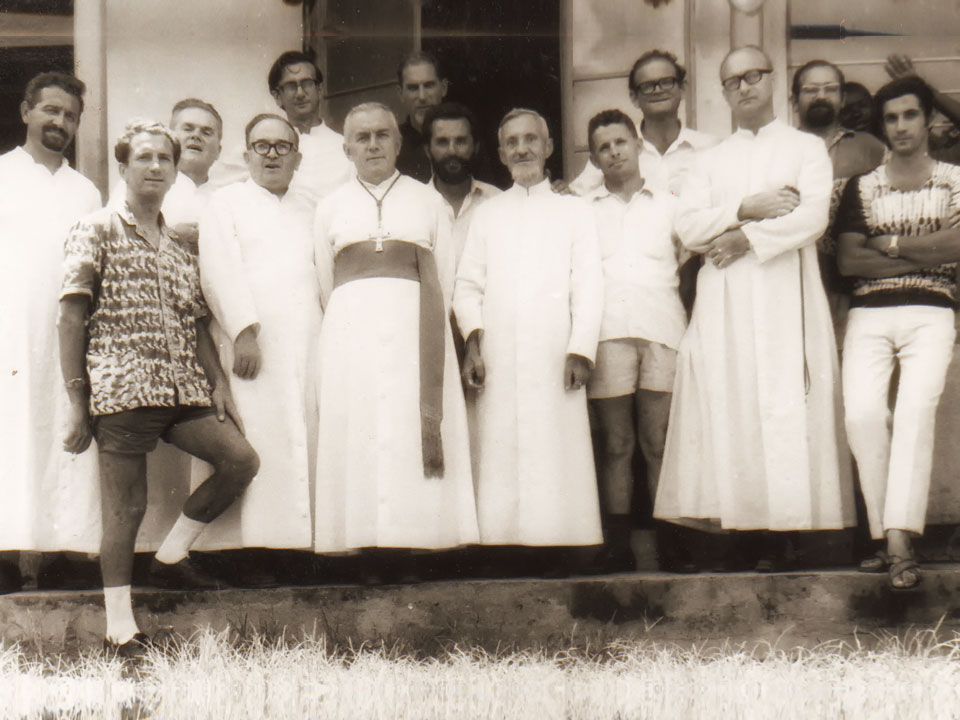
Fr. Michele Carlini sx
First Reading (Acts of the Apostles 3:13-15.17-19)
From Easter to Pentecost the Church invites us to read the book of the Acts of the Apostles. It narrates the acts (= actions, facts) of Peter, John, Steven – the first martyr –, Philip and, in a longer way, the evangelizing mission of St. Paul. The book of Acts can be defined as the «Gospel of the Holy Spirit», just as the Gospel describes the «acts of Jesus».
Today’s reading reports the second missionary speech of Peter to the Jews. The opportunity for him to proclaim the good news follows the healing of the paralytic in the temple of Jerusalem (c. 3.1-11). The apostle takes the cripple by his hand and the man is able to walk for the first time in his life; the Apostle then tells the people present that it is not Peter who heals, but Peter in the name of Jesus Christ. This text reminds us that we are never to consider ourselves the protagonists of the mission: its primacy belongs to the Spirit of Christ.
Chapter 3 begins with this annotation: “Peter and John were going up to the temple area for the three o'clock hour of prayer”. Everything starts from prayer: the miracle (vv 2-11), the missionary speech (vv. 12-26) must be preceded by a personal relationship with God.
The Entrance antiphon of the Mass echoes the missionary interpretation of the Scripture given by Peter in his address to the Israelites in the temple’s court: “Cry out with joy to God, all the earth, Sing to the glory of his name” (Ps 66:1).
The two apostles told the sick man to look at them (v. 4) and Luke reports that he was expecting some material benefit from them, but they did not gave the man what he was requesting that day, they gave him a greater gift: they made him encounter the Risen Lord and his new life. The healed man walked into the Temple jumping, as the Prayer of Collect summarises it: “May your people exult forever o God, in renewed youthfulness of spirit”. Joy and newness of life are the gifts of this liturgical season.
Second Reading (1Letter of Saint John 2:1-5)
In his first letter the apostle whom Jesus loved invites the Christian communities to walk in the light (1Jn 1:5-2:29): during the 50 days of Easter Time in our churches we gather around the Easter Candle, the luminous symbol of the Risen Christ, which we received as a gift during the Easter Vigil. There are four conditions required in order to walk in the light: this reading presents to the faithful the first two: to break with sin and to keep the commandments, especially that of love. The text is warning us to be aware of one of the dangers of modern philosophical thinking: to presume that once we know what is good – or true – that is enough. But that is only the first step: what is in our mind must make its journey towards our hands and heart and feet; what we know to be good must be incarnated in good actions, it must direct our feet to walk especially on the paths that lead to the poor, ready to share our daily bread with them. We must love what we believe in, and this means that we must love the Risen Lord.
Gospel (Lk 24:35-48) “You are witnesses of these things
On the First day of the week the Lord rose from the dead and the Gospel that was proclaimed one week ago told us about Christ’s apparition to ten apostles gathered in a locked room; Thomas was not with them and told the others that he needed to touch the body of Jesus in order to believe. One week later the Lord granted him his wish and appeared also to him. This event occurred on Sunday again: in this way the believers were gradually taught that the day to celebrate their faith is Sunday.
We recall what happened in the year 304 to the early Christians of the town of Abitinia in North
Africa. The Emperor of Rome Diocletian had published an edict against the Christians, ordering the destruction of Christian scriptures and places of worship across the Empire, and prohibiting them from assembling for worship. Pope Benedict XVI, in Sacramentum Caritatis n.95, presents them as example:
“Some Christians in North Africa, who felt bound to celebrate the Lord's Day, defied the prohibition. They were martyred after declaring that it was not possible for them to live without the Eucharist, the food of the Lord: “sine dominico non possumus”. May these martyrs of Abitinae, in union with all those saints and beati who made the Eucharist the centre of their lives, intercede for us and teach us to be faithful to our encounter with the risen Christ. We too desire to be iuxta dominicam viventes, to reflect in our lives what we celebrate on the Lord's Day” [see Second Reading].
The purpose of this page of the Gospel is to give evidence in favour of the reality of the Resurrection: this is not a story made up by the disciples, but a description of an event that really occurred. On seeing the Lord, the disciples were in panic, for they thought he was a ghost, some kind of spiritual being. Christ did not react in a negative way to their lack of faith; instead he showed them his hands and feet: phantoms do not have those marks left by nails. He also invited them to touch him, to proof that he had a body (spiritual beings do not have it). Moreover, he ate some fish: the Evangelist Luke, writing for the Greeks, who considered the idea of resurrection as nonsense, insists on the physical reality of the risen Jesus. The resurrection of Christ is the foundation of our faith.
The Lord then went a step ahead, and disclosed the meaning of passages of the Bible that referred to the Messiah: he had to suffer and be killed and then rise from death, as the scripture foretold. The sufferings of the Christ were prophesised in “The Servant-of-the-Lord" oracles found in the prophet Isaiah (c. 42; c.49:1-7; c. 50:4-11; cc. 52:13-53:12).
This is also reflected in Paul’s Kerigma: “Christ died and was buried and on the third day he was raised to life in accordance with the scriptures” 1Cor 15:4.
To all of us today, who have received the gift of faith, the Risen Lord entrusts the same mission that he commissioned to the Disciples on those Sundays: to preach him to all the nations and to be witnesses of his resurrection. Though none of us was present during of his apparitions, or gave him some of our fish to eat in front of our eyes, we witnessed many situations that are fruit of his resurrection, reflected in any action that speaks of forgiveness, sympathy, joy, solidarity and justice.
Just as any good homily, we close with some Announcements:
Next week, 4th of Easter, is Good Shepherd Sunday: the Church celebrates Vocation Sunday.
Here are some suggestions:
Celebration - Organize the Thursday adoration with the intention of prayer for vocation.
Saturday Evening: Vigil of prayer for Vocations.
Oratio/prayer - Pray with your family/community for the gift of vocations in the Church.
Action - This is the Year of Consecrated Life: pay a visit to a religious community in your area.
First Reading (Acts of the Apostles 3:13-15.17-19)
From Easter to Pentecost the Church invites us to read the book of the Acts of the Apostles. It narrates the acts (= actions, facts) of Peter, John, Steven – the first martyr –, Philip and, in a longer way, the evangelizing mission of St. Paul. The book of Acts can be defined as the «Gospel of the Holy Spirit», just as the Gospel describes the «acts of Jesus».
Today’s reading reports the second missionary speech of Peter to the Jews. The opportunity for him to proclaim the good news follows the healing of the paralytic in the temple of Jerusalem (c. 3.1-11). The apostle takes the cripple by his hand and the man is able to walk for the first time in his life; the Apostle then tells the people present that it is not Peter who heals, but Peter in the name of Jesus Christ. This text reminds us that we are never to consider ourselves the protagonists of the mission: its primacy belongs to the Spirit of Christ.
Chapter 3 begins with this annotation: “Peter and John were going up to the temple area for the three o'clock hour of prayer”. Everything starts from prayer: the miracle (vv 2-11), the missionary speech (vv. 12-26) must be preceded by a personal relationship with God.
The Entrance antiphon of the Mass echoes the missionary interpretation of the Scripture given by Peter in his address to the Israelites in the temple’s court: “Cry out with joy to God, all the earth, Sing to the glory of his name” (Ps 66:1).
The two apostles told the sick man to look at them (v. 4) and Luke reports that he was expecting some material benefit from them, but they did not gave the man what he was requesting that day, they gave him a greater gift: they made him encounter the Risen Lord and his new life. The healed man walked into the Temple jumping, as the Prayer of Collect summarises it: “May your people exult forever o God, in renewed youthfulness of spirit”. Joy and newness of life are the gifts of this liturgical season.
Second Reading (1Letter of Saint John 2:1-5)
In his first letter the apostle whom Jesus loved invites the Christian communities to walk in the light (1Jn 1:5-2:29): during the 50 days of Easter Time in our churches we gather around the Easter Candle, the luminous symbol of the Risen Christ, which we received as a gift during the Easter Vigil. There are four conditions required in order to walk in the light: this reading presents to the faithful the first two: to break with sin and to keep the commandments, especially that of love. The text is warning us to be aware of one of the dangers of modern philosophical thinking: to presume that once we know what is good – or true – that is enough. But that is only the first step: what is in our mind must make its journey towards our hands and heart and feet; what we know to be good must be incarnated in good actions, it must direct our feet to walk especially on the paths that lead to the poor, ready to share our daily bread with them. We must love what we believe in, and this means that we must love the Risen Lord.
Gospel (Lk 24:35-48) “You are witnesses of these things
On the First day of the week the Lord rose from the dead and the Gospel that was proclaimed one week ago told us about Christ’s apparition to ten apostles gathered in a locked room; Thomas was not with them and told the others that he needed to touch the body of Jesus in order to believe. One week later the Lord granted him his wish and appeared also to him. This event occurred on Sunday again: in this way the believers were gradually taught that the day to celebrate their faith is Sunday.
We recall what happened in the year 304 to the early Christians of the town of Abitinia in North
Africa. The Emperor of Rome Diocletian had published an edict against the Christians, ordering the destruction of Christian scriptures and places of worship across the Empire, and prohibiting them from assembling for worship. Pope Benedict XVI, in Sacramentum Caritatis n.95, presents them as example:
“Some Christians in North Africa, who felt bound to celebrate the Lord's Day, defied the prohibition. They were martyred after declaring that it was not possible for them to live without the Eucharist, the food of the Lord: “sine dominico non possumus”. May these martyrs of Abitinae, in union with all those saints and beati who made the Eucharist the centre of their lives, intercede for us and teach us to be faithful to our encounter with the risen Christ. We too desire to be iuxta dominicam viventes, to reflect in our lives what we celebrate on the Lord's Day” [see Second Reading].
The purpose of this page of the Gospel is to give evidence in favour of the reality of the Resurrection: this is not a story made up by the disciples, but a description of an event that really occurred. On seeing the Lord, the disciples were in panic, for they thought he was a ghost, some kind of spiritual being. Christ did not react in a negative way to their lack of faith; instead he showed them his hands and feet: phantoms do not have those marks left by nails. He also invited them to touch him, to proof that he had a body (spiritual beings do not have it). Moreover, he ate some fish: the Evangelist Luke, writing for the Greeks, who considered the idea of resurrection as nonsense, insists on the physical reality of the risen Jesus. The resurrection of Christ is the foundation of our faith.
The Lord then went a step ahead, and disclosed the meaning of passages of the Bible that referred to the Messiah: he had to suffer and be killed and then rise from death, as the scripture foretold. The sufferings of the Christ were prophesised in “The Servant-of-the-Lord" oracles found in the prophet Isaiah (c. 42; c.49:1-7; c. 50:4-11; cc. 52:13-53:12).
This is also reflected in Paul’s Kerigma: “Christ died and was buried and on the third day he was raised to life in accordance with the scriptures” 1Cor 15:4.
To all of us today, who have received the gift of faith, the Risen Lord entrusts the same mission that he commissioned to the Disciples on those Sundays: to preach him to all the nations and to be witnesses of his resurrection. Though none of us was present during of his apparitions, or gave him some of our fish to eat in front of our eyes, we witnessed many situations that are fruit of his resurrection, reflected in any action that speaks of forgiveness, sympathy, joy, solidarity and justice.
Just as any good homily, we close with some Announcements:
Next week, 4th of Easter, is Good Shepherd Sunday: the Church celebrates Vocation Sunday.
Here are some suggestions:
Celebration - Organize the Thursday adoration with the intention of prayer for vocation.
Saturday Evening: Vigil of prayer for Vocations.
Oratio/prayer - Pray with your family/community for the gift of vocations in the Church.
Action - This is the Year of Consecrated Life: pay a visit to a religious community in your area.