
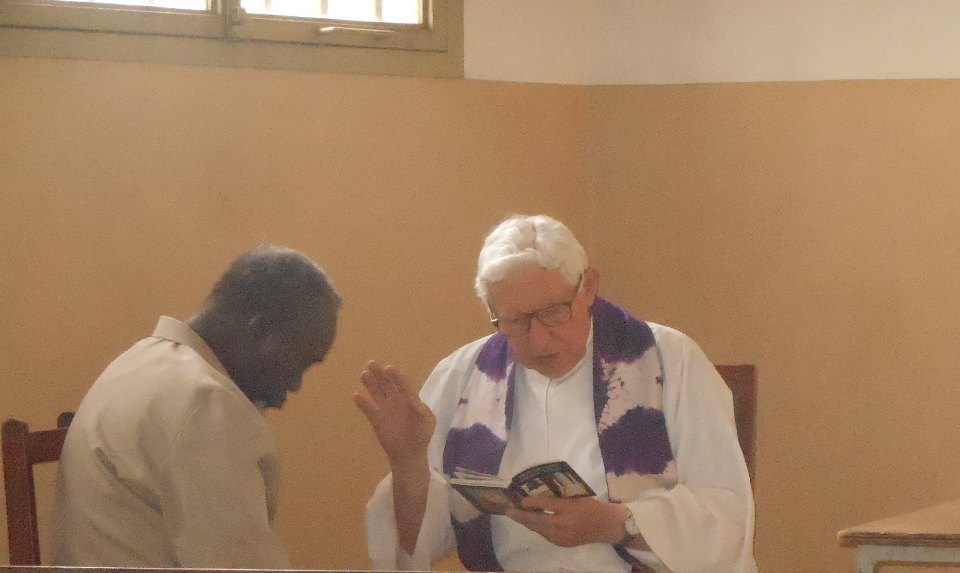
Fr. F. X. Sudarmanto, SX
THIRD SUNDAY OF LENT
Just at the beginning of his mission, Jesus called people to repentance saying, “Repent, for the Kingdom of God is at hand.” It seems that for him repentance is not a complicated thing, or something causing distress. He approached people in their lives and called them to change and follow him. Also in the Gospel today he called people to repentance in the same way, “If you do not repent, you will all perish!” Instead of giving them a complicated explanation about the reason of the calamities that affected the innocent Galileans, Jesus simply used the episodes of the deliberate killing of the innocent Galileans by Pilate and the accidental death of the Siloamites by the fall of the tower as a warning to all people to repent. Again, it seems that for him, the call to repentance should not sound complicated or cause us distress.
Moreover, in the Gospel Jesus beautifully describes the repentance with the parable of the gardener and the fig tree. Like a fig tree that is supposed to grow and bear fruits, repentance is an opportunity given in order to grow and bear fruit. Repentance is an opportunity that gives us space and time for a process of growing, like a fig tree planted in the garden, and step by step grows until the time when it will naturally bear fruits. It is a simple and humble process. That is why, instead of causing distress to our heart, it should give us a joyful experience.
Considering the gesture of Pope Francis when inviting people to change through his approachable style and simplicity, it seems that an effective way of repentance is a process of change through humility and simplicity. Through his example of humility and simplicity, we are experiencing a process of repentance as Church and as believers. It is not only that his humility and simplicity attract many people to change their lives and grow, it is also giving us a joyful experience of repentance. We can really feel sorry for something bad or wrong that we done and we want to do what is right joyfully. Repentance then gives us real hope.
Like growing a fig tree in the garden, the call of Jesus to repentance is really an invitation to grow, to raise something, and especially to bear fruit, under our responsibility. In the light of the parable of Jesus, I can see that as a missionary called to the work of evangelisation, my responsibility is to invite people to undertake a journey of repentance, which is a process of growing in the righteousness and bearing good attitudes and deeds in our lives. As a process, the journey of repentance is a gradual step, with a humble and simple attitude, that really moves our heart to welcome and live in the grace of God.
Like Moses, one day he was minding sheep. Then he was called to lead an oppressed people to freedom. He was called to lead the people away from the slavery of selfishness and sin, to a life of freedom and grace. He was called to lead the people to experience a joyful change in their lives. It was really good news. Repentance is a call away from a life of emptiness to a life of fruitfulness. It is a call to enter into the joy of the Kingdom.
However, it is not something that is achieved quickly once and for all, but it involves a process of growth and development. The Christian life is a continuous process of repentance, joyfully. Jesus’ parable shows that through the journey of repentance, we may have a deeper, richer, and more authentic life.
THIRD SUNDAY OF LENT
Just at the beginning of his mission, Jesus called people to repentance saying, “Repent, for the Kingdom of God is at hand.” It seems that for him repentance is not a complicated thing, or something causing distress. He approached people in their lives and called them to change and follow him. Also in the Gospel today he called people to repentance in the same way, “If you do not repent, you will all perish!” Instead of giving them a complicated explanation about the reason of the calamities that affected the innocent Galileans, Jesus simply used the episodes of the deliberate killing of the innocent Galileans by Pilate and the accidental death of the Siloamites by the fall of the tower as a warning to all people to repent. Again, it seems that for him, the call to repentance should not sound complicated or cause us distress.
Moreover, in the Gospel Jesus beautifully describes the repentance with the parable of the gardener and the fig tree. Like a fig tree that is supposed to grow and bear fruits, repentance is an opportunity given in order to grow and bear fruit. Repentance is an opportunity that gives us space and time for a process of growing, like a fig tree planted in the garden, and step by step grows until the time when it will naturally bear fruits. It is a simple and humble process. That is why, instead of causing distress to our heart, it should give us a joyful experience.
Considering the gesture of Pope Francis when inviting people to change through his approachable style and simplicity, it seems that an effective way of repentance is a process of change through humility and simplicity. Through his example of humility and simplicity, we are experiencing a process of repentance as Church and as believers. It is not only that his humility and simplicity attract many people to change their lives and grow, it is also giving us a joyful experience of repentance. We can really feel sorry for something bad or wrong that we done and we want to do what is right joyfully. Repentance then gives us real hope.
Like growing a fig tree in the garden, the call of Jesus to repentance is really an invitation to grow, to raise something, and especially to bear fruit, under our responsibility. In the light of the parable of Jesus, I can see that as a missionary called to the work of evangelisation, my responsibility is to invite people to undertake a journey of repentance, which is a process of growing in the righteousness and bearing good attitudes and deeds in our lives. As a process, the journey of repentance is a gradual step, with a humble and simple attitude, that really moves our heart to welcome and live in the grace of God.
Like Moses, one day he was minding sheep. Then he was called to lead an oppressed people to freedom. He was called to lead the people away from the slavery of selfishness and sin, to a life of freedom and grace. He was called to lead the people to experience a joyful change in their lives. It was really good news. Repentance is a call away from a life of emptiness to a life of fruitfulness. It is a call to enter into the joy of the Kingdom.
However, it is not something that is achieved quickly once and for all, but it involves a process of growth and development. The Christian life is a continuous process of repentance, joyfully. Jesus’ parable shows that through the journey of repentance, we may have a deeper, richer, and more authentic life.