
Fr. Marsel Rante Taruk
Readings: Acts 13:14, 43-5, Psalm: 100:1-2, 3, 5; Revelation 7:9, 14b-17; John 10:27-30
Fourth Sunday of Easter is known as Good Shepherd Sunday, since each year of the liturgical cycle the gospel is taken from chapter 10 of John’ gospel where Jesus speaks of himself as: “the Good Shepherd”. This Sunday is also considered particularly as a world day of Vocations, as a day of special prayer and intention for the vocation to priesthood. Good Shepherd is an eloquent image that Jesus uses to reveal the quality of his relationship with his Heavenly Father and the people who hears his voice, the flock.
Jesus, the true Good Shepherd
The text for this Sunday gospel is a rather short passage, in which Jesus states plainly how to give eternal life to his sheep. The context of this text occurs at a celebration of the feast of Dedication, i.e., Hanukkah, which commemorates the Maccabees' successful revolt against the Syrian tyrant Antiochus IV, around 194 BCE. The evangelist says that some of the people celebrating that feast were asking Jesus whether he was the Messiah. The context suggests that they were thinking of a Messiah along the militaristic lines of David the warrior and Judah the Hammer. Jesus' answer implies that he provides ultimate security (“eternal life”) in another way, as shepherd of the flock the Father gives to him. The way to gain access to eternal life is by accepting Jesus as sent by the Father and by laying down one's life for one's friends.
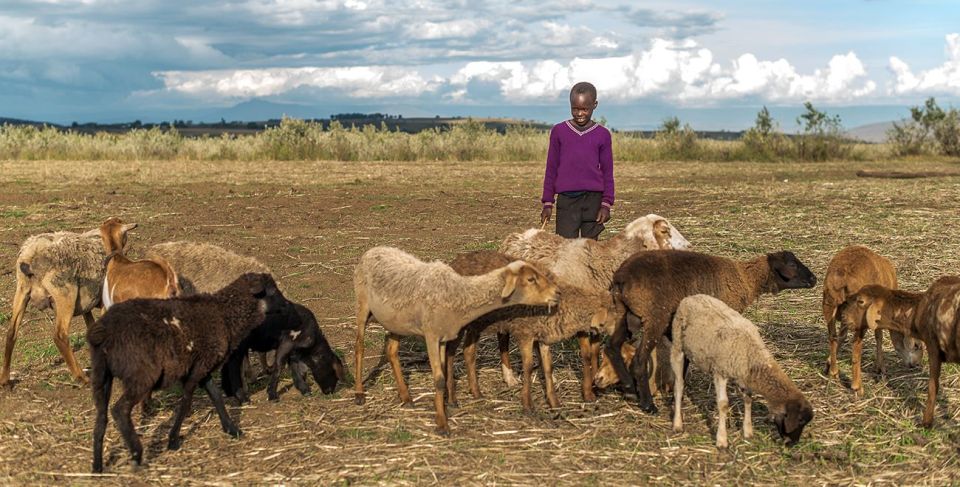
How then can a shepherd identify his own sheep? In two ways. First, the shepherd knows them by heart. Sometimes he had a special name for each individual in the flock. And second, the sheep themselves recognize their master’s voice immediately. When he calls them out, they simply run to him and follow him, through the sheep-gate. Jesus refers to this familiarity in today’s Sunday short gospel reading. “My sheep hear my voice; I know them and they know me,” he says. Haven’t we ever longed to hear the voice of someone who can make things alright, who can lift the burdens from our shoulders? Someone who knows us by name and loves us?
And to those sheep who recognize the Good Shepherd’s voice, Jesus promises three things:
First, Jesus promises eternal life. Jesus promises that those who accept him as Master and Lord, become members of his flock, all the littleness of earthly life would be gone and they would know the splendour and the magnificence of the life of God. Second, Jesus promises a life that would have no end. Death would not be the end of everything but a beginning, they would know the glory of imperishable life. And last, Jesus promises a life that is secure. Nothing can snatch them form his hand. This does not mean his flock is free from sorrow, from suffering or from temporary death; but rather that in the painful moment and the darkest hour, they would still know the serenity of God, his reassuring arms around them.
We are called to be courageous and to take risks, according to the Good Shepherd’s promise
This Sunday draws our special attention also to the vocations in the Church. We are asked first of all to pray that the Church may be provided with the leaders needed to do the work of spreading the Gospel. Pope Francis in his message for the World day of prayer for vocations, Vocation Sunday of this year, invites us to reflect “on how the Lord’s call makes us bearers of a promise and, at the same time, asks of us the courage to take a risk, with him and for him.” Indeed, “the Lord’s call is not an intrusion of God in our freedom; it is not a “cage” or a burden to be borne. On the contrary, it is the loving initiative whereby God encounters us and invites us to be part of a great undertaking. He opens before our eyes the horizon of a greater sea and an abundant catch.
Every vocation is a summons to follow Jesus on the path he has marked out for us, for our own happiness and for the good of those around us. Therefore, pope Francis insists that responding to the Lord’s call involves putting ourselves on the line and facing a great challenge that means to be ready to leave behind whatever would keep us tied to our little boat and prevent us from making a definitive choice. We are called to be bold and determined in seeking God’s plan for our lives. We cannot remain content just to repair our nets on the boat that gives us security, but must trust instead in the Lord’s promise.
“On this World Day of Prayer for Vocations, let us join in prayer and ask the Lord to help us discover his plan of love for our lives, and to grant us the courage to walk in the path that, from the beginning, he has chosen for each of us”.
Readings: Acts 13:14, 43-5, Psalm: 100:1-2, 3, 5; Revelation 7:9, 14b-17; John 10:27-30
Fourth Sunday of Easter is known as Good Shepherd Sunday, since each year of the liturgical cycle the gospel is taken from chapter 10 of John’ gospel where Jesus speaks of himself as: “the Good Shepherd”. This Sunday is also considered particularly as a world day of Vocations, as a day of special prayer and intention for the vocation to priesthood. Good Shepherd is an eloquent image that Jesus uses to reveal the quality of his relationship with his Heavenly Father and the people who hears his voice, the flock.
Jesus, the true Good Shepherd
The text for this Sunday gospel is a rather short passage, in which Jesus states plainly how to give eternal life to his sheep. The context of this text occurs at a celebration of the feast of Dedication, i.e., Hanukkah, which commemorates the Maccabees' successful revolt against the Syrian tyrant Antiochus IV, around 194 BCE. The evangelist says that some of the people celebrating that feast were asking Jesus whether he was the Messiah. The context suggests that they were thinking of a Messiah along the militaristic lines of David the warrior and Judah the Hammer. Jesus' answer implies that he provides ultimate security (“eternal life”) in another way, as shepherd of the flock the Father gives to him. The way to gain access to eternal life is by accepting Jesus as sent by the Father and by laying down one's life for one's friends.
How then can a shepherd identify his own sheep? In two ways. First, the shepherd knows them by heart. Sometimes he had a special name for each individual in the flock. And second, the sheep themselves recognize their master’s voice immediately. When he calls them out, they simply run to him and follow him, through the sheep-gate. Jesus refers to this familiarity in today’s Sunday short gospel reading. “My sheep hear my voice; I know them and they know me,” he says. Haven’t we ever longed to hear the voice of someone who can make things alright, who can lift the burdens from our shoulders? Someone who knows us by name and loves us?
And to those sheep who recognize the Good Shepherd’s voice, Jesus promises three things:
First, Jesus promises eternal life. Jesus promises that those who accept him as Master and Lord, become members of his flock, all the littleness of earthly life would be gone and they would know the splendour and the magnificence of the life of God. Second, Jesus promises a life that would have no end. Death would not be the end of everything but a beginning, they would know the glory of imperishable life. And last, Jesus promises a life that is secure. Nothing can snatch them form his hand. This does not mean his flock is free from sorrow, from suffering or from temporary death; but rather that in the painful moment and the darkest hour, they would still know the serenity of God, his reassuring arms around them.
We are called to be courageous and to take risks, according to the Good Shepherd’s promise
This Sunday draws our special attention also to the vocations in the Church. We are asked first of all to pray that the Church may be provided with the leaders needed to do the work of spreading the Gospel. Pope Francis in his message for the World day of prayer for vocations, Vocation Sunday of this year, invites us to reflect “on how the Lord’s call makes us bearers of a promise and, at the same time, asks of us the courage to take a risk, with him and for him.” Indeed, “the Lord’s call is not an intrusion of God in our freedom; it is not a “cage” or a burden to be borne. On the contrary, it is the loving initiative whereby God encounters us and invites us to be part of a great undertaking. He opens before our eyes the horizon of a greater sea and an abundant catch.
Every vocation is a summons to follow Jesus on the path he has marked out for us, for our own happiness and for the good of those around us. Therefore, pope Francis insists that responding to the Lord’s call involves putting ourselves on the line and facing a great challenge that means to be ready to leave behind whatever would keep us tied to our little boat and prevent us from making a definitive choice. We are called to be bold and determined in seeking God’s plan for our lives. We cannot remain content just to repair our nets on the boat that gives us security, but must trust instead in the Lord’s promise.
“On this World Day of Prayer for Vocations, let us join in prayer and ask the Lord to help us discover his plan of love for our lives, and to grant us the courage to walk in the path that, from the beginning, he has chosen for each of us”.