
Fr. Marsel Rante Taruk
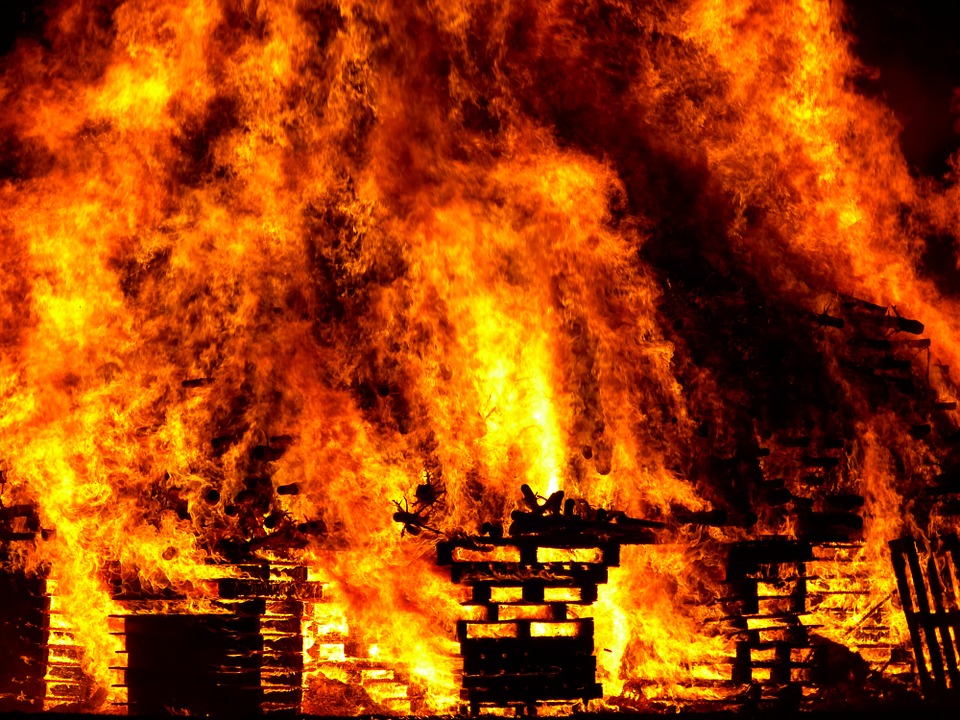
When reading the Gospel of the 20th Sunday, spontaneously I question myself: what is going on here? Jesus says clearly that he has come to set the world on fire. And this fire will be blazing to destroy peace and it will produce divisions even within a family.
‘Trouble don com…’ Every day we pray in a loud voice “come Holy Ghost Fire, burn and destroy all evil site, to clear all the dark from our lives.” But now Jesus is the one praying for the coming of Fire not to destroy evil but rather to set the world, the family on fire, to destroy peace.
How can Jesus, who is called the prince of peace and whom St. Paul presents as the One who, breaking down the walls of separation, says he has come to set the world and family on fire and to bring division within families? What peace does Jesus mean or bring to the earth then? One thing is clear, that peace on a human scale does not always correspond to the gift of peace that God, through Jesus Christ, wants to assure to the whole of humanity.
Reading accurately this passage, we can conclude that it is not a discourse about peace that Jesus is making, but it is rather the tragedy of the moment he is experiencing, that is the opposition or the rejection he is at that time experiencing, the experience all his disciples must go through. For this reason, the idea of discerning the sign of times is rather important, a task which the believers cannot ignore. The tragedy of waiting for the coming of His kingdom is expressed by Luke with two images: fire and baptism. Both images portray the idea of purification; the best way to prepare the coming of the Lord is to go through the process of purification.
Fire in Jewish way of thinking is almost always the symbol of judgment. So, then, Jesus regards the coming of his kingdom as a time of judgment. The idea of Jesus’ message is to purify and to cause people to discern dross from the genuine product. Baptism: the word baptizein in Greek means to immerse and submerge, but in the metaphorical sense of being overwhelmed by catastrophe. In obedience to God’s will, Jesus goes on his journey to Jerusalem, determined to face every opposition. The cross is ever before his eyes.
His coming would inevitably mean division; and the peace that Jesus proclaims and gives is indeed a peace that divides. It is a peace that can cause division even within each individual person. Bearing this in mind, the story of prophet Jeremiah (first reading), who by the Lord's word became torn from himself, from his human projects, from his legitimate desires, to be totally thrown into the history of his people, is highly significant. One of the main reasons why the Romans hated Christianity was that this peace that brings division – it tears families in two, it causes divisions even among human relationships.
Jesus’ Peace will not be obtained at any cost, or at the cost of compromising God’s word. Loyalty to Christ has to take precedence over any loyalty on this earth. We have to be prepared to count all things as loss vis-a-vis the excellence of the Gospel.
This is the challenge to each of us: to be on fire for goodness. Our God is a consuming fire of love, and there is peace for us only if we are at one with him in that fire.
When reading the Gospel of the 20th Sunday, spontaneously I question myself: what is going on here? Jesus says clearly that he has come to set the world on fire. And this fire will be blazing to destroy peace and it will produce divisions even within a family.
‘Trouble don com…’ Every day we pray in a loud voice “come Holy Ghost Fire, burn and destroy all evil site, to clear all the dark from our lives.” But now Jesus is the one praying for the coming of Fire not to destroy evil but rather to set the world, the family on fire, to destroy peace.
How can Jesus, who is called the prince of peace and whom St. Paul presents as the One who, breaking down the walls of separation, says he has come to set the world and family on fire and to bring division within families? What peace does Jesus mean or bring to the earth then? One thing is clear, that peace on a human scale does not always correspond to the gift of peace that God, through Jesus Christ, wants to assure to the whole of humanity.
Reading accurately this passage, we can conclude that it is not a discourse about peace that Jesus is making, but it is rather the tragedy of the moment he is experiencing, that is the opposition or the rejection he is at that time experiencing, the experience all his disciples must go through. For this reason, the idea of discerning the sign of times is rather important, a task which the believers cannot ignore. The tragedy of waiting for the coming of His kingdom is expressed by Luke with two images: fire and baptism. Both images portray the idea of purification; the best way to prepare the coming of the Lord is to go through the process of purification.
Fire in Jewish way of thinking is almost always the symbol of judgment. So, then, Jesus regards the coming of his kingdom as a time of judgment. The idea of Jesus’ message is to purify and to cause people to discern dross from the genuine product. Baptism: the word baptizein in Greek means to immerse and submerge, but in the metaphorical sense of being overwhelmed by catastrophe. In obedience to God’s will, Jesus goes on his journey to Jerusalem, determined to face every opposition. The cross is ever before his eyes.
His coming would inevitably mean division; and the peace that Jesus proclaims and gives is indeed a peace that divides. It is a peace that can cause division even within each individual person. Bearing this in mind, the story of prophet Jeremiah (first reading), who by the Lord's word became torn from himself, from his human projects, from his legitimate desires, to be totally thrown into the history of his people, is highly significant. One of the main reasons why the Romans hated Christianity was that this peace that brings division – it tears families in two, it causes divisions even among human relationships.
Jesus’ Peace will not be obtained at any cost, or at the cost of compromising God’s word. Loyalty to Christ has to take precedence over any loyalty on this earth. We have to be prepared to count all things as loss vis-a-vis the excellence of the Gospel.
This is the challenge to each of us: to be on fire for goodness. Our God is a consuming fire of love, and there is peace for us only if we are at one with him in that fire.