
Fr. Marsel Taruk sx
Solemnity of the Most Holy Trinity
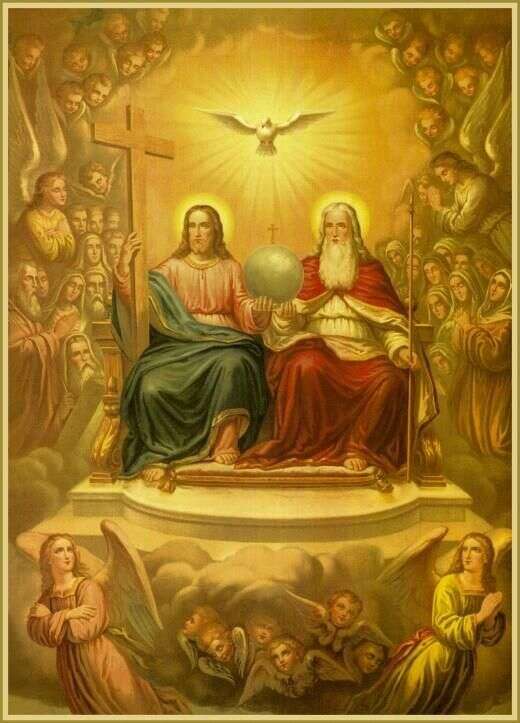
I grew up in a Muslim environment, in the largest Muslim country in the world, Indonesia. “How can three be one?” was one of frequent questions asked by my Muslim friends since that time. I have started the theological debate on Trinity earlier before joining the seminary formation. Unfortunately, the limited knowledge of my faith in those days could not deliver a satisfying answer to such question; and eventually I would simply end up saying: “na so we don learn at Sunday school, catechism na school that Papa God na wan but three persons I get: God the Father, God the Son and God the Holy Spirit.” Indeed, the doctrine of the Most Holy Trinity is one of the most questionable teaching for the followers of other faiths; even they often misunderstand it against the Supremacy and oneness of God the Almighty (concept of Monotheism). I have to acknowledge that even after going through all the philosophical and theological studies in seminary, still I am not able to offer a complete and satisfying explanation to such wonder: How can three be one?” I find consolation in the words of one of the church Fathers, Gregory Nazianzen who says that “to speak of the Godhead is, I know, like crossing the ocean on a raft, or like flying to the stars with wings of narrow span. Even heavenly beings are unable to speak of God’s decrees or of his government of the world.” The Trinity is precisely one of those parts of our faith that escapes reason's grasp. How to pray and preach about so complex a mystery in a single celebration? However, we have to say that one of the foundational truths of our faith is the “one God in three Persons: Father all-powerful, Christ Lord and Savior, Spirit of love.” We can reason our way into knowledge of the existence of God, but we would never know of God as Trinity, if it were not revealed to us. “The Most Holy Trinity is not the product of human reasoning, but the face with which God actually revealed himself, … walking with humanity, … with his people in the history of Israel, and Jesus who has always walked with us and promised us the Holy Spirit who is fire, who teaches us everything we do not know, and guides us from within, gives us good ideas and good inspirations”. (Pope Francis, Angelus, May 26, 2013) The doctrine of the Trinity, as distinct from triadic formulas and the triadic structure of the biblical experience of God, is implicit rather than explicit in Scripture. There are two texts in the New Testament that offer us an image of the Trinity: The baptism of Jesus at the river Jordan and the Transfiguration of the Lord on the mountain. As always, the selections from Scripture give us points of entry that can freshen our mind and imagination as we revisit this part of the heart of our faith. The Gospel reading for this Trinity Sunday, John 3:16-18, is the passage that reports the comment of the evangelist to the dialogue between Jesus and Nicodemus. It is an explanation of the saying about having eternal life, thanks to faith in the one whom God has raised.: “For God so loved the world that he gave his only Son, so that everyone who believes in him might not perish but might have eternal life”. The words “loved and gave” (the actions of God) can give us a glimpse to enter into the mystery of the Trinity. The Father “gave” the Son not only in the incarnation but also in the handing over to death by the crucifixion. Commentators have observed that the language of a father giving an only son recalls the O.T. story of Abraham's readiness to give his only son in sacrifice to God. It also points to the divine self-emptying expressed in the hymn that Paul formulates in the second chapter of his letter to the Philippians:“though he was in the form of God, [he] did not regard equality with God something to be grasped. Rather, he emptied himself”. The word "loved" shows us the firm statement with which God has manifested his reality as "love". His revelation reminds us that he turns to us with generosity and care for our life. In the face of this love, which now appears as the true face of the mystery, only an unspeakable amazement arises in those who feel at the center of the attention and care of the One, who is life itself. And the fullness of life is experienced when, wrapped and transformed by this love, we turn to him in the hymn of praise, a sign that fear is definitively dispelled. On this Trinity Sunday, it would be good to reflect on the God of our faith and worship. Do we honor the God of the Revelation, or do we honor a god of our own making? Do we honor the vengeful god of a merciless world, or do we honor “the Lord, a merciful and gracious God, slow to anger and rich in kindness and fidelity”? Moreover, Our focus is not on the problem of How can three be one? but rather how God who manifests himself as love can truly mould my heart, change my way of living and make me a better Christian? The great challenge is to make the mystery of the Trinitarian God to be an experiential God. Let us recognize that God is not something vague. Our God is not a mere empty word or breath, he is tangible; he is not abstract but has a name: “God is LOVE.” His is not a sentimental, emotional kind of love but the love of the Father who is the origin of all life, the love of the Son who dies on the cross and is raised, the love of the Spirit who renews human beings and the world. In his goodness and wisdom, God chose to reveal himself and to make known to us the hidden purpose of his will by which through Christ, the Word made flesh, man has access to the Father in the Holy Spirit and comes to make sharers in the divine nature. Through this revelation, therefore, the invisible God, out of the abundance of his love, speaks to men as friends and lives among them, so that he may invite and take them into communion with himself. (Dei Verbum, # 2) @MarselRt, June 3, 2020
Solemnity of the Most Holy Trinity
I grew up in a Muslim environment, in the largest Muslim country in the world, Indonesia. “How can three be one?” was one of frequent questions asked by my Muslim friends since that time. I have started the theological debate on Trinity earlier before joining the seminary formation. Unfortunately, the limited knowledge of my faith in those days could not deliver a satisfying answer to such question; and eventually I would simply end up saying: “na so we don learn at Sunday school, catechism na school that Papa God na wan but three persons I get: God the Father, God the Son and God the Holy Spirit.” Indeed, the doctrine of the Most Holy Trinity is one of the most questionable teaching for the followers of other faiths; even they often misunderstand it against the Supremacy and oneness of God the Almighty (concept of Monotheism). I have to acknowledge that even after going through all the philosophical and theological studies in seminary, still I am not able to offer a complete and satisfying explanation to such wonder: How can three be one?” I find consolation in the words of one of the church Fathers, Gregory Nazianzen who says that “to speak of the Godhead is, I know, like crossing the ocean on a raft, or like flying to the stars with wings of narrow span. Even heavenly beings are unable to speak of God’s decrees or of his government of the world.” The Trinity is precisely one of those parts of our faith that escapes reason's grasp. How to pray and preach about so complex a mystery in a single celebration? However, we have to say that one of the foundational truths of our faith is the “one God in three Persons: Father all-powerful, Christ Lord and Savior, Spirit of love.” We can reason our way into knowledge of the existence of God, but we would never know of God as Trinity, if it were not revealed to us. “The Most Holy Trinity is not the product of human reasoning, but the face with which God actually revealed himself, … walking with humanity, … with his people in the history of Israel, and Jesus who has always walked with us and promised us the Holy Spirit who is fire, who teaches us everything we do not know, and guides us from within, gives us good ideas and good inspirations”. (Pope Francis, Angelus, May 26, 2013) The doctrine of the Trinity, as distinct from triadic formulas and the triadic structure of the biblical experience of God, is implicit rather than explicit in Scripture. There are two texts in the New Testament that offer us an image of the Trinity: The baptism of Jesus at the river Jordan and the Transfiguration of the Lord on the mountain. As always, the selections from Scripture give us points of entry that can freshen our mind and imagination as we revisit this part of the heart of our faith. The Gospel reading for this Trinity Sunday, John 3:16-18, is the passage that reports the comment of the evangelist to the dialogue between Jesus and Nicodemus. It is an explanation of the saying about having eternal life, thanks to faith in the one whom God has raised.: “For God so loved the world that he gave his only Son, so that everyone who believes in him might not perish but might have eternal life”. The words “loved and gave” (the actions of God) can give us a glimpse to enter into the mystery of the Trinity. The Father “gave” the Son not only in the incarnation but also in the handing over to death by the crucifixion. Commentators have observed that the language of a father giving an only son recalls the O.T. story of Abraham's readiness to give his only son in sacrifice to God. It also points to the divine self-emptying expressed in the hymn that Paul formulates in the second chapter of his letter to the Philippians:“though he was in the form of God, [he] did not regard equality with God something to be grasped. Rather, he emptied himself”. The word "loved" shows us the firm statement with which God has manifested his reality as "love". His revelation reminds us that he turns to us with generosity and care for our life. In the face of this love, which now appears as the true face of the mystery, only an unspeakable amazement arises in those who feel at the center of the attention and care of the One, who is life itself. And the fullness of life is experienced when, wrapped and transformed by this love, we turn to him in the hymn of praise, a sign that fear is definitively dispelled. On this Trinity Sunday, it would be good to reflect on the God of our faith and worship. Do we honor the God of the Revelation, or do we honor a god of our own making? Do we honor the vengeful god of a merciless world, or do we honor “the Lord, a merciful and gracious God, slow to anger and rich in kindness and fidelity”? Moreover, Our focus is not on the problem of How can three be one? but rather how God who manifests himself as love can truly mould my heart, change my way of living and make me a better Christian? The great challenge is to make the mystery of the Trinitarian God to be an experiential God. Let us recognize that God is not something vague. Our God is not a mere empty word or breath, he is tangible; he is not abstract but has a name: “God is LOVE.” His is not a sentimental, emotional kind of love but the love of the Father who is the origin of all life, the love of the Son who dies on the cross and is raised, the love of the Spirit who renews human beings and the world. In his goodness and wisdom, God chose to reveal himself and to make known to us the hidden purpose of his will by which through Christ, the Word made flesh, man has access to the Father in the Holy Spirit and comes to make sharers in the divine nature. Through this revelation, therefore, the invisible God, out of the abundance of his love, speaks to men as friends and lives among them, so that he may invite and take them into communion with himself. (Dei Verbum, # 2) @MarselRt, June 3, 2020