
Fr. Marsel R. Taruk sx
Reflection for Fourth Sunday in Advent B
Fiat Voluntas tua – Let Your will be done!
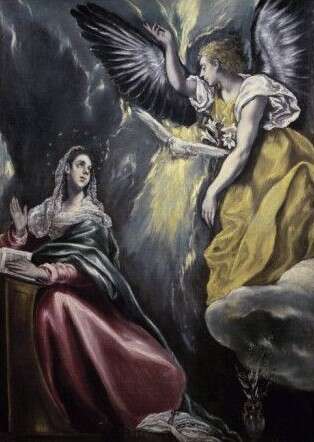
The Gospel of the fourth Sunday in Advent B gives us a lovely picture of the Annunciation of the Angel Gabriel to Mary. Does Mary accept and consent to the words of the angel Gabriel spontaneously? The Gospel seems to show that Mary did accept the news from Gabriel immediately. Surely Mary was struggling inside before reaching her total yes to Gabriel. The event of the announcement seems to me a scary moment for a young girl, Mary: it changes the whole of Mary’s life and the story of humanity. Indeed, Mary was perplexed on hearing the news from Gabriel; she was confronted with two choices: either preference to her own will or to God’s will. Once Mary consented to Gabriel’s words, she gave herself totally to God’s providence: Fiat Voluntas tua
Mary’s Yes discloses the mystery hidden for ages.
Mary’s yes to the mystery kept secret for long ages makes the promise of God’s closeness become real; that yields her pregnancy. She believed that God could take human flesh in her womb, become one with her very body; because of this she brought the Most Hight into the world. This is the heart of the Incarnation mystery: that the ineffable God could take human flesh, could become one with us, could be a human baby.
It is Mary’s very acceptance of God’s words that brought the curse of the first sin come to an end. The Divine came down to embrace human nature; the Word became flesh to make us "partakers of the divine nature. This is why the Word became flesh, and the Son of God became the Son of man, so that man, by entering into communion with the Word and thus receiving divine sonship, might become son of God."
Nothing is be impossible to God.
Mary’s "Fiat" signifies a total obedience of Mary to God’s will. She was fully aware of the consequences of her Fiat to God’s Words, her life would not be the same again; she might be a source of scandal to her family, to her people, to her religion and society; and - worst of all - might be rejected by Joseph, her spouse. But for her there was be no turning back. She accepted God’s will with total confidence in his providence; for Mary therewas nothing impossible to God. She held God’s word and his promises in reverence and based her life on them. So, though she was bewildered and unsure of all the implications of the angel’s message, her yes to God rose out of faith in him and in his wisdom and goodness. She took God at his word and trusted him totally. She had an unerring conviction that God would honour and meet her yes with grace, assistance and protection, supplying her with all she needed to carry it out.
Nor is Mary’s Fiat a “one-time only” consent—it would be repeated over and over in the days and years ahead. It initially opened her to be the recipient of the Word making its home in her. Mary would literally bear the Word of God in her flesh; then she would be borne up by it. Her steady pondering on the word and her constant obedience to it would carry her forward in unwavering faith and confidence.
There is Joy in obedience to God’s will
Two thousand years after Mary said yes to God at Nazareth, her example still offers us strength to follow God’s will in our own lives. There is so much joy and freedom, I believe, in the life of Mary after giving herself to God’s will. Surely, obedience to God’s will is not always convenient and easy for many of us; not even popular for many Christians. We may, like king David in the first reading who wanted to providing a suitable dwelling place for God, feel disappointed. His intention was good; however, the response of God to David was that God himself would provide a house for him.
One thing I learned from my limited experience with people as a missionary is that true joy and freedom are not found in many projects, in missionary and social activities, but in a personal attitude that allows God to take control of all my plans and dreams. There is a great tendency to do a lot of activities according to personal plans and projects, for success only. And the outcome may be either frustration, whenever the result of all efforts is negative, or self-pride (boasting) whenever one project is completed. Instead, joy and freedom are built upon fidelity to the mandate received as God’s will. Missionary mandate is not about being successful with numbers of churches and schools built or social projects established, but rather to become a joyful and free missionary
“Fiat voluntas tua” : Make a joy of your obedience, and the result will be that obedience becomes your joy.
Reflection for Fourth Sunday in Advent B
Fiat Voluntas tua – Let Your will be done!
The Gospel of the fourth Sunday in Advent B gives us a lovely picture of the Annunciation of the Angel Gabriel to Mary. Does Mary accept and consent to the words of the angel Gabriel spontaneously? The Gospel seems to show that Mary did accept the news from Gabriel immediately. Surely Mary was struggling inside before reaching her total yes to Gabriel. The event of the announcement seems to me a scary moment for a young girl, Mary: it changes the whole of Mary’s life and the story of humanity. Indeed, Mary was perplexed on hearing the news from Gabriel; she was confronted with two choices: either preference to her own will or to God’s will. Once Mary consented to Gabriel’s words, she gave herself totally to God’s providence: Fiat Voluntas tua
Mary’s Yes discloses the mystery hidden for ages.
Mary’s yes to the mystery kept secret for long ages makes the promise of God’s closeness become real; that yields her pregnancy. She believed that God could take human flesh in her womb, become one with her very body; because of this she brought the Most Hight into the world. This is the heart of the Incarnation mystery: that the ineffable God could take human flesh, could become one with us, could be a human baby.
It is Mary’s very acceptance of God’s words that brought the curse of the first sin come to an end. The Divine came down to embrace human nature; the Word became flesh to make us "partakers of the divine nature. This is why the Word became flesh, and the Son of God became the Son of man, so that man, by entering into communion with the Word and thus receiving divine sonship, might become son of God."
Nothing is be impossible to God.
Mary’s "Fiat" signifies a total obedience of Mary to God’s will. She was fully aware of the consequences of her Fiat to God’s Words, her life would not be the same again; she might be a source of scandal to her family, to her people, to her religion and society; and - worst of all - might be rejected by Joseph, her spouse. But for her there was be no turning back. She accepted God’s will with total confidence in his providence; for Mary therewas nothing impossible to God. She held God’s word and his promises in reverence and based her life on them. So, though she was bewildered and unsure of all the implications of the angel’s message, her yes to God rose out of faith in him and in his wisdom and goodness. She took God at his word and trusted him totally. She had an unerring conviction that God would honour and meet her yes with grace, assistance and protection, supplying her with all she needed to carry it out.
Nor is Mary’s Fiat a “one-time only” consent—it would be repeated over and over in the days and years ahead. It initially opened her to be the recipient of the Word making its home in her. Mary would literally bear the Word of God in her flesh; then she would be borne up by it. Her steady pondering on the word and her constant obedience to it would carry her forward in unwavering faith and confidence.
There is Joy in obedience to God’s will
Two thousand years after Mary said yes to God at Nazareth, her example still offers us strength to follow God’s will in our own lives. There is so much joy and freedom, I believe, in the life of Mary after giving herself to God’s will. Surely, obedience to God’s will is not always convenient and easy for many of us; not even popular for many Christians. We may, like king David in the first reading who wanted to providing a suitable dwelling place for God, feel disappointed. His intention was good; however, the response of God to David was that God himself would provide a house for him.
One thing I learned from my limited experience with people as a missionary is that true joy and freedom are not found in many projects, in missionary and social activities, but in a personal attitude that allows God to take control of all my plans and dreams. There is a great tendency to do a lot of activities according to personal plans and projects, for success only. And the outcome may be either frustration, whenever the result of all efforts is negative, or self-pride (boasting) whenever one project is completed. Instead, joy and freedom are built upon fidelity to the mandate received as God’s will. Missionary mandate is not about being successful with numbers of churches and schools built or social projects established, but rather to become a joyful and free missionary
“Fiat voluntas tua” : Make a joy of your obedience, and the result will be that obedience becomes your joy.