
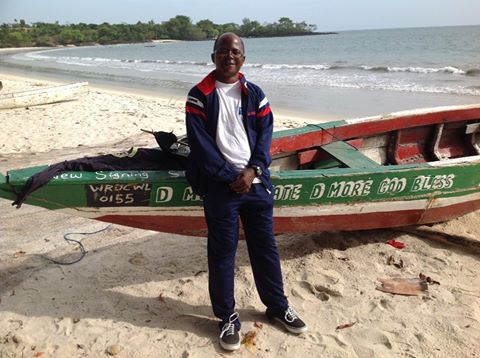
Fr. Paulin Shadari Tutu sx
12th Sunday in Ordinary time B
This incident of the storm on the lake is recounted not only by Mark but also in all the Gospels. The early Church saw in it a profound meaning for every generation of Christians. The sea has always had a strong fascination for people. It inspires wonder, curiosity, fear, awe, and challenge. The sea evokes the mysterious incontrollable and primitive force of nature. In the scriptures, it has the same meaning.
In today’s gospel, the apostles in the boat are so frightened by the storm that they got angry with Jesus, who has fallen asleep. As they criticized him for not seeming to care about the danger, they appear to have forgotten any lessons about faith and trust they may have previously learned. Their faith has regressed to a childish level. Their concern is to be saved by Jesus at that moment.
Let us imagine ourselves in the same situation. In their situation, we would find it hard to blame them. Our times are very insecure in so many respects, with wars, Ebola, violence, economic and moral crises. God seems so far away, like a God who sleeps, a God who seems indifferent to our fears and anxieties. Sometimes we are all like the apostles in the boat. We reach a crisis, and we start questioning everything we ever believed. We will never be totally consistent in our journey of faith. Our cries when we find ourselves in that situation and feel threatened by the storms of sufferings, evil and misfortune are often these questions: “where are you, Lord Jesus, when we suffer?”, why do you sleep, Lord, when your church is in pain (in Iraq, Syria, Pakistan, Nigeria…)? Why is there so much evil? What did West Africa Countries (Sierra Leone, Liberia, Guinea) did to deserve all this? And the Lord’s answer to us is a question: “Why are you so afraid?”, “ I am with you. Have faith in me, trust me”.
“Quiet! Be still!” are words that we would use to a barking dog. They are words Jesus had used to rebuke the “unclean spirit” who possessed the devil in the synagogue of Carpernaum, the same words He used to rebuke the raging sea. In doing this, Jesus reveals God to us. He is indeed the one who has everything under his control. Why are we so terrified and why are we lacking in faith?
Our readings today give us some guidelines for handling these personal storms.
Our first reading from the Book of Job reminds us that the storms have limits. However intense it might be, a storm will pass. The Lord knows the limits of our tolerance. To any storm, the Lord says as in Job, “thus far shall you come and no farther”. Difficult times are not the times to distance ourselves from prayer and the church. Instead are those times when we need to remain close in prayer. Even if that prayer seems not to invigorate, we need to focus on the Lord who is always with us in boat. Our prayer life will give us the stability we need in any turbulence.
The storm is not a time to change the direction. We should not make any critical, serious, life changing decisions during times of deep anxiety or loss. The storm is not a time to make a career change, the changes can be made when calm returns.
In the second reading, St Paul is not calling us to pretend the difficulties, the storms we face are not there but to see them more deeply with the eyes of faith in Christ. Christ is with us in the boat. When we are deluged by life, we are tempted to say with the apostles, “Lord, don’t you care?”. We can understand storms happening to others but not to ourselves. In all our storms, Christ is not simply beside us in our boat but within us. We know that Christ inside us makes us a new creation, which nothing can overwhelm or destroy.
Life presents all kinds of storms. “For Christians acceptance of Jesus is not a guarantee that we will not face problems, difficulties, turmoil. The risk of faith demands a radical trust that whatever our storms, Jesus is present; being conscious of his presence will give us a calm peace in all the problems of our life”.
12th Sunday in Ordinary time B
This incident of the storm on the lake is recounted not only by Mark but also in all the Gospels. The early Church saw in it a profound meaning for every generation of Christians. The sea has always had a strong fascination for people. It inspires wonder, curiosity, fear, awe, and challenge. The sea evokes the mysterious incontrollable and primitive force of nature. In the scriptures, it has the same meaning.
In today’s gospel, the apostles in the boat are so frightened by the storm that they got angry with Jesus, who has fallen asleep. As they criticized him for not seeming to care about the danger, they appear to have forgotten any lessons about faith and trust they may have previously learned. Their faith has regressed to a childish level. Their concern is to be saved by Jesus at that moment.
Let us imagine ourselves in the same situation. In their situation, we would find it hard to blame them. Our times are very insecure in so many respects, with wars, Ebola, violence, economic and moral crises. God seems so far away, like a God who sleeps, a God who seems indifferent to our fears and anxieties. Sometimes we are all like the apostles in the boat. We reach a crisis, and we start questioning everything we ever believed. We will never be totally consistent in our journey of faith. Our cries when we find ourselves in that situation and feel threatened by the storms of sufferings, evil and misfortune are often these questions: “where are you, Lord Jesus, when we suffer?”, why do you sleep, Lord, when your church is in pain (in Iraq, Syria, Pakistan, Nigeria…)? Why is there so much evil? What did West Africa Countries (Sierra Leone, Liberia, Guinea) did to deserve all this? And the Lord’s answer to us is a question: “Why are you so afraid?”, “ I am with you. Have faith in me, trust me”.
“Quiet! Be still!” are words that we would use to a barking dog. They are words Jesus had used to rebuke the “unclean spirit” who possessed the devil in the synagogue of Carpernaum, the same words He used to rebuke the raging sea. In doing this, Jesus reveals God to us. He is indeed the one who has everything under his control. Why are we so terrified and why are we lacking in faith?
Our readings today give us some guidelines for handling these personal storms.
Our first reading from the Book of Job reminds us that the storms have limits. However intense it might be, a storm will pass. The Lord knows the limits of our tolerance. To any storm, the Lord says as in Job, “thus far shall you come and no farther”. Difficult times are not the times to distance ourselves from prayer and the church. Instead are those times when we need to remain close in prayer. Even if that prayer seems not to invigorate, we need to focus on the Lord who is always with us in boat. Our prayer life will give us the stability we need in any turbulence.
The storm is not a time to change the direction. We should not make any critical, serious, life changing decisions during times of deep anxiety or loss. The storm is not a time to make a career change, the changes can be made when calm returns.
In the second reading, St Paul is not calling us to pretend the difficulties, the storms we face are not there but to see them more deeply with the eyes of faith in Christ. Christ is with us in the boat. When we are deluged by life, we are tempted to say with the apostles, “Lord, don’t you care?”. We can understand storms happening to others but not to ourselves. In all our storms, Christ is not simply beside us in our boat but within us. We know that Christ inside us makes us a new creation, which nothing can overwhelm or destroy.
Life presents all kinds of storms. “For Christians acceptance of Jesus is not a guarantee that we will not face problems, difficulties, turmoil. The risk of faith demands a radical trust that whatever our storms, Jesus is present; being conscious of his presence will give us a calm peace in all the problems of our life”.