
Fr. Marsel R. Taruk sx
Reflection on the 33rd Sunday in OT year B.
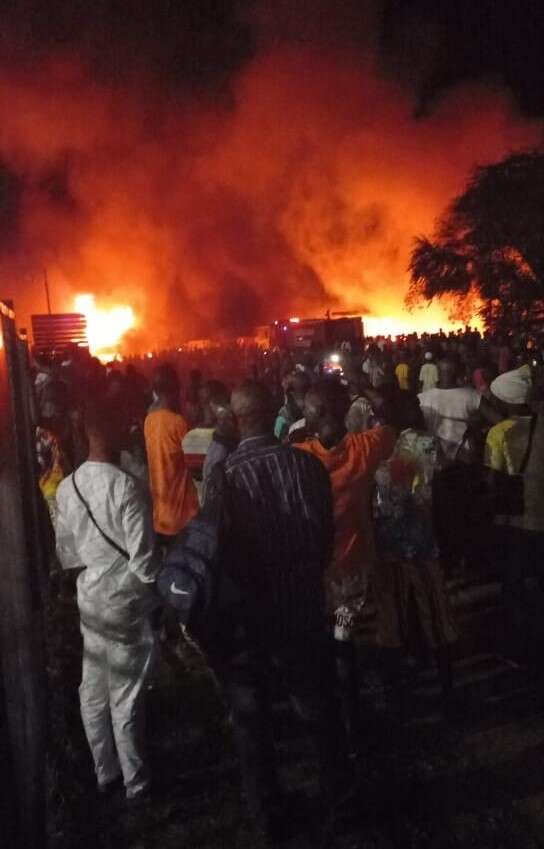
Commenting on the fuel tanker explosion that happened last Friday in Wellington, Freetown, a fellow priest said to me, “I could not bear to watch those images and videos posted in the medias; it was truly sorrowful and pathetic to witness an apocalyptic scenario before your eyes”.
Indeed, it was a dreadful and horrible moment that took so many lives; an apocalyptic situation. In the readings for this Sunday, we find some horrible images too: Jagged and dark, a time unsurpassed in distress, some shall live forever others shall be an everlasting horror and disgrace, the sun will be darkened, and the moon will not give its light, the stars will be falling from the sky, and the powers in the heavens will be shaken. Such images are really frightening us. But why, then, such horrible imagery should be proclaimed in our liturgical celebration?
As the church year is coming to an end, so it is understandable that the Church tries to catch our attention, our reflection to the end of times; thus, to prepare ourselves and to be on the watch. We envisage Mark’s portrayal of the end of times to be about the end of the world, the trials, the omens, the shaking of the heavens, the Son of Man coming on the clouds with power and glory. And yet, if we take it all so literally, the text will lose its meaning. Jesus said, “I assure you; this generation will not pass away until all these things take place.” How many generations have now passed?
The trick is not reducing the word to a historical period. We must let it speak to every historical generation, including our own. After all, the end of times happen to us all, not only to each of us in facing our own sundering death, but to all of us together as a generation that will pass into the mist of disappearing ages. The reading helps us recognize that our expectations about the ultimate future are rooted in what has already been accomplished, the victory of Jesus’ once-for-all sacrifice .And still everyone needs to re-read Jesus’ final words: “No one knows, neither the angels in heaven, nor the Son, but only the Father” (Mk 13:32).
Again, those apocalyptic images lead us to discover and strengthen one beautiful thing about Christianity: it is the attitude of being on the watch. Since no one knows the time and the hour, the wise Christian will be always watchful, wakeful and praying. The wise man never forgets that he must be ready when the summons comes. We may find at the end of the first reading a beautiful promise of rescue: the wise shall shine brightly like the splendour of the firmament, and those who lead the many to justice shall be like the stars forever.
Our faith asserts that those pictures, apocalyptic images, are not unrealistic, because we recognize that the Creator of all has become fully manifest in Jesus of Nazareth, especially in his death and resurrection, and that these events constitute a victory of cosmic implications. We find, in our best moments and sometimes in our worst moments, that this declaration of victory and this cosmic vision free us sufficiently from fear so that we can get on with our housekeeping.
Reflection on the 33rd Sunday in OT year B.
Commenting on the fuel tanker explosion that happened last Friday in Wellington, Freetown, a fellow priest said to me, “I could not bear to watch those images and videos posted in the medias; it was truly sorrowful and pathetic to witness an apocalyptic scenario before your eyes”.
Indeed, it was a dreadful and horrible moment that took so many lives; an apocalyptic situation. In the readings for this Sunday, we find some horrible images too: Jagged and dark, a time unsurpassed in distress, some shall live forever others shall be an everlasting horror and disgrace, the sun will be darkened, and the moon will not give its light, the stars will be falling from the sky, and the powers in the heavens will be shaken. Such images are really frightening us. But why, then, such horrible imagery should be proclaimed in our liturgical celebration?
As the church year is coming to an end, so it is understandable that the Church tries to catch our attention, our reflection to the end of times; thus, to prepare ourselves and to be on the watch. We envisage Mark’s portrayal of the end of times to be about the end of the world, the trials, the omens, the shaking of the heavens, the Son of Man coming on the clouds with power and glory. And yet, if we take it all so literally, the text will lose its meaning. Jesus said, “I assure you; this generation will not pass away until all these things take place.” How many generations have now passed?
The trick is not reducing the word to a historical period. We must let it speak to every historical generation, including our own. After all, the end of times happen to us all, not only to each of us in facing our own sundering death, but to all of us together as a generation that will pass into the mist of disappearing ages. The reading helps us recognize that our expectations about the ultimate future are rooted in what has already been accomplished, the victory of Jesus’ once-for-all sacrifice .And still everyone needs to re-read Jesus’ final words: “No one knows, neither the angels in heaven, nor the Son, but only the Father” (Mk 13:32).
Again, those apocalyptic images lead us to discover and strengthen one beautiful thing about Christianity: it is the attitude of being on the watch. Since no one knows the time and the hour, the wise Christian will be always watchful, wakeful and praying. The wise man never forgets that he must be ready when the summons comes. We may find at the end of the first reading a beautiful promise of rescue: the wise shall shine brightly like the splendour of the firmament, and those who lead the many to justice shall be like the stars forever.
Our faith asserts that those pictures, apocalyptic images, are not unrealistic, because we recognize that the Creator of all has become fully manifest in Jesus of Nazareth, especially in his death and resurrection, and that these events constitute a victory of cosmic implications. We find, in our best moments and sometimes in our worst moments, that this declaration of victory and this cosmic vision free us sufficiently from fear so that we can get on with our housekeeping.