
Fr. Michael Carlini sx
Comment of the Gospel of the 3rd Sunday of Lent – Year C
The message of Christ was seen as dangerous by the religious leaders of his time. People in authority fear that the faithful have access to knowledge and then understand the connection between events and the Word, facts and explanation. Christians that are capable of personal discernment are no longer a mass that can be manipulated at will "in the name of God", but are entitled to explanations, to be offered reasons and motivations for action.
A warning to Jesus
The Pharisees see in Jesus a dangerous troublemaker who teaches the autonomy of moral evaluation and the assumption of responsibility in the face of what happens in history.
In the gospel some people are giving a warning to Christ: he must know that the stakeholders will not stand idly by and thus send messengers to remind Jesus about what happened to those troublesome Galileans; as they were slaughtered, we could slaughter you and your followers, who happen to be in smaller number.
A new interpretation
Israel had the image of the Messiah as an executioner who comes to punish sins, as it happened to the eighteen considered guilty; in fact, their death was considered a punishment of God for their sins or those of their ancestors. Between this theology of sin – guilt – punishment and the events of history there is an analogy, a relationship: there is no difference between a God who punishes sins and the Messiah who comes to clean up sinners. Christ reformulates that theology by challenging the current mentality that, in these facts (those perished under the collapse of the tower, or executed by Pilate), we see God's punishments, as if he enjoyed sending misfortunes to test the fidelity of his children. Poor God, reduced to a puppeteer who plays with the lives of his children! Such a tragic and evil God cannot be a Father, but an executioner. We have an absurd concept of God: when we are not able to give rational explanations to what happens, we project in him the easiest interpretation or be blame him for anything that occurs.
Now is the favourable time
The time given to the fig tree is a warning: there is little time and we must work on conversion. The opportunities in life are not repeated: we have to seize them in due time if we want to live it to the last drop. The alternative is to waste our precious time or pretend to live.
Today's liturgy, through readings, wants to teach us the criterion of the search for God's will. The 1st reading and the gospel teach us the first pillar of discernment: all the events of life, ordinary, extraordinary, banal and unforeseen, are signs of the times, through which we can see God's plan for our history. The Second reading teaches us the other pillar of Christian spirituality: the Word of God is the code of interpretation of life.
The discernment works as follows: first step, we reflect on the contemporary situations; secondly, we judge it under the light of the Scripture, with the guidance of the Spirit.
Remove your sandals
The God of the Bible uses his ears and eyes: I have heard the cry of the slaves, I have seen … (Ex 3). He lowered himself: “I have come down to deliver”(v8). Christian leadership requires an amount of lowering oneself , to be at the same level of those that are marginalized. It implies a reduction of status, the opposite of promotion.
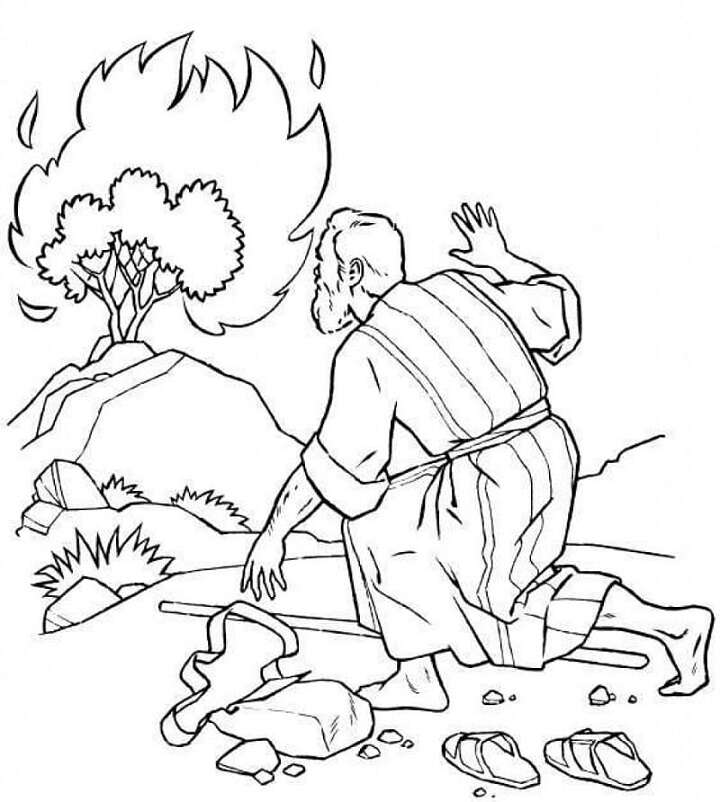
Moses had to remove his sandals, made of dead animal’s skin. The mountain was holy. Indeed, we should consider holy any person we approach, since we are all adopted by of God. All ought to be treated with respect, removing our prejudices and biases, whenever we meet somebody. Any land in the world is Holy ground: therefore no country should invade another nation, profaning it with tanks, shelling and killing of civilians. World’s history has been aways a history of wars: it is time to change the narrative and we must engage in peacebuilding, before the atomic bombs fall un us, like the tower of Siloam.
Comment of the Gospel of the 3rd Sunday of Lent – Year C
The message of Christ was seen as dangerous by the religious leaders of his time. People in authority fear that the faithful have access to knowledge and then understand the connection between events and the Word, facts and explanation. Christians that are capable of personal discernment are no longer a mass that can be manipulated at will "in the name of God", but are entitled to explanations, to be offered reasons and motivations for action.
A warning to Jesus
The Pharisees see in Jesus a dangerous troublemaker who teaches the autonomy of moral evaluation and the assumption of responsibility in the face of what happens in history.
In the gospel some people are giving a warning to Christ: he must know that the stakeholders will not stand idly by and thus send messengers to remind Jesus about what happened to those troublesome Galileans; as they were slaughtered, we could slaughter you and your followers, who happen to be in smaller number.
A new interpretation
Israel had the image of the Messiah as an executioner who comes to punish sins, as it happened to the eighteen considered guilty; in fact, their death was considered a punishment of God for their sins or those of their ancestors. Between this theology of sin – guilt – punishment and the events of history there is an analogy, a relationship: there is no difference between a God who punishes sins and the Messiah who comes to clean up sinners. Christ reformulates that theology by challenging the current mentality that, in these facts (those perished under the collapse of the tower, or executed by Pilate), we see God's punishments, as if he enjoyed sending misfortunes to test the fidelity of his children. Poor God, reduced to a puppeteer who plays with the lives of his children! Such a tragic and evil God cannot be a Father, but an executioner. We have an absurd concept of God: when we are not able to give rational explanations to what happens, we project in him the easiest interpretation or be blame him for anything that occurs.
Now is the favourable time
The time given to the fig tree is a warning: there is little time and we must work on conversion. The opportunities in life are not repeated: we have to seize them in due time if we want to live it to the last drop. The alternative is to waste our precious time or pretend to live.
Today's liturgy, through readings, wants to teach us the criterion of the search for God's will. The 1st reading and the gospel teach us the first pillar of discernment: all the events of life, ordinary, extraordinary, banal and unforeseen, are signs of the times, through which we can see God's plan for our history. The Second reading teaches us the other pillar of Christian spirituality: the Word of God is the code of interpretation of life.
The discernment works as follows: first step, we reflect on the contemporary situations; secondly, we judge it under the light of the Scripture, with the guidance of the Spirit.
Remove your sandals
The God of the Bible uses his ears and eyes: I have heard the cry of the slaves, I have seen … (Ex 3). He lowered himself: “I have come down to deliver”(v8). Christian leadership requires an amount of lowering oneself , to be at the same level of those that are marginalized. It implies a reduction of status, the opposite of promotion.
Moses had to remove his sandals, made of dead animal’s skin. The mountain was holy. Indeed, we should consider holy any person we approach, since we are all adopted by of God. All ought to be treated with respect, removing our prejudices and biases, whenever we meet somebody. Any land in the world is Holy ground: therefore no country should invade another nation, profaning it with tanks, shelling and killing of civilians. World’s history has been aways a history of wars: it is time to change the narrative and we must engage in peacebuilding, before the atomic bombs fall un us, like the tower of Siloam.