
Fr. Christophe N. Chiza, sx.
The Gospel reading of this second Sunday of Lent Year C is talking about the “Transfiguration” of our Lord and Savior Jesus Christ. Where, when, how and why? These questions can help us to have a better understanding concerning the Transfiguration of our Lord Jesus Christ. “About eight days after Jesus has said all this, Jesus took Peter, John and James and went up the mountain to pray” Luke 9,28.
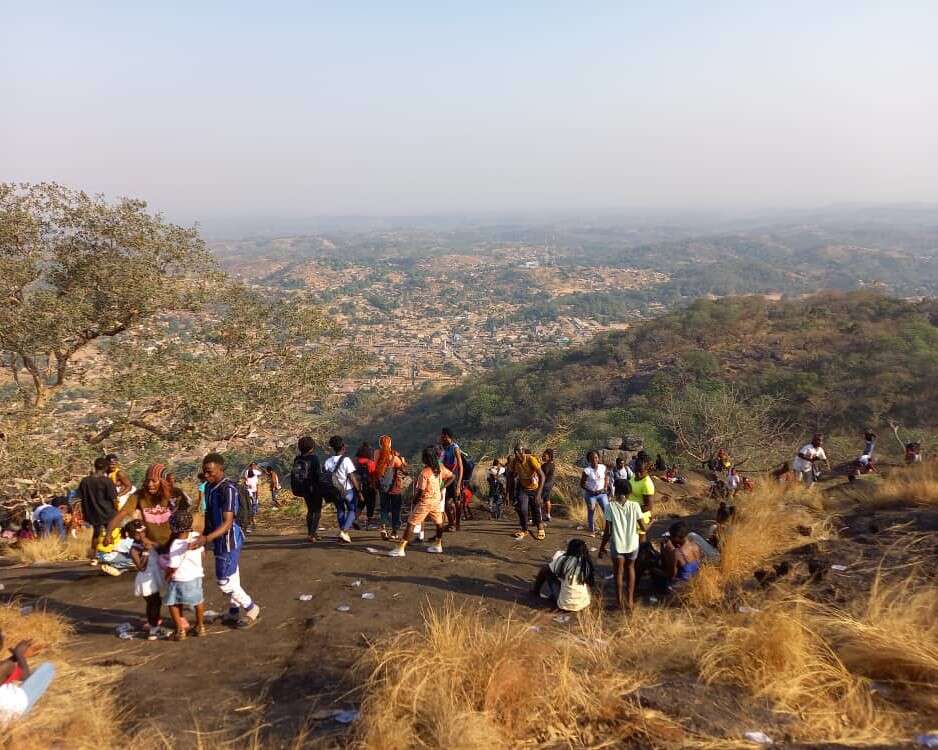
According to the Gospel reading, the Transfiguration took place on the mountain. I would like to emphasize that in the Bible perspective, the mountain remains a sacred place where we can encounter the living God. However, in a Christian context, the mountain cannot be merely taken as a location or a geographic place. Our sinful life is also a mountain where we can encounter the holy and merciful God. Therefore, Lent is a time of grace and conversion where we are called to climb the mountain of our sinful life so that we may be transfigured and transformed.
The transfiguration happened when Jesus had just announced His own impending rejection, suffering and death. Following Peter’s great confession at Caesarea Philippi, Jesus unveiled His own immediate future to them. He must suffer, must be rejected by the religious leaders of Israel, must be killed and must be raised the third day. It is in this context of rejection and difficult moment that Jesus took Peter, John and James and went up the mountain to pray. Jesus is looking for spiritual strength to face his imminent suffering and death. Through his prayer, Jesus seeks strength not to lose sense of direction in his mission.
This remind us that it is through prayer that we will be able to overcome any kind of temptation in our daily and Christian life. Lent is for us a time of grace which calls each one of us to focus on the life of Prayer, Fasting and Charity. The transfiguration is a result of intensive prayer made by Jesus to the Heavenly Father. Let us keep in mind that prayer is a way to seek the presence of God in our daily life. Prayer can change, transform and transfigure our life. And there is no prayer without faith. It is though his faith that Abraham is blessed and considered as God’s faithful servant.
“While he was praying his face changed in appearance and his Clothing became dazzling white. “The Transfiguration is a shadow or prefiguration of Jesus’s resurrection and glorification. But let us bear in mind that there is no Happy Easter Sunday without Good Friday, a day of sorrow and sadness. In our life, battles and sufferings are evident but not permanent. The Transfiguration of Jesus is a message of hope which reminds us that “After the rain comes good weather.” Transfiguration is a strong message of hope for us all and in a special way for my fellow citizens of the Eastern Part of the Democratic Republic of Congo who are suffering from unjust war, violence and atrocity of human sins and wickedness. My people are experiencing endless nights of violence, insecurity and uncertainty. May the Almighty God transfigure the faces and change the hearts of those involved directly or indirectly on this bloodshed which seems to be like a video game at the sight of the International Community.
As they were about to part from him, Peter said to Jesus, “ Master, it is good that we are here; let us make three tents, one for you, one for Moses, and one for Elijah.” The divine glory of Transfiguration confirms Peter’s expectation of a Glorious Messiah. However, let us not forget that “There is no roses without thorns.” Peter is happy because he has seen the glory of God. Let us keep in mind that the way to glory is through the painful way of the cross, passion and suffering. Indeed, Jesus is a glorious Messiah but a crucified and suffering servant. Let us live this time of Lent as a time of grace, conversion and reconciliation. Happy Lenten Season to all. Amen.
The Gospel reading of this second Sunday of Lent Year C is talking about the “Transfiguration” of our Lord and Savior Jesus Christ. Where, when, how and why? These questions can help us to have a better understanding concerning the Transfiguration of our Lord Jesus Christ. “About eight days after Jesus has said all this, Jesus took Peter, John and James and went up the mountain to pray” Luke 9,28.
According to the Gospel reading, the Transfiguration took place on the mountain. I would like to emphasize that in the Bible perspective, the mountain remains a sacred place where we can encounter the living God. However, in a Christian context, the mountain cannot be merely taken as a location or a geographic place. Our sinful life is also a mountain where we can encounter the holy and merciful God. Therefore, Lent is a time of grace and conversion where we are called to climb the mountain of our sinful life so that we may be transfigured and transformed.
The transfiguration happened when Jesus had just announced His own impending rejection, suffering and death. Following Peter’s great confession at Caesarea Philippi, Jesus unveiled His own immediate future to them. He must suffer, must be rejected by the religious leaders of Israel, must be killed and must be raised the third day. It is in this context of rejection and difficult moment that Jesus took Peter, John and James and went up the mountain to pray. Jesus is looking for spiritual strength to face his imminent suffering and death. Through his prayer, Jesus seeks strength not to lose sense of direction in his mission.
This remind us that it is through prayer that we will be able to overcome any kind of temptation in our daily and Christian life. Lent is for us a time of grace which calls each one of us to focus on the life of Prayer, Fasting and Charity. The transfiguration is a result of intensive prayer made by Jesus to the Heavenly Father. Let us keep in mind that prayer is a way to seek the presence of God in our daily life. Prayer can change, transform and transfigure our life. And there is no prayer without faith. It is though his faith that Abraham is blessed and considered as God’s faithful servant.
“While he was praying his face changed in appearance and his Clothing became dazzling white. “The Transfiguration is a shadow or prefiguration of Jesus’s resurrection and glorification. But let us bear in mind that there is no Happy Easter Sunday without Good Friday, a day of sorrow and sadness. In our life, battles and sufferings are evident but not permanent. The Transfiguration of Jesus is a message of hope which reminds us that “After the rain comes good weather.” Transfiguration is a strong message of hope for us all and in a special way for my fellow citizens of the Eastern Part of the Democratic Republic of Congo who are suffering from unjust war, violence and atrocity of human sins and wickedness. My people are experiencing endless nights of violence, insecurity and uncertainty. May the Almighty God transfigure the faces and change the hearts of those involved directly or indirectly on this bloodshed which seems to be like a video game at the sight of the International Community.
As they were about to part from him, Peter said to Jesus, “ Master, it is good that we are here; let us make three tents, one for you, one for Moses, and one for Elijah.” The divine glory of Transfiguration confirms Peter’s expectation of a Glorious Messiah. However, let us not forget that “There is no roses without thorns.” Peter is happy because he has seen the glory of God. Let us keep in mind that the way to glory is through the painful way of the cross, passion and suffering. Indeed, Jesus is a glorious Messiah but a crucified and suffering servant. Let us live this time of Lent as a time of grace, conversion and reconciliation. Happy Lenten Season to all. Amen.