
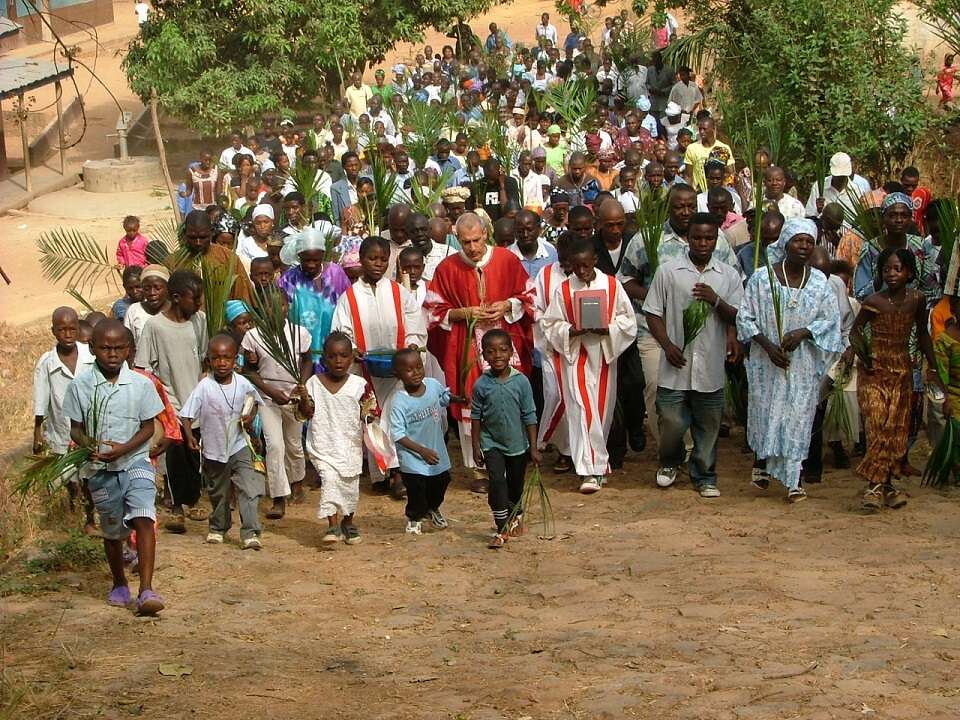
Fr. Jerome Pistoni sx
WEBSITE REFLECTION PALMS SUNDAY YEAR C 13th April 2025
Every year, when we celebrate the solemnity of Palm Sunday, and we remember the glorious entrance of Jesus into Jerusalem, I always ask myself:
Why the same people who welcomed and acclaimed Jesus with great joy and enthusiasm, few days later, not only disowned him, but wanted him executed on the cross?
Why had they changed their joyful words: “Blessings on the King who comes in the name of the Lord!” to the more angry and violent words: “Crucify Him!”
How was it possible to express so opposite feelings in so a short time?
What happened during the period between the entrance into Jerusalem and the condemnation by Pontius Pilate?
The waiting of the Messiah was founded on a misunderstanding: Messiah for the Jews was a military leader. They believed that only a warrior could win the powerful army of the Romans and they believed that God acted as a warrior more powerful than the romans themselves: didn’t God freed the people of Israel, slaves in Egypt, "with a strong hand and an outstretched arm"? This belief was so rooted in their minds, that they were not able to recognise the prophecies in the bible that announced a different intervention of God. One of these prophecies was proclaimed by Zechariah:
“Your King is coming, humble and riding on a donkey; no more chariots in Ephraim no more horses in Jerusalem, the warrior bow shall be broken”.
The weapon used by Jesus to defeat the enemies was his Word, that was meant to convince, to open minds and not to kill.
Jesus fulfilled the prophecy of Zechariah that nobody remembered:
they were not expecting and they did not want a peaceful Messiah but one sent by God who acted like the God of Exodus, “with a strong hand and an outstretched arm”! How could the Messiah defeat the Romans with words? However, during his brief public life, Jesus, in more than one occasion, presented a Messiah different from the common belief, a peaceful one:
Some episodes of Luke were meant to open the eyes of the disciples on this different way of coming of the Messiah.
When Jesus announced that he was going to Jerusalem, and he would be arrested and killed, Peter reacted vehemently, and refused to accept that Jesus, the Messiah, could be detained and executed. Jesus, the Lord and master, turned and looked at Peter and called him Satan. It is satanic to cultivate the idea that violence is the solution of all our problems. It is fruit of the devil to permit the voice of the weapons become stronger that the voice of the dialogue.
The other episode that oriented the attention of the disciples toward a different kind of Messiah, happened when the soldiers came to arrest Jesus, and Peter cut the right ear of a servant. Jesus not only rebuked Peter for the action done, but he also healed the wounded servant.
The image of warlord did not fit Jesus and let alone his disciples.
The Picture that best fit Jesus is the action that he performed during the last supper: he took away the cloth he was wearing, and that represented his authority as Master, took a towel, that signifies the service for our brothers and sisters, and started washing the feet of the disciples. This is the best image of our Messiah, a God who brings life and not death, and it is an example for all the disciples of Jesus: “The greatest among you is the one who serves, not the one who kills”. Fr. Jerome Pistoni sx
WEBSITE REFLECTION PALMS SUNDAY YEAR C 13th April 2025
Every year, when we celebrate the solemnity of Palm Sunday, and we remember the glorious entrance of Jesus into Jerusalem, I always ask myself:
Why the same people who welcomed and acclaimed Jesus with great joy and enthusiasm, few days later, not only disowned him, but wanted him executed on the cross?
Why had they changed their joyful words: “Blessings on the King who comes in the name of the Lord!” to the more angry and violent words: “Crucify Him!”
How was it possible to express so opposite feelings in so a short time?
What happened during the period between the entrance into Jerusalem and the condemnation by Pontius Pilate?
The waiting of the Messiah was founded on a misunderstanding: Messiah for the Jews was a military leader. They believed that only a warrior could win the powerful army of the Romans and they believed that God acted as a warrior more powerful than the romans themselves: didn’t God freed the people of Israel, slaves in Egypt, "with a strong hand and an outstretched arm"? This belief was so rooted in their minds, that they were not able to recognise the prophecies in the bible that announced a different intervention of God. One of these prophecies was proclaimed by Zechariah:
“Your King is coming, humble and riding on a donkey; no more chariots in Ephraim no more horses in Jerusalem, the warrior bow shall be broken”.
The weapon used by Jesus to defeat the enemies was his Word, that was meant to convince, to open minds and not to kill.
Jesus fulfilled the prophecy of Zechariah that nobody remembered:
they were not expecting and they did not want a peaceful Messiah but one sent by God who acted like the God of Exodus, “with a strong hand and an outstretched arm”! How could the Messiah defeat the Romans with words? However, during his brief public life, Jesus, in more than one occasion, presented a Messiah different from the common belief, a peaceful one:
Some episodes of Luke were meant to open the eyes of the disciples on this different way of coming of the Messiah.
When Jesus announced that he was going to Jerusalem, and he would be arrested and killed, Peter reacted vehemently, and refused to accept that Jesus, the Messiah, could be detained and executed. Jesus, the Lord and master, turned and looked at Peter and called him Satan. It is satanic to cultivate the idea that violence is the solution of all our problems. It is fruit of the devil to permit the voice of the weapons become stronger that the voice of the dialogue.
The other episode that oriented the attention of the disciples toward a different kind of Messiah, happened when the soldiers came to arrest Jesus, and Peter cut the right ear of a servant. Jesus not only rebuked Peter for the action done, but he also healed the wounded servant.
The image of warlord did not fit Jesus and let alone his disciples.
The Picture that best fit Jesus is the action that he performed during the last supper: he took away the cloth he was wearing, and that represented his authority as Master, took a towel, that signifies the service for our brothers and sisters, and started washing the feet of the disciples. This is the best image of our Messiah, a God who brings life and not death, and it is an example for all the disciples of Jesus: “The greatest among you is the one who serves, not the one who kills”. Fr. Jerome Pistoni sx