
Fr. Adolph Guy sx
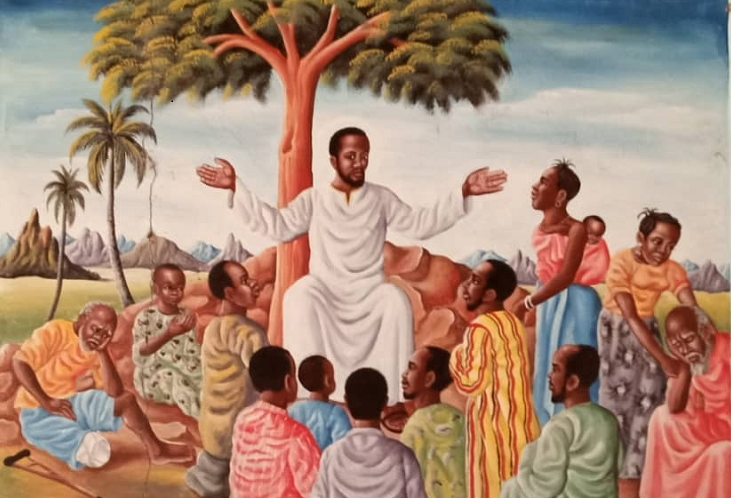
The solemn declaration Habemus Papam (Latin for ‘we have a pope’) resounded across social media with the election of Cardinal Robert Francis Prevost as the successor of Saint Peter, taking the name Pope Leo XIV. He is our new shepherd. Just last Sunday, we recalled the moment when the Lord Jesus asked Peter to feed his sheep (John 21: 1-19). The Holy Scripture and the Christian faith employ a rich variety of images to describe the relationship between God and His people. To name but a few: the Body of Christ, Father and Child, Bride and Bridegroom, Friendship, and Shepherd. Among these, the image of a shepherd evokes the protection, security, and care that the Lord Jesus offers to each of us. Thus, unlike in the preceding Sundays of this Easter season – during which our meditation has been nourished by various Gospel accounts of the empty tomb and the risen Lord’s appearances to the apostles in different forms and settings – the readings for this Fourth Sunday of Easter draw our attention to the figure of the person of risen Christ as the Good Shepherd. For this reason, it is known as Good shepherd Sunday: a day on which we pray for vocations within the Church and take up a special collection in support of our brothers preparing for the priesthood.
The Good Shepherd in today’s readings
This reflection will explore three key points in the light of this Sunday readings. First, the first reading – taken from the Acts of the Apostles 13; 14, 43-52 – shows that the Good Shepherd cares about other sheep that are not yet in his fold. For this purpose, Paul and Barnabas preach the good news among the gentiles, drawing God-fearing converts in Antioch of Pisidia. The responsorial psalm (100: 1-2,3,5) is a joyful song of praise of to the Lord who shepherds His people. I invite you to linger in personal meditation upon these verses.
Second, we are reminded of the diversity of among the followers of Christ. In his vision recorded in the second reading from the Book of Revelation (7: 9. 14b-17), Saint John describes a multitude from every nation, tribe, and language, united in their worship of the Lamb.
The third point draws us to the Gospel of John (10:27-30), which speaks of the intimate bond between Christ and His sheep. The Good Shepherd knows each of them and offers tenderly protection, security, and care – without discrimination - despite the multiplicity of voices, cultures, and identities that make up His flock.
Paul and Barnabas win God-fearers for Christ, the good shepherd
As we heard in the first reading: “And many Jews and devout converts to Judaism followed Paul and Barnabas.” Toward the end of the reading, we heard: “And when the Gentiles heard this, they were glad and glorified the word of God; and as many as were ordained to eternal life believed.” This provoked the anger of the Jewish authorities, who ultimately expelled Paul and Barnabas from their city.
Experts in Archaeology and Scripture help us better understand the context of the first century Jewish communities in the diaspora and their synagogue. In many cities, Jews had sympathizers of their religion. These people accepted the Jewish monotheism and ethics but were not fully converted to Judaism. They remain in between non conversion and full conversion. The Acts of the Apostles refers to them as ‘God-fearers’ or ‘God-worshipers’ (10:2, 22, 35; 13:16). It was precisely among these individuals that Paul and Barnabas found a receptive audience for the Gospel message.
Reflecting on the healing of Capernaum official’s son – as narrated in John 4:46-53, Matthew 8:5-13, and Luke 7:1-10 – or the story of Cornelius in Acts 10-11, some scholars even surmise that Saint Luke, the author of the Gospel bearing his name and of the Acts of the Apostles, may himself have come from these God-fearers.
I will not enter that scholarly debate, as I am not among their ranks. What is clear, however, is that the departure of the God-fearers from the synagogue would have represented a significant blow. Many of them played vital roles in the Jewish diaspora communities, offering political, social, and economic support.
Even today, we still have God-fearers in our context here in Sierra Leone. They are our neighbours, friends, office mates and those, though not baptized, have spent much of their lives within the environment of catholic schools and institutions. They are familiar with Christian prayers; they pray with us in the church when they lose a loved one or to celebrate a wedding. These are people to whom we can bring the good news through our life witness.
A multitude…from every nation, from all tribes and peoples and tongues
I recall attending the Chrism Mass at Our Lady of Congo Cathedral in Kinshasa in 2004. It was the first time I truly became aware of the racial and cultural diversity among priests. During the entrance procession, two long lines of clergy filed into the church – so many that it took several minutes to complete. The diversity was striking, with priests seemingly from every corner of the globe, their physical appearance reflecting the Church’s international character.
A second story comes from those who attended the canonisation of our founder, Saint Guido Maria Conforti, in Rome in 2011. They spoke with great enthusiasm about seeing lay faithful and representatives from our missions around the world gathered together. The assembly included people of different nationalities, cultures, languages, and races. One confrere remarked that, on that day, he caught a glimpse of Saint Guido’s dream: “To make of the world a single family in Christ.”
Lastly, I recall a talk given in 2016 by Rev. Fr Romeo Jocson Intengan, a Filipino Jesuit in Manila, on the political situation in the Philippines following the election of President Rodrigo Duterte. Aware of the international audience before him – mostly Xaverians from diverse backgrounds – he concluded his talk with a moving reflection. “When I see you, Xaverians,” he said, “I am reminded of one of Saint John’s visions in the Book of Revelation,” and he quoted from the second reading: “A great multitude which no one could number, from every nation, from all tribes and peoples and tongues, standing before the throne and before the Lamb…” Truly, Christ the Good Shepherd embraces diversity within His sheepfold.
Let us enjoy the Good Shepherd’s care
One of the dangers that hovers over the Christian community is frictions and fractions among ourselves as some people tend to close in on themselves based on their respective background, as listed above, and look at the other members as a threat. It is not new actually in Church history. In fact, history has taught us that it is part of the Church’s journey. Right in the beginning the church, the apostles were quarrelling with each other on the way to mission (Gal. 2:11-14; 2 Pet. 3:15-16). As it is now, the Church is the result of all those fruitful frictions that had happened in the past.
Disputes among ourselves diverts our attention from the risen Lord who is our Lord and our shepherd. Instead of fighting each other, let enjoy the protection, care and security that the Good Shepherd assures us. He voices it loudly and poignantly in today Gospel. Let us hear him again once more:
“My sheep hear my voice, and I know them, and they follow me; and I give them eternal life, and they shall never perish, and no one shall snatch them out of my hand. My Father, who has given them to me, is greater than all, and no one is able to snatch them out of the Father’s hand. I and the Father are one.”
Finally, let us pray for the one to whom the Good Shepherd entrusted the care of his flock here on earth, particularly the newly elected pope, His holiness pope Leo XIV that he may continue to be inspired by the risen Lord, the Good Shepherd who assured Saint Peter, the apostle and his successors, of his prayer (Lk 22:31-32). May God bless us all.
The solemn declaration Habemus Papam (Latin for ‘we have a pope’) resounded across social media with the election of Cardinal Robert Francis Prevost as the successor of Saint Peter, taking the name Pope Leo XIV. He is our new shepherd. Just last Sunday, we recalled the moment when the Lord Jesus asked Peter to feed his sheep (John 21: 1-19). The Holy Scripture and the Christian faith employ a rich variety of images to describe the relationship between God and His people. To name but a few: the Body of Christ, Father and Child, Bride and Bridegroom, Friendship, and Shepherd. Among these, the image of a shepherd evokes the protection, security, and care that the Lord Jesus offers to each of us. Thus, unlike in the preceding Sundays of this Easter season – during which our meditation has been nourished by various Gospel accounts of the empty tomb and the risen Lord’s appearances to the apostles in different forms and settings – the readings for this Fourth Sunday of Easter draw our attention to the figure of the person of risen Christ as the Good Shepherd. For this reason, it is known as Good shepherd Sunday: a day on which we pray for vocations within the Church and take up a special collection in support of our brothers preparing for the priesthood.
The Good Shepherd in today’s readings
This reflection will explore three key points in the light of this Sunday readings. First, the first reading – taken from the Acts of the Apostles 13; 14, 43-52 – shows that the Good Shepherd cares about other sheep that are not yet in his fold. For this purpose, Paul and Barnabas preach the good news among the gentiles, drawing God-fearing converts in Antioch of Pisidia. The responsorial psalm (100: 1-2,3,5) is a joyful song of praise of to the Lord who shepherds His people. I invite you to linger in personal meditation upon these verses.
Second, we are reminded of the diversity of among the followers of Christ. In his vision recorded in the second reading from the Book of Revelation (7: 9. 14b-17), Saint John describes a multitude from every nation, tribe, and language, united in their worship of the Lamb.
The third point draws us to the Gospel of John (10:27-30), which speaks of the intimate bond between Christ and His sheep. The Good Shepherd knows each of them and offers tenderly protection, security, and care – without discrimination - despite the multiplicity of voices, cultures, and identities that make up His flock.
Paul and Barnabas win God-fearers for Christ, the good shepherd
As we heard in the first reading: “And many Jews and devout converts to Judaism followed Paul and Barnabas.” Toward the end of the reading, we heard: “And when the Gentiles heard this, they were glad and glorified the word of God; and as many as were ordained to eternal life believed.” This provoked the anger of the Jewish authorities, who ultimately expelled Paul and Barnabas from their city.
Experts in Archaeology and Scripture help us better understand the context of the first century Jewish communities in the diaspora and their synagogue. In many cities, Jews had sympathizers of their religion. These people accepted the Jewish monotheism and ethics but were not fully converted to Judaism. They remain in between non conversion and full conversion. The Acts of the Apostles refers to them as ‘God-fearers’ or ‘God-worshipers’ (10:2, 22, 35; 13:16). It was precisely among these individuals that Paul and Barnabas found a receptive audience for the Gospel message.
Reflecting on the healing of Capernaum official’s son – as narrated in John 4:46-53, Matthew 8:5-13, and Luke 7:1-10 – or the story of Cornelius in Acts 10-11, some scholars even surmise that Saint Luke, the author of the Gospel bearing his name and of the Acts of the Apostles, may himself have come from these God-fearers.
I will not enter that scholarly debate, as I am not among their ranks. What is clear, however, is that the departure of the God-fearers from the synagogue would have represented a significant blow. Many of them played vital roles in the Jewish diaspora communities, offering political, social, and economic support.
Even today, we still have God-fearers in our context here in Sierra Leone. They are our neighbours, friends, office mates and those, though not baptized, have spent much of their lives within the environment of catholic schools and institutions. They are familiar with Christian prayers; they pray with us in the church when they lose a loved one or to celebrate a wedding. These are people to whom we can bring the good news through our life witness.
A multitude…from every nation, from all tribes and peoples and tongues
I recall attending the Chrism Mass at Our Lady of Congo Cathedral in Kinshasa in 2004. It was the first time I truly became aware of the racial and cultural diversity among priests. During the entrance procession, two long lines of clergy filed into the church – so many that it took several minutes to complete. The diversity was striking, with priests seemingly from every corner of the globe, their physical appearance reflecting the Church’s international character.
A second story comes from those who attended the canonisation of our founder, Saint Guido Maria Conforti, in Rome in 2011. They spoke with great enthusiasm about seeing lay faithful and representatives from our missions around the world gathered together. The assembly included people of different nationalities, cultures, languages, and races. One confrere remarked that, on that day, he caught a glimpse of Saint Guido’s dream: “To make of the world a single family in Christ.”
Lastly, I recall a talk given in 2016 by Rev. Fr Romeo Jocson Intengan, a Filipino Jesuit in Manila, on the political situation in the Philippines following the election of President Rodrigo Duterte. Aware of the international audience before him – mostly Xaverians from diverse backgrounds – he concluded his talk with a moving reflection. “When I see you, Xaverians,” he said, “I am reminded of one of Saint John’s visions in the Book of Revelation,” and he quoted from the second reading: “A great multitude which no one could number, from every nation, from all tribes and peoples and tongues, standing before the throne and before the Lamb…” Truly, Christ the Good Shepherd embraces diversity within His sheepfold.
Let us enjoy the Good Shepherd’s care
One of the dangers that hovers over the Christian community is frictions and fractions among ourselves as some people tend to close in on themselves based on their respective background, as listed above, and look at the other members as a threat. It is not new actually in Church history. In fact, history has taught us that it is part of the Church’s journey. Right in the beginning the church, the apostles were quarrelling with each other on the way to mission (Gal. 2:11-14; 2 Pet. 3:15-16). As it is now, the Church is the result of all those fruitful frictions that had happened in the past.
Disputes among ourselves diverts our attention from the risen Lord who is our Lord and our shepherd. Instead of fighting each other, let enjoy the protection, care and security that the Good Shepherd assures us. He voices it loudly and poignantly in today Gospel. Let us hear him again once more:
“My sheep hear my voice, and I know them, and they follow me; and I give them eternal life, and they shall never perish, and no one shall snatch them out of my hand. My Father, who has given them to me, is greater than all, and no one is able to snatch them out of the Father’s hand. I and the Father are one.”
Finally, let us pray for the one to whom the Good Shepherd entrusted the care of his flock here on earth, particularly the newly elected pope, His holiness pope Leo XIV that he may continue to be inspired by the risen Lord, the Good Shepherd who assured Saint Peter, the apostle and his successors, of his prayer (Lk 22:31-32). May God bless us all.