
Fr. Patrick Fornah sx
The Fourth Sunday of Lent is known among us Catholics as Laetare Sunday. Just as there is Gaudete Sunday on the Third Sunday of Advent, so too there is Laetare Sunday in the middle of Lent. The vocabulary is different, but the meaning is the same: REJOICE!
The first reading is a reminder of the truth that “not as man sees does God see, because man sees the appearance but the Lord looks into the heart.” (1Samuel 16: 7-8). This was what God said to the prophet Samuel who was looking for the king chosen by God, who will replace King Saul. Samuel experienced a lesson in faith. He was sent to Jesse in order to anoint a new king of Israel from among his sons. Samuel already a prophet and a man of faith still fell into this tendency to judge according to appearance. But God kept telling Samuel: you human beings judge by looking at the appearances but God looks at the heart. The good thing about Samuel was his faith led him to listen to God. He did not insist on his own sight; he was open to God. He allowed God to lead him to what God sees.
The Responsorial Psalm is a song of praise to God who is the Good Shepherd. Aside from his genuine compassion and care for the flock, the good shepherd must have also clear vision – to lead his flock to where the green pastures and fresh waters are, and to have a keen eye on the enemies and dangers ahead.
St. Paul exhorts the Ephesians in the second reading to “live as children of light”. Being saved by the Lord from darkness, they are to “take no part in the fruitless works of darkness.” This enlightenment comes from Jesus: “Christ will give you light.” (Eph 5:14)
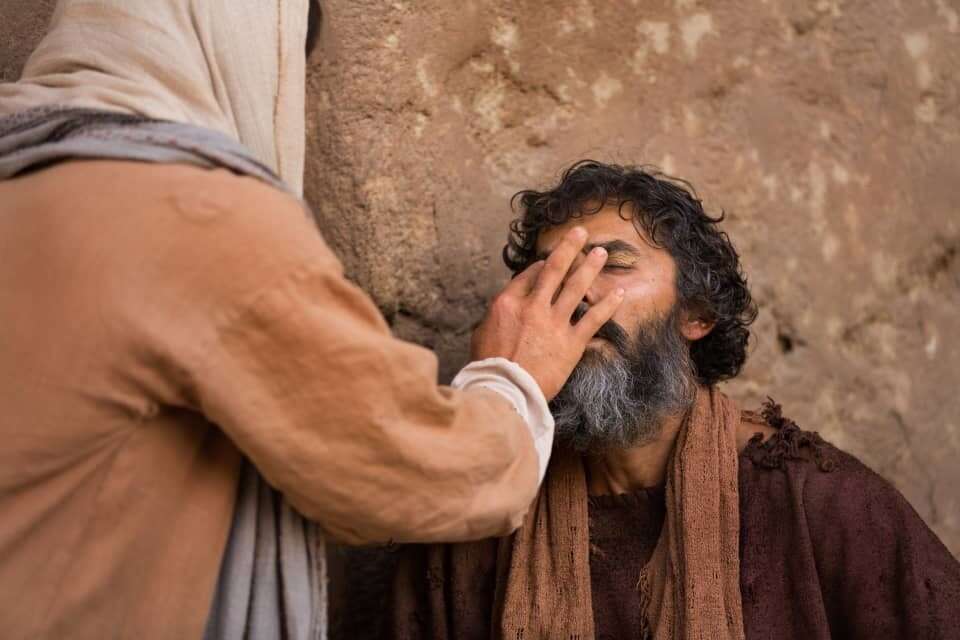
The Gospel tells us about Jesus’ meeting with a blind man from birth. We are told how Jesus meets that person, what He does for him, and what happens after, both in the blind man as well as those around him. We observe about two cures and one “tragedy”. First, there is the healing of the blind man’s eyes. Through Jesus’ touch, the man is now able to see but that is just the start. As usual, John’s Gospel goes deeper than that to show a second cure. Slowly the man comes to recognize Jesus as a prophet and then finally as Lord. The man moves from sight to insight, to faith. That is the second cure. The very opposite happens with the Pharisees. They were born with vision but refused to believe – spiritually blind. Jesus says to them at the end, “If you were born blind, you would have no sin, but are saying ‘we see,’ so your sin remains.” (Jn. 9: 41). The cured man accepts Christ. They reject Him. That’s the “tragedy”. It’s like two motor bikes in the streets of Makeni, speeding past each other in opposite directions. As quickly as he moves toward faith in Jesus as Lord and into the light, they move just as fast into hostility toward the Lord and into darkness. As he comes out of a darkness, they enter it. Both the Pharisees and the cured man looked at Jesus. They saw an opponent. He saw a Savior.
See with the eyes of faith. Faith is a form of seeing and the lack of faith is a form of blindness. Through faith we can see a deeper meaning in things. For example: We see illness not just as tragedy but also as a sharing in the Passion of Jesus Christ. We see the Church not simply as a social institution but as the voice and presence of Christ in our world, our guide for life. We see the sacraments not just as rituals but as the actions of the Lord Himself rescuing us in so many different ways from darkness. We see the Mass not as a ceremony or a daily routine but as the Sacrifice of the Cross perpetuated among us, drawing us into its saving power. We see our life not simply as a career but as a journey either towards or away from God. We see our care for others during this period of Lent not just as philanthropy but as an extension of the healing work of Christ. We see marriage not just as a contract but as the promise of two people to give themselves to each other with the same kind of loyal, self-sacrificing love that Jesus has for the Church. We see death not as a biological end but as a passage to everlasting life. We see the failures in our life not as failures but as ways to new and deeper life. We see others not as opponents but as collaborators and as our brothers and sisters. We see the same things others see but in a deeper way.
In Baptism, we were given the capacity to see. It is called the gift of faith. We have to care for and grow in that faith. Lent should help us do that. Faith is very much like sight. Both physical sight and spiritual sight are gifts that we can so easily take for granted. Just as only those who have been deprived of sight can appreciate what it means to see, so those who have been without belief can appreciate the grace and gift of faith when it is given them. Let’s use this second half of Lent to deepen the gift of our faith through prayer, to learn about it through study, to display it in our relationships with others, to strengthen it by gathering with the Church on Sundays so we can proclaim it at Easter and live it the rest of the year.
Lent is also a good time for us to look back at the healing we have received from the Lord in our life. Throughout this Gospel, amid all the controversy surrounding his cure, the man born blind clings to the simple truth of his experience of the Lord: “All I know is, I was blind before, now I see.” Despite the specious arguments to explain it away, he says, “All I know is, I was blind before, now I see.” Despite the threats against him and his family, he says, “All I know is, I was blind before, now I see.” Despite the efforts to get him to deny what happened to him, he says, “All I know is, I was blind before, now I see.” When there are all kinds of discussions and doubts about our faith and identity in Christ, especially in our time, we can cut through them with the simple truth about Jesus that grounds our life: “All I know is, I was blind before, now I see.”
The Fourth Sunday of Lent is known among us Catholics as Laetare Sunday. Just as there is Gaudete Sunday on the Third Sunday of Advent, so too there is Laetare Sunday in the middle of Lent. The vocabulary is different, but the meaning is the same: REJOICE!
The first reading is a reminder of the truth that “not as man sees does God see, because man sees the appearance but the Lord looks into the heart.” (1Samuel 16: 7-8). This was what God said to the prophet Samuel who was looking for the king chosen by God, who will replace King Saul. Samuel experienced a lesson in faith. He was sent to Jesse in order to anoint a new king of Israel from among his sons. Samuel already a prophet and a man of faith still fell into this tendency to judge according to appearance. But God kept telling Samuel: you human beings judge by looking at the appearances but God looks at the heart. The good thing about Samuel was his faith led him to listen to God. He did not insist on his own sight; he was open to God. He allowed God to lead him to what God sees.
The Responsorial Psalm is a song of praise to God who is the Good Shepherd. Aside from his genuine compassion and care for the flock, the good shepherd must have also clear vision – to lead his flock to where the green pastures and fresh waters are, and to have a keen eye on the enemies and dangers ahead.
St. Paul exhorts the Ephesians in the second reading to “live as children of light”. Being saved by the Lord from darkness, they are to “take no part in the fruitless works of darkness.” This enlightenment comes from Jesus: “Christ will give you light.” (Eph 5:14)
The Gospel tells us about Jesus’ meeting with a blind man from birth. We are told how Jesus meets that person, what He does for him, and what happens after, both in the blind man as well as those around him. We observe about two cures and one “tragedy”. First, there is the healing of the blind man’s eyes. Through Jesus’ touch, the man is now able to see but that is just the start. As usual, John’s Gospel goes deeper than that to show a second cure. Slowly the man comes to recognize Jesus as a prophet and then finally as Lord. The man moves from sight to insight, to faith. That is the second cure. The very opposite happens with the Pharisees. They were born with vision but refused to believe – spiritually blind. Jesus says to them at the end, “If you were born blind, you would have no sin, but are saying ‘we see,’ so your sin remains.” (Jn. 9: 41). The cured man accepts Christ. They reject Him. That’s the “tragedy”. It’s like two motor bikes in the streets of Makeni, speeding past each other in opposite directions. As quickly as he moves toward faith in Jesus as Lord and into the light, they move just as fast into hostility toward the Lord and into darkness. As he comes out of a darkness, they enter it. Both the Pharisees and the cured man looked at Jesus. They saw an opponent. He saw a Savior.
See with the eyes of faith. Faith is a form of seeing and the lack of faith is a form of blindness. Through faith we can see a deeper meaning in things. For example: We see illness not just as tragedy but also as a sharing in the Passion of Jesus Christ. We see the Church not simply as a social institution but as the voice and presence of Christ in our world, our guide for life. We see the sacraments not just as rituals but as the actions of the Lord Himself rescuing us in so many different ways from darkness. We see the Mass not as a ceremony or a daily routine but as the Sacrifice of the Cross perpetuated among us, drawing us into its saving power. We see our life not simply as a career but as a journey either towards or away from God. We see our care for others during this period of Lent not just as philanthropy but as an extension of the healing work of Christ. We see marriage not just as a contract but as the promise of two people to give themselves to each other with the same kind of loyal, self-sacrificing love that Jesus has for the Church. We see death not as a biological end but as a passage to everlasting life. We see the failures in our life not as failures but as ways to new and deeper life. We see others not as opponents but as collaborators and as our brothers and sisters. We see the same things others see but in a deeper way.
In Baptism, we were given the capacity to see. It is called the gift of faith. We have to care for and grow in that faith. Lent should help us do that. Faith is very much like sight. Both physical sight and spiritual sight are gifts that we can so easily take for granted. Just as only those who have been deprived of sight can appreciate what it means to see, so those who have been without belief can appreciate the grace and gift of faith when it is given them. Let’s use this second half of Lent to deepen the gift of our faith through prayer, to learn about it through study, to display it in our relationships with others, to strengthen it by gathering with the Church on Sundays so we can proclaim it at Easter and live it the rest of the year.
Lent is also a good time for us to look back at the healing we have received from the Lord in our life. Throughout this Gospel, amid all the controversy surrounding his cure, the man born blind clings to the simple truth of his experience of the Lord: “All I know is, I was blind before, now I see.” Despite the specious arguments to explain it away, he says, “All I know is, I was blind before, now I see.” Despite the threats against him and his family, he says, “All I know is, I was blind before, now I see.” Despite the efforts to get him to deny what happened to him, he says, “All I know is, I was blind before, now I see.” When there are all kinds of discussions and doubts about our faith and identity in Christ, especially in our time, we can cut through them with the simple truth about Jesus that grounds our life: “All I know is, I was blind before, now I see.”