
Fr. Adolph Guy sx
I found myself in a taxi in a foreign country and we were just two of us inside the vehicle, that is, the driver and myself. Being an African or a black to be specific, the driver wanted to know much about me, like who was and what was my occupation in this particular country. I explained that I was a religious undergoing a formation in order to be ordained as a Roman Catholic priest. I also took advantage of that opportunity to ask him whether he was a Catholic since that country is known as Catholic dominated country. The driver said: yes, I am a Catholic but I have stopped attending the Eucharistic celebrations. I wanted to know the reason behind it. He said: going to the church does not stop me from committing sin. Then it dawned on me that for my interlocutor the church is meant for a certain category of persons qualified as holy people. Seen like this, the Christian community looks disconnected from our humanness.
The good news of this fifth Sunday of Easter, year A is that the Church is made up of human beings in need of God’s grace. As such, when we come together, not matter how holy we are, our humanity emerges always in form of different issues that challenge the internal cohesion of the Christian community. This may be the different backgrounds or worldviews and the likes within the community. In today’s first reading from the Acts of the Apostles 6: 1-7, we heard the Apostles opting for the option to entrust the daily distribution to seven men from Hellenist background as a result of an internal friction between Hebrews and Hellenists. This option started the ministry of deacons inside the Church.
In my little experience as a religious ordained priest, whenever a conflict sparks within the Christian community or even within a religious, I notice through the body language of our members something like this should not happen in the church. Definitely, the church is not a place of conflict but if it happens, let us remember that even the primitive Church went through it. Accepting it as part of our humanness of our journey toward Jesus is the beginning of the solution.
Indeed, some of us think that there were really two different groups of people may be coming from different countries within the nascent Church. In his catechesis given on Wednesday January 10, 2007 on Stephen, the Protomartyr, Pope Benedict XVI said the conflict “consisted entirely of Christians of Jewish origin, but some came from the land of Israel and were called “Hebrews”, while others, of the Old Testament Jewish faith, came from the Greek-speaking diaspora and were known as “Hellenists”[1]. When a conflict arises, the most important thing is to draw inspiration from the Holy Spirit as they Apostles did as to how we have to solve the issue that is bringing division inside the church. Taken like this, each one of us is a valuable member in the Christian community. Saint Peter tells us in today’s second reading: “…like living stones be yourselves built into a spiritual house, to be a holy priesthood, to offer spiritual sacrifices acceptable to God through Jesus Christ.”
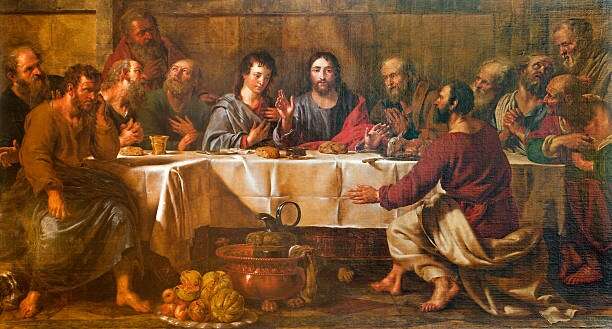
The same humanness surfaces in the interaction between the Lord Jesus and the Apostles in his farewell discourse to them. Since the Apostles were part of the Lord Jesus’ close circle, we presume that they knew him fully and still more at the end of his stay with them. Now Thomas is saying to him: “Lord, we do not know where you are going; how can we know the way? After the Lord’s answer, Philip asks again: “Lord, show us the Father, and we shall be satisfied.” The Lord Jesus wondered: “Have I been with you so long, and yet you do not know me, Philip? At the surface, the Apostles’ questions surprise us as I have shown it. But deep down, Saint John is telling us that though they were Apostles, they were also human. As such they were also learning how to have faith in the Lord Jesus.
To conclude, let us hear again pope Benedict XVI what he says of the Apostles in his catechesis given in Paul VI audience Hall on Wednesday, August 9, 2006:
The Apostles were Jesus’ traveling companions, Jesus’ friends. Their journey with Jesus was not only a physical journey from Galilee to Jerusalem, but an interior journey during which they learned faith in Jesus Christ, not without difficulty, for they were people like us. […]
But for this very reason, because they were Jesus’ traveling companions, Jesus’ friends, who learned faith on a journey that was far from easy, they are also guides for us, who help us to know Jesus Christ, to love him, and to have faith in him.[2]
[1] Pope Benedict XVI: Stephen, the Protomartyr in Jesus, the Apostles and the Early Church, General Audiences 15 March 2006 – 14 February 2007 (San Francisco: Ignatius Press, 2027)
[2] Idem
I found myself in a taxi in a foreign country and we were just two of us inside the vehicle, that is, the driver and myself. Being an African or a black to be specific, the driver wanted to know much about me, like who was and what was my occupation in this particular country. I explained that I was a religious undergoing a formation in order to be ordained as a Roman Catholic priest. I also took advantage of that opportunity to ask him whether he was a Catholic since that country is known as Catholic dominated country. The driver said: yes, I am a Catholic but I have stopped attending the Eucharistic celebrations. I wanted to know the reason behind it. He said: going to the church does not stop me from committing sin. Then it dawned on me that for my interlocutor the church is meant for a certain category of persons qualified as holy people. Seen like this, the Christian community looks disconnected from our humanness.
The good news of this fifth Sunday of Easter, year A is that the Church is made up of human beings in need of God’s grace. As such, when we come together, not matter how holy we are, our humanity emerges always in form of different issues that challenge the internal cohesion of the Christian community. This may be the different backgrounds or worldviews and the likes within the community. In today’s first reading from the Acts of the Apostles 6: 1-7, we heard the Apostles opting for the option to entrust the daily distribution to seven men from Hellenist background as a result of an internal friction between Hebrews and Hellenists. This option started the ministry of deacons inside the Church.
In my little experience as a religious ordained priest, whenever a conflict sparks within the Christian community or even within a religious, I notice through the body language of our members something like this should not happen in the church. Definitely, the church is not a place of conflict but if it happens, let us remember that even the primitive Church went through it. Accepting it as part of our humanness of our journey toward Jesus is the beginning of the solution.
Indeed, some of us think that there were really two different groups of people may be coming from different countries within the nascent Church. In his catechesis given on Wednesday January 10, 2007 on Stephen, the Protomartyr, Pope Benedict XVI said the conflict “consisted entirely of Christians of Jewish origin, but some came from the land of Israel and were called “Hebrews”, while others, of the Old Testament Jewish faith, came from the Greek-speaking diaspora and were known as “Hellenists”[1]. When a conflict arises, the most important thing is to draw inspiration from the Holy Spirit as they Apostles did as to how we have to solve the issue that is bringing division inside the church. Taken like this, each one of us is a valuable member in the Christian community. Saint Peter tells us in today’s second reading: “…like living stones be yourselves built into a spiritual house, to be a holy priesthood, to offer spiritual sacrifices acceptable to God through Jesus Christ.”
The same humanness surfaces in the interaction between the Lord Jesus and the Apostles in his farewell discourse to them. Since the Apostles were part of the Lord Jesus’ close circle, we presume that they knew him fully and still more at the end of his stay with them. Now Thomas is saying to him: “Lord, we do not know where you are going; how can we know the way? After the Lord’s answer, Philip asks again: “Lord, show us the Father, and we shall be satisfied.” The Lord Jesus wondered: “Have I been with you so long, and yet you do not know me, Philip? At the surface, the Apostles’ questions surprise us as I have shown it. But deep down, Saint John is telling us that though they were Apostles, they were also human. As such they were also learning how to have faith in the Lord Jesus.
To conclude, let us hear again pope Benedict XVI what he says of the Apostles in his catechesis given in Paul VI audience Hall on Wednesday, August 9, 2006:
The Apostles were Jesus’ traveling companions, Jesus’ friends. Their journey with Jesus was not only a physical journey from Galilee to Jerusalem, but an interior journey during which they learned faith in Jesus Christ, not without difficulty, for they were people like us. […]
But for this very reason, because they were Jesus’ traveling companions, Jesus’ friends, who learned faith on a journey that was far from easy, they are also guides for us, who help us to know Jesus Christ, to love him, and to have faith in him.[2]
[1] Pope Benedict XVI: Stephen, the Protomartyr in Jesus, the Apostles and the Early Church, General Audiences 15 March 2006 – 14 February 2007 (San Francisco: Ignatius Press, 2027)
[2] Idem