
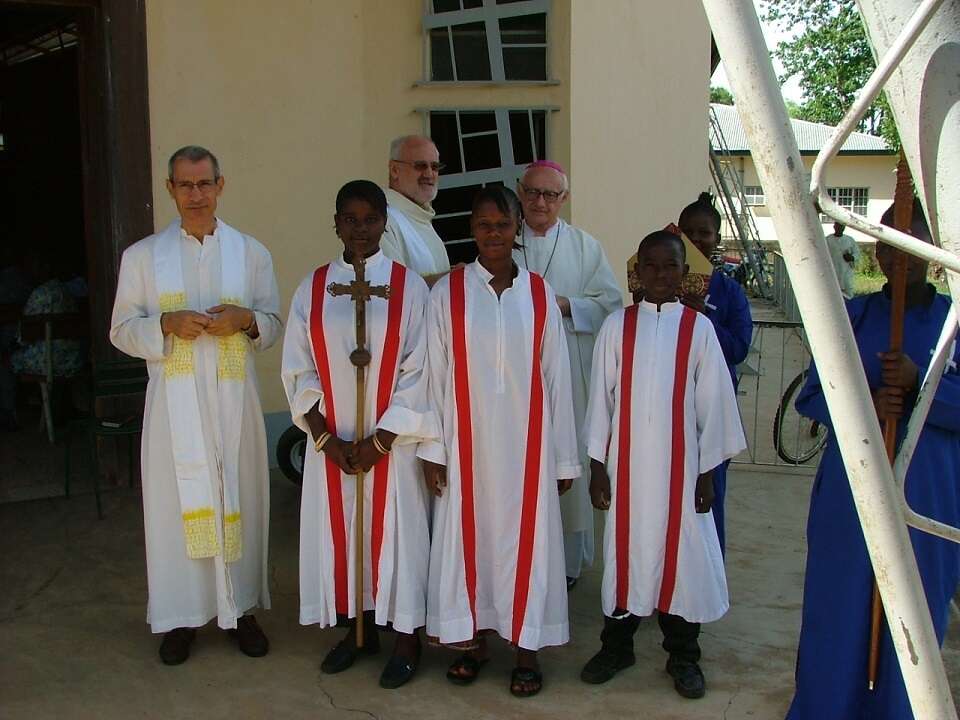
Fr. Patrick Fornah sx
The readings for this Sunday point towards how God cares for people and calls those chosen to embody God’s love in this world. In the First Reading from the Book of Exodus, God instructs Moses to impart to the Israelites how they were freed and brought out of Egypt. The Responsorial Psalm describes what it is like to be chosen and loved by God. In the Second Reading from the Letter to the Romans, Paul explains how Jesus’ death reveals the depth of God’s love and reconciles the people to God. And in the Gospel Reading, Matthew writes how Jesus shows compassion to the people by sending and enjoining his disciples to proclaim the Kingdom of God: to cure the sick, raise the dead, cleanse lepers, drive out demons” (Mt 10:8).
How do we participate in this love that liberates, heals, and brings life to the people? What might it mean to proclaim the Kingdom of God in our own time? How do we bring justice and liberation to countries and people that still suffers from poverty aggravated by chronic government corruption, greed, and social apathy? How do we bring reconciliation to places ravaged by armed conflicts and natural disasters?
Jesus’ heart was moved with compassion when he saw the great crowds “troubled and abandoned, like sheep without a shepherd” (Mt 9:36), coming to him, bringing their relatives who were sick, disabled, and possessed by demons. In St. Mark’s version of this story, he had just finished caring for a group the whole day; he was very tired and was about to rest. Yet the people still followed him. He felt pity for them because they were like “sheep without a shepherd.” And so, unable to turn them away, he faced them and postponed his rest. In this version we read from St. Matthew, because it weighed heavily on him to leave the people or make them wait, he said to his disciples: “The harvest is abundant but the laborers are few. Pray to the Lord of the harvest to send more workers into his harvest.”
Could our hearts feel the same for them? How are we called? Look at how Jesus responded. Jesus asked them to pray for more workers in the vineyard. And immediately after, Jesus appointed his twelve apostles and sent them to the “lost sheep of the house of Israel!” (Mt 10:1-8). His command is also his to fulfill. He commanded them to pray and fulfilled this prayer by sending the apostles themselves to accomplish the mission. Prayer is a “heart-to-heart” talk with God, a conversation that makes the heartbeat with God’s compassion. “Be careful what you pray for!” But how could we not pray to a God who loves and whose saving action breathes new life to a people once enslaved, whose “mercy endures forever,” and whose “faithfulness lasts through every generation?” (Ps 100:5). And how could we ignore the call of the One who died for us (Cf. Rom 5:8) in order to bring God’s Kingdom here on earth to reconcile us to himself? “The Kingdom of God is at hand” (Mt 10:7). May Jesus’ mission be accomplished through us.
The readings for this Sunday point towards how God cares for people and calls those chosen to embody God’s love in this world. In the First Reading from the Book of Exodus, God instructs Moses to impart to the Israelites how they were freed and brought out of Egypt. The Responsorial Psalm describes what it is like to be chosen and loved by God. In the Second Reading from the Letter to the Romans, Paul explains how Jesus’ death reveals the depth of God’s love and reconciles the people to God. And in the Gospel Reading, Matthew writes how Jesus shows compassion to the people by sending and enjoining his disciples to proclaim the Kingdom of God: to cure the sick, raise the dead, cleanse lepers, drive out demons” (Mt 10:8).
How do we participate in this love that liberates, heals, and brings life to the people? What might it mean to proclaim the Kingdom of God in our own time? How do we bring justice and liberation to countries and people that still suffers from poverty aggravated by chronic government corruption, greed, and social apathy? How do we bring reconciliation to places ravaged by armed conflicts and natural disasters?
Jesus’ heart was moved with compassion when he saw the great crowds “troubled and abandoned, like sheep without a shepherd” (Mt 9:36), coming to him, bringing their relatives who were sick, disabled, and possessed by demons. In St. Mark’s version of this story, he had just finished caring for a group the whole day; he was very tired and was about to rest. Yet the people still followed him. He felt pity for them because they were like “sheep without a shepherd.” And so, unable to turn them away, he faced them and postponed his rest. In this version we read from St. Matthew, because it weighed heavily on him to leave the people or make them wait, he said to his disciples: “The harvest is abundant but the laborers are few. Pray to the Lord of the harvest to send more workers into his harvest.”
Could our hearts feel the same for them? How are we called? Look at how Jesus responded. Jesus asked them to pray for more workers in the vineyard. And immediately after, Jesus appointed his twelve apostles and sent them to the “lost sheep of the house of Israel!” (Mt 10:1-8). His command is also his to fulfill. He commanded them to pray and fulfilled this prayer by sending the apostles themselves to accomplish the mission. Prayer is a “heart-to-heart” talk with God, a conversation that makes the heartbeat with God’s compassion. “Be careful what you pray for!” But how could we not pray to a God who loves and whose saving action breathes new life to a people once enslaved, whose “mercy endures forever,” and whose “faithfulness lasts through every generation?” (Ps 100:5). And how could we ignore the call of the One who died for us (Cf. Rom 5:8) in order to bring God’s Kingdom here on earth to reconcile us to himself? “The Kingdom of God is at hand” (Mt 10:7). May Jesus’ mission be accomplished through us.