
Fr. Paulin Shadari
23rd Sunday in Ordinary Time – Year A
Ez 33:7-9; Ps 95; Rom 13:8-10; Mt 18:15-20
The Word of God from the Book of Ezekiel introduces us to the central theme of today’s readings: we are responsible for one another, and we are called to help one another grow in holiness. God does not want us to live our faith in isolation. He makes each of us a watchman for our brothers and sisters.
We all belong to a family. We have friends, neighbours, colleagues, and members of our Christian community. Wherever people live together, difficulties and misunderstandings are inevitable. Unfortunately, some tensions can last for years because people close themselves off from peace and refuse every attempt at reconciliation. Sometimes, such conflicts disappear only with the death of those who have carried them in their hearts for years.
It is in this context that we can understand the image of the watchman in today’s first reading. God does not make us watchmen in order to spy on others, judge them, or expose their faults. Rather, He entrusts us with the responsibility of watching over one another, so that no one may be lost. This means that we have a responsibility towards the spiritual well-being of our brothers and sisters. When we see someone taking a wrong path, we cannot simply remain indifferent. We have a duty, in a spirit of love and concern, to help that person recognize his or her mistake and return to the right path. If we remain silent when we could have helped, God reminds us that we too have a responsibility.
But how should we exercise this responsibility? Saint Paul gives us the answer in the second reading: love must be the foundation of everything we do. He tells us: “Owe no one anything, except to love one another, for the one who loves another has fulfilled the law” (Rom 13:8). Love must therefore be our compass, especially when we have to correct someone. If correction is not motivated by love, it can easily become judgment, condemnation, or humiliation. Genuine love, on the contrary, seeks the good of the other person. As Saint Paul reminds us, “Love is patient; love is kind; it is not jealous; it does not boast; it is not proud... it is not easily angered; it keeps no record of wrongs” (1 Cor 13:4-5).
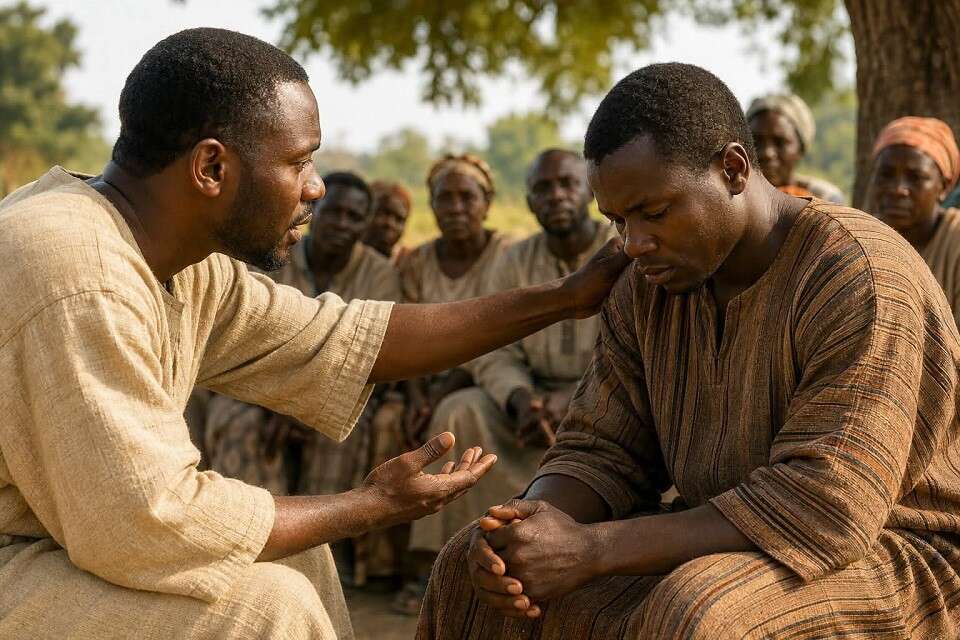
This is precisely what Jesus teaches us in today’s Gospel. He gives us a concrete way of putting love into practice when a brother or sister has offended us or gone astray. Jesus says: “If your brother sins against you, go and tell him his fault between you and him alone” (Mt 18:15). Notice that Jesus does not tell us to speak about the person behind his or her back. He does not tell us to gather other people against that person. He tells us to go to the person directly and speak to him or her privately.
This requires courage, but also humility and inner peace. Before correcting someone, we must examine our own hearts. Are we really seeking the good of that person, or do we simply want to prove that we are right? Are we trying to restore the relationship, or are we trying to make the other person feel guilty? That is why what Jesus asks of us is fraternal correction, not fratricidal correction. Fraternal correction seeks to restore the brother or sister; fratricidal correction seeks to destroy, shame, or exclude. The goal of Christian correction is never to humiliate the other person, but to help him or her rediscover the right path and restore communion.
Jesus then gives further steps if the person refuses to listen. First, another person or two may be involved; then, if necessary, the matter may be brought before the community. In this way, Jesus shows us that reconciliation requires patience. We should not give up after the first attempt. But what happens when, after all these efforts, the person still refuses to listen? Jesus says: “Treat him as you would a pagan or a tax collector.”
At first, these words may sound like an invitation to reject or exclude the person. But we must remember how Jesus himself treated tax collectors and sinners. He did not approve of their sins, but neither did He reject them as persons. He approached them with mercy, invited them to conversion, and gave them a new opportunity. Therefore, to treat such a person as a pagan or tax collector does not mean that we should hate, condemn, or permanently exclude him or her from our hearts. It means recognizing that communion cannot be forced. We may have to maintain a certain distance, but we should continue to love, pray, and hope for that person's conversion.
This is why indifference has no place among believers. If we truly belong to Christ, we cannot say, “It is none of my business.” We are responsible for one another. The Christian community is not a collection of individuals who simply live side by side; it is a family in which each person is called to care for the others. Today, therefore, the Lord invites us to ask ourselves: How do I react when someone around me goes astray? Do I speak with love and courage, or do I simply criticize the person behind his or her back? Do I seek reconciliation, or do I hold on to resentment?
Let us ask the Lord for the grace to become true watchmen for one another—not watchmen who spy, judge, or condemn, but watchmen who care, correct with love, forgive, and help others return to the right path.
May our love for one another be sincere and genuine. May our words bring healing rather than division, and may our fraternal correction always be guided by humility, patience, and mercy. In this way, we will truly help one another on our journey towards holiness. Amen.
23rd Sunday in Ordinary Time – Year A
Ez 33:7-9; Ps 95; Rom 13:8-10; Mt 18:15-20
The Word of God from the Book of Ezekiel introduces us to the central theme of today’s readings: we are responsible for one another, and we are called to help one another grow in holiness. God does not want us to live our faith in isolation. He makes each of us a watchman for our brothers and sisters.
We all belong to a family. We have friends, neighbours, colleagues, and members of our Christian community. Wherever people live together, difficulties and misunderstandings are inevitable. Unfortunately, some tensions can last for years because people close themselves off from peace and refuse every attempt at reconciliation. Sometimes, such conflicts disappear only with the death of those who have carried them in their hearts for years.
It is in this context that we can understand the image of the watchman in today’s first reading. God does not make us watchmen in order to spy on others, judge them, or expose their faults. Rather, He entrusts us with the responsibility of watching over one another, so that no one may be lost. This means that we have a responsibility towards the spiritual well-being of our brothers and sisters. When we see someone taking a wrong path, we cannot simply remain indifferent. We have a duty, in a spirit of love and concern, to help that person recognize his or her mistake and return to the right path. If we remain silent when we could have helped, God reminds us that we too have a responsibility.
But how should we exercise this responsibility? Saint Paul gives us the answer in the second reading: love must be the foundation of everything we do. He tells us: “Owe no one anything, except to love one another, for the one who loves another has fulfilled the law” (Rom 13:8). Love must therefore be our compass, especially when we have to correct someone. If correction is not motivated by love, it can easily become judgment, condemnation, or humiliation. Genuine love, on the contrary, seeks the good of the other person. As Saint Paul reminds us, “Love is patient; love is kind; it is not jealous; it does not boast; it is not proud... it is not easily angered; it keeps no record of wrongs” (1 Cor 13:4-5).
This is precisely what Jesus teaches us in today’s Gospel. He gives us a concrete way of putting love into practice when a brother or sister has offended us or gone astray. Jesus says: “If your brother sins against you, go and tell him his fault between you and him alone” (Mt 18:15). Notice that Jesus does not tell us to speak about the person behind his or her back. He does not tell us to gather other people against that person. He tells us to go to the person directly and speak to him or her privately.
This requires courage, but also humility and inner peace. Before correcting someone, we must examine our own hearts. Are we really seeking the good of that person, or do we simply want to prove that we are right? Are we trying to restore the relationship, or are we trying to make the other person feel guilty? That is why what Jesus asks of us is fraternal correction, not fratricidal correction. Fraternal correction seeks to restore the brother or sister; fratricidal correction seeks to destroy, shame, or exclude. The goal of Christian correction is never to humiliate the other person, but to help him or her rediscover the right path and restore communion.
Jesus then gives further steps if the person refuses to listen. First, another person or two may be involved; then, if necessary, the matter may be brought before the community. In this way, Jesus shows us that reconciliation requires patience. We should not give up after the first attempt. But what happens when, after all these efforts, the person still refuses to listen? Jesus says: “Treat him as you would a pagan or a tax collector.”
At first, these words may sound like an invitation to reject or exclude the person. But we must remember how Jesus himself treated tax collectors and sinners. He did not approve of their sins, but neither did He reject them as persons. He approached them with mercy, invited them to conversion, and gave them a new opportunity. Therefore, to treat such a person as a pagan or tax collector does not mean that we should hate, condemn, or permanently exclude him or her from our hearts. It means recognizing that communion cannot be forced. We may have to maintain a certain distance, but we should continue to love, pray, and hope for that person's conversion.
This is why indifference has no place among believers. If we truly belong to Christ, we cannot say, “It is none of my business.” We are responsible for one another. The Christian community is not a collection of individuals who simply live side by side; it is a family in which each person is called to care for the others. Today, therefore, the Lord invites us to ask ourselves: How do I react when someone around me goes astray? Do I speak with love and courage, or do I simply criticize the person behind his or her back? Do I seek reconciliation, or do I hold on to resentment?
Let us ask the Lord for the grace to become true watchmen for one another—not watchmen who spy, judge, or condemn, but watchmen who care, correct with love, forgive, and help others return to the right path.
May our love for one another be sincere and genuine. May our words bring healing rather than division, and may our fraternal correction always be guided by humility, patience, and mercy. In this way, we will truly help one another on our journey towards holiness. Amen.