
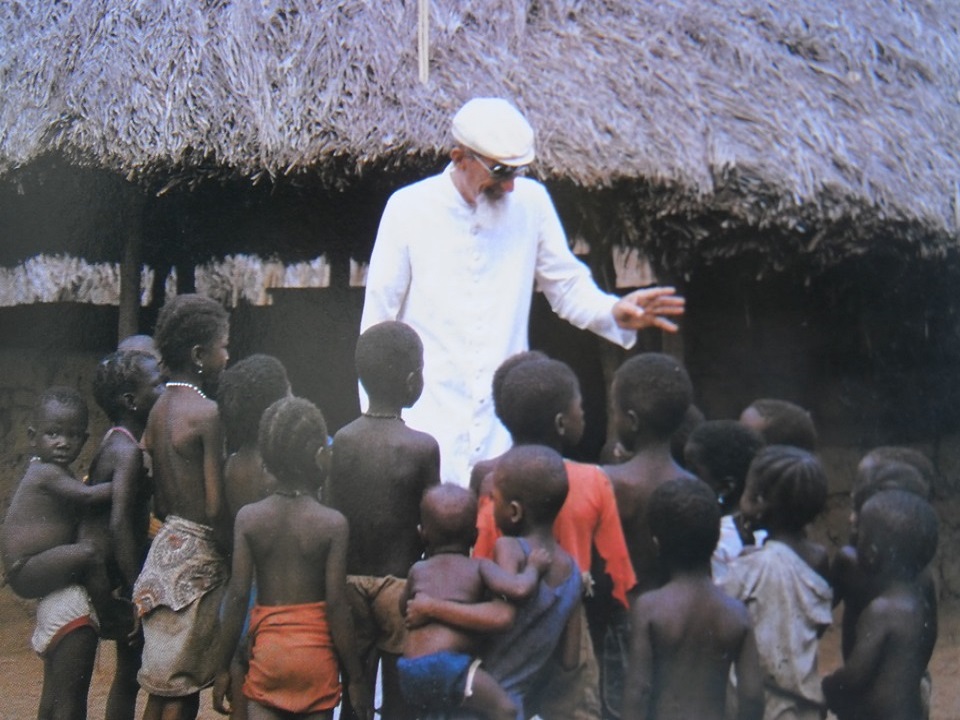
Fr. Michele Carlini sx
27th Sunday Ordinary in Time Year B
Gospel – part one
The Gospel in his first part presents to us the Lord’s vision about marriage: “man and woman are no longer two, but become one body; what God has united, the human beings must not divide” (Mk 10:8-9). In this very week (4-25 October 2015) the Pope has summoned the Bishops from every country in the world to a meeting (Synod) to reflect together about the reality of the family: “The Vocation and the Mission of the family in the Church and in the contemporary world”
We shall accompany the work of our shepherds with our prayers and by trying to get to know the message they are conveying to all the Christians. Family is the domestic Church, the church that lives in the houses. Indeed, any society and Country is only healthy if the relationships among the members of each family are strong and tender. Families are the bricks on which each Nation is built upon.
In today’s gospel we can see another episode in which many among the Pharisees did not welcome in their hearts the message of Christ. Therefore they started to put him to the test, asking his opinion about matters that were of difficult solution. This time the issue is about divorce, whether it is allowed or not. At the time of Jesus there were two rabbis teaching about the matter, Hillel and Shammai; one was stricter, the other more accommodating. Moses in the book of Deuteronomy (Dt 24:1) grants the husband the faculty to dismiss his wife. The Pharisees were not interested in Jesus’ position about matrimony, but were only looking for his answer: whether he was in favour or against divorce. In either case, they would have criticized him. If he had answered “Moses allowed the writ of divorce” they would have accused him to be against the dignity of marriage. If he answered “Man does not have the right to dismiss his wife” they would have accused him to be against the Bible.
This is a very sad episode in the mission of Jesus, because the opponents of Jesus are using the noble reality of matrimony to pursue their mean intent. When we are not ready to follow Jesus, we end up by using him for our purposes, instead of allowing him to change our minds and lives and actions. Either we follow him or we use him. But Christ escapes from the impasse by reminding the initial intention of God about man and woman, when he created them: they are to leave the two families, from where they originate, to create a new family. Whenever the sacrament of matrimony is celebrated in the Church, it is made visible the invisible love of God toward the entire human family and the love of God for me and you. God is never discouraged in his love for us; therefore husband and wife are to love each other, to make this love of God visible. When we see how a man and a woman love and respect each other, we see how the Lord loves us. The family becomes a sacrament, that is a visible sign of the invisible love of God.
A mission to perform
The spouses have a mission to perform on behalf of God; they are to be always ready to tell the others the gospel of their wedded condition: “see how we love each other and thus you can experience how God loves you”. All those who, from outside, see a Christian couple that lives with love, in looking at that couple should not say: “see how they love each other” but rather “see how God loves us”.
According to the biblical vision on marriage, we are sure, there is no space for separation and divorce because the man grows in the love of God through his wife and she lives God's love through her husband and they are not walking towards each other, but God is leading them by the hand and makes them one. Any difficulty life will bring, will be drowned in a sea of love without calculations and without boundaries. Everything else, separation, divorce, women's role, gender inequality, oppression, sexism, abuse of power, will disappear.
Gospel - Part two: become like children
“Let the little children come to me, for it is to such as these that the kingdom of God belongs” (Mk 10:14).
We should not be afraid to be considered small by those who follow the mentality of this world. Christ said: “Unless you become like little children, you will not enter the kingdom”.
You might have noticed that when the pope signs a document, after his name he adds two initials “s.s.” (for example: Francis, s. s.). These initials stand for the latin words “Servus Servorum”, meaning the Servant of the Servants (of God). The believers are the servants of God, and the pope is the servant of those servants. He is there to serve them, just as Christ washed his disciples’ feet, at the last supper. But the usage of these two initials “s.s.” has been substituted by some Christians (for example in Italy) by two other words that start with the same initials: “Sua Santità”, meaning His Holiness. This is to prove that it seems inappropriate that the Pope should be called a Servant – this term is not convenient to his status, dignity, hierarchical and hieratical position - but he should be rather addressed as Holiness. How difficult it is to see the role of authority in the Church with the eyes of God! We want to teach the Lord how to carry out his salvific mission, instead of learning from the Holy Spirit how God wants to transform our mentality. The Lord’s work is an action of liberation, liberation from our human categories – that disregard smallness as if it was equivalent to weakness – moving us towards a divine way of thinking. When I am weak, then I am strong, says Paul in his letter (2Cor 12:10).
Mary, the Mother of Jesus, in her Canticle (Lk 1) praises the Lord because he has looked on her lowliness. The New Testament testifies that the work of salvation started with a humble beginning.
It is not easy to decide to be like little children, to return to childhood: we consider ourselves to be adults, we presume to know a lot, to have reached a point of maturity. We are not ready to step down from our position and put ourselves at the level of a child. We resemble pretty much Nicodemus (Jn 4) who was shocked by Jesus’ statement that we must be born again. He was not ready to go back to his childhood. But whenever I stick to my position, I prevent myself from moving ahead.
A child will inherit the kingdom of God, because children are more open to newness, and therefore to the attitude of marvel. A child is often happy, since everything that he/she sees is new to him/her. He is happy because he can experience the joy of wonder.
The Eucharistic prayer:
As the Celebrant recites the prayer after consecration, we can bear in our minds these expressions, taken from today’s Gospel:
“Heavenly Father, listen to our prayer and pour out your Spirit of love on all those who take part in this Eucharist; make them one heart and one soul in your Church, together with Francis our Pope, our Bishop, all your Church and with all those who work for the good of all the peoples” (see Mk 10:6-8).
27th Sunday Ordinary in Time Year B
Gospel – part one
The Gospel in his first part presents to us the Lord’s vision about marriage: “man and woman are no longer two, but become one body; what God has united, the human beings must not divide” (Mk 10:8-9). In this very week (4-25 October 2015) the Pope has summoned the Bishops from every country in the world to a meeting (Synod) to reflect together about the reality of the family: “The Vocation and the Mission of the family in the Church and in the contemporary world”
We shall accompany the work of our shepherds with our prayers and by trying to get to know the message they are conveying to all the Christians. Family is the domestic Church, the church that lives in the houses. Indeed, any society and Country is only healthy if the relationships among the members of each family are strong and tender. Families are the bricks on which each Nation is built upon.
In today’s gospel we can see another episode in which many among the Pharisees did not welcome in their hearts the message of Christ. Therefore they started to put him to the test, asking his opinion about matters that were of difficult solution. This time the issue is about divorce, whether it is allowed or not. At the time of Jesus there were two rabbis teaching about the matter, Hillel and Shammai; one was stricter, the other more accommodating. Moses in the book of Deuteronomy (Dt 24:1) grants the husband the faculty to dismiss his wife. The Pharisees were not interested in Jesus’ position about matrimony, but were only looking for his answer: whether he was in favour or against divorce. In either case, they would have criticized him. If he had answered “Moses allowed the writ of divorce” they would have accused him to be against the dignity of marriage. If he answered “Man does not have the right to dismiss his wife” they would have accused him to be against the Bible.
This is a very sad episode in the mission of Jesus, because the opponents of Jesus are using the noble reality of matrimony to pursue their mean intent. When we are not ready to follow Jesus, we end up by using him for our purposes, instead of allowing him to change our minds and lives and actions. Either we follow him or we use him. But Christ escapes from the impasse by reminding the initial intention of God about man and woman, when he created them: they are to leave the two families, from where they originate, to create a new family. Whenever the sacrament of matrimony is celebrated in the Church, it is made visible the invisible love of God toward the entire human family and the love of God for me and you. God is never discouraged in his love for us; therefore husband and wife are to love each other, to make this love of God visible. When we see how a man and a woman love and respect each other, we see how the Lord loves us. The family becomes a sacrament, that is a visible sign of the invisible love of God.
A mission to perform
The spouses have a mission to perform on behalf of God; they are to be always ready to tell the others the gospel of their wedded condition: “see how we love each other and thus you can experience how God loves you”. All those who, from outside, see a Christian couple that lives with love, in looking at that couple should not say: “see how they love each other” but rather “see how God loves us”.
According to the biblical vision on marriage, we are sure, there is no space for separation and divorce because the man grows in the love of God through his wife and she lives God's love through her husband and they are not walking towards each other, but God is leading them by the hand and makes them one. Any difficulty life will bring, will be drowned in a sea of love without calculations and without boundaries. Everything else, separation, divorce, women's role, gender inequality, oppression, sexism, abuse of power, will disappear.
Gospel - Part two: become like children
“Let the little children come to me, for it is to such as these that the kingdom of God belongs” (Mk 10:14).
We should not be afraid to be considered small by those who follow the mentality of this world. Christ said: “Unless you become like little children, you will not enter the kingdom”.
You might have noticed that when the pope signs a document, after his name he adds two initials “s.s.” (for example: Francis, s. s.). These initials stand for the latin words “Servus Servorum”, meaning the Servant of the Servants (of God). The believers are the servants of God, and the pope is the servant of those servants. He is there to serve them, just as Christ washed his disciples’ feet, at the last supper. But the usage of these two initials “s.s.” has been substituted by some Christians (for example in Italy) by two other words that start with the same initials: “Sua Santità”, meaning His Holiness. This is to prove that it seems inappropriate that the Pope should be called a Servant – this term is not convenient to his status, dignity, hierarchical and hieratical position - but he should be rather addressed as Holiness. How difficult it is to see the role of authority in the Church with the eyes of God! We want to teach the Lord how to carry out his salvific mission, instead of learning from the Holy Spirit how God wants to transform our mentality. The Lord’s work is an action of liberation, liberation from our human categories – that disregard smallness as if it was equivalent to weakness – moving us towards a divine way of thinking. When I am weak, then I am strong, says Paul in his letter (2Cor 12:10).
Mary, the Mother of Jesus, in her Canticle (Lk 1) praises the Lord because he has looked on her lowliness. The New Testament testifies that the work of salvation started with a humble beginning.
It is not easy to decide to be like little children, to return to childhood: we consider ourselves to be adults, we presume to know a lot, to have reached a point of maturity. We are not ready to step down from our position and put ourselves at the level of a child. We resemble pretty much Nicodemus (Jn 4) who was shocked by Jesus’ statement that we must be born again. He was not ready to go back to his childhood. But whenever I stick to my position, I prevent myself from moving ahead.
A child will inherit the kingdom of God, because children are more open to newness, and therefore to the attitude of marvel. A child is often happy, since everything that he/she sees is new to him/her. He is happy because he can experience the joy of wonder.
The Eucharistic prayer:
As the Celebrant recites the prayer after consecration, we can bear in our minds these expressions, taken from today’s Gospel:
“Heavenly Father, listen to our prayer and pour out your Spirit of love on all those who take part in this Eucharist; make them one heart and one soul in your Church, together with Francis our Pope, our Bishop, all your Church and with all those who work for the good of all the peoples” (see Mk 10:6-8).