
Fr. Adolph Guy sx
The Beatitudes are a tangible invitation to follow the Lord Jesus.
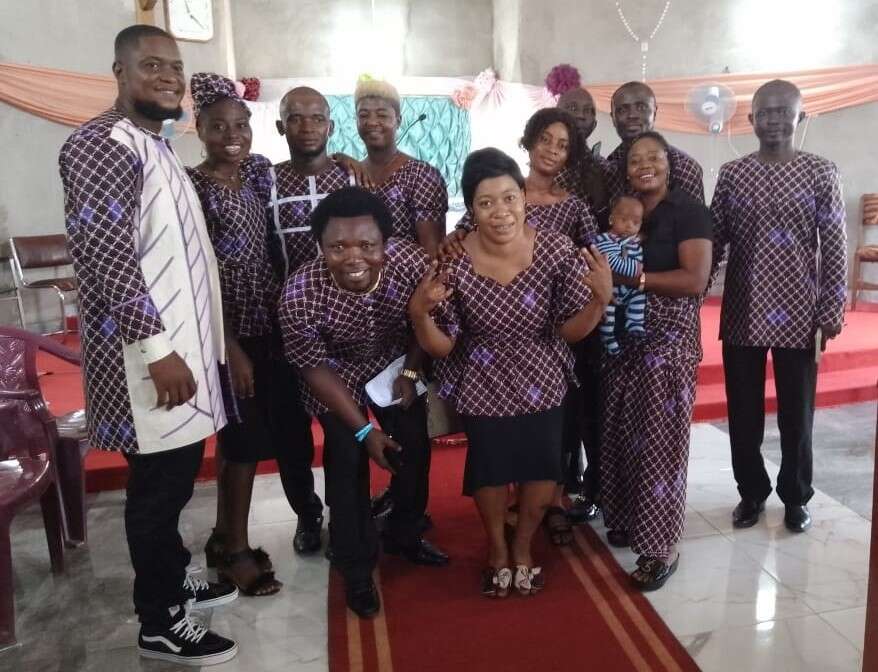
This Sunday, the first of February 2026, the Church celebrates the fourth Sunday in Ordinary Time, year A. On this same Sunday, Saint Kizito Catholic Community of Rokel, where I act as the priest in charge, will host Waterloo deanery choir on the occasion their Africana thanksgiving. By the way, an Africana thanksgiving is a Eucharistic celebration wherein certain elements of the local culture, such as language, dancing, songs, and dressing code, and the likes are incorporated into the liturgy as a way for the local people to express their faith, prayer, and gratitude to the Lord God. Of course, the readings are the proper of the fourth Sunday in Ordinary Time, Year A.
The Beatitudes in today’s readings
For our meditation, the Church gives as the first reading Zephaniah 2: 3, 3:12-13. The gist of this reading is there will be a people who remain sheltered from God’s anger. The responsorial psalm is psalm 146: 6-10. The Lord is faithful forever. The second reading comes from 1 Corinthians 1: 26-31. Saint Paul says God chooses the weak to show his power. Lastly, the Holy Gospel comes from Saint Matthew 5: 1-12a. The Lord Jesus teaches what it means to be happy through the Beatitudes.
Blessed are…
Father James Martin, a member of the society of Jesus in USA, states that “the Beatitudes are series of Jesus’ statements that begin with ‘Blessed are…’” Indeed, on the one hand, it sounds sweet if not “romantic” to hear the Lord Jesus praising the meek, the merciful, the peacemakers, and the pure. Now let us be real. Is our world in this postmodern era with generations Z and Alpha exalting this kind of people? As a matter of fact, in our world today “some of the groups named in the Beatitudes are thought of as lazy, cowardly, foolish, and gullible – basically, losers.”[1] The question remains: Are the Beatitudes appealing or appalling?
Humility pays
In the first reading we hear Prophet Zephaniah admonishing the people to seek the Lord and to seek humility. For those who seek the Lord, says the prophet Zephaniah, “shall do no wrong and utter no lies, nor shall there be found in their mouth a deceitful tongue.” In our world where telling lie and being arrogant have become commonplace, who among us will not enjoy the companionship of people who speak the truth and are humble? For those of us who watch football, the hero of the AFCON final between Senegal and Morocco is Sadio Mane. After the referee validated the penalty kick against Senegal few minutes before the end of normal time, all his co-players left the field and went to the dressing room, Sadio Mane remained all alone in the field as a Senegalese player. After hearing from key individuals, he was able to call back his co-players to the field to finish the game, saying: “It is ok, let us play like men and finish the game to end.” Now we know that there are sanctions for certain people from the two teams, at the same time, we all also know how the game ended: Sadio Mane’s humility paid in favor of his country.
The Beatitudes demand conversion
It is from this same perspective that we need to look at the Beatitudes. They are ways to true happiness. Our challenge resides in the fact that we usually look at them with our postmodern lenses and, still more, our understanding of them is flatly literal that they sound crazy and look repulsive. Taken like this, the Beatitudes require another way of look at and of understanding them, that is, a conversion. Pope Benedict VXI admitted this, saying:
“Yes, indeed, the Beatitudes stand opposed to our spontaneous sense of existence, our hunger and thirst for life. They demand ‘conversion’ – that we inwardly turn around to go in the opposite direction from the one we would spontaneously like to go in. But this U-turn brings what is pure and noble to the fore and gives a proper ordering to our lives.”[2]
From the perspective of God
We need to look, read, and understand the Beatitudes from the perspective of God. God says: “For my thoughts are not your thoughts, nor are your ways my ways, says the Lord. For as the heavens are higher than your ways and my thoughts than your thoughts (Isaiah 55: 8-9). In today’s second reading highlights it in this way: “But God chose what is foolish in the world to shame the strong; God chose what is low and despised in the world, things that are not, to reduce to nothing things that are, so that no one might boast in the presence of God (1 Cor. 1: 27-29).” To the Philippians and today, to us, Saint Paul admonishes: “Let the same mind be in you that was in Christ Jesus” (Phil 2:5).
Living the Beatitudes in Everyday Life
Having said all this, what now the Beatitudes have to do in our everyday life? I once heard a fellow priest preaching on today’s gospel and he said, in the word Beatitudes we can surmise “attitudes”. We need to know their meaning by reflecting to the point they start directing our actions and reactions. For instance, when we hear “Blessed are the poor in spirit”, it does not mean that all the poor people are good. Many of them are greedy, layers and full of hatred. A poor in spirit is a person who is very detached from material possession. “Blessed are those who mourn.” Mourners are not always those who have lost dear ones, but those who are also facing rejection because they did not surrender to the diktat of the world. blessed are merciful, peacemakers. Many of us need to make peace with ourselves and to be merciful with ourselves in our everyday life struggles before we show mercy and make peace with our brothers and sisters. I leave the rest of Beatitudes in your mediation and research.
The beatitudes as an invitation to follow christ
In conclusion, the Beatitudes are not an illusion but a tangible invitation to follow Christ. Of course, we will face challenges in striving to put them into practice in our daily life but they are not impossible. The Holy Scripture and Tradition tell us the Lord Jesus himself lived the Beatitudes and, after him, the saints imitated him. Father Jeffrey Kirby explicitly puts it in this way:
The Lord’s invitation is not a distant or foreign one. Jesus Christ did not fall from the sky or emerge as a superhero. He came as one of us. He was born to a mother, lived in a family, loved others, shared in hard work, laughed among friends, cried and felt sorrows, was rejected by those he cared about, understood poverty, was falsely accused of evil, tortured, and died. The Lord Jesus lived a fully human life. He experienced such a life in order to show us how to live, how to suffer, and how to rejoice.”[3]
In the Liturgy of the Hours of Saturday morning, week 3, the fifth stanza of the hymn runs like this:
It were my soul’s desire
To imitate my King.
The eighth stanza:
This still my soul’s desire
Whatever life afford,
To gain my soul’s desire
And see thy face, O Lord.
[1] James Martin, SJ, “Happy: Rejoice and be glad (167-181)” in Jesus: A Pilgrimage (New York, Broadway: HarperCollins Publishers, 2014) pp. 168, 174.
[2] Joseph Ratzinger (Pope Benedict XVI), Jesus of Nazareth: From the Baptism in the Jordan to the Transfiguration (New York: Doubleday, 2007) p. 98.
[3] Fr. Jeffrey Kirby, STD, “The Choice between two kingdoms (xv-xxviii)” in Kingdom of Happiness: Living the Beatitudes in Everyday Life (North Carolina, Charlotte: Saint Benedict Press, 2017) pp. xxiii-xxiv.
The Beatitudes are a tangible invitation to follow the Lord Jesus.
This Sunday, the first of February 2026, the Church celebrates the fourth Sunday in Ordinary Time, year A. On this same Sunday, Saint Kizito Catholic Community of Rokel, where I act as the priest in charge, will host Waterloo deanery choir on the occasion their Africana thanksgiving. By the way, an Africana thanksgiving is a Eucharistic celebration wherein certain elements of the local culture, such as language, dancing, songs, and dressing code, and the likes are incorporated into the liturgy as a way for the local people to express their faith, prayer, and gratitude to the Lord God. Of course, the readings are the proper of the fourth Sunday in Ordinary Time, Year A.
The Beatitudes in today’s readings
For our meditation, the Church gives as the first reading Zephaniah 2: 3, 3:12-13. The gist of this reading is there will be a people who remain sheltered from God’s anger. The responsorial psalm is psalm 146: 6-10. The Lord is faithful forever. The second reading comes from 1 Corinthians 1: 26-31. Saint Paul says God chooses the weak to show his power. Lastly, the Holy Gospel comes from Saint Matthew 5: 1-12a. The Lord Jesus teaches what it means to be happy through the Beatitudes.
Blessed are…
Father James Martin, a member of the society of Jesus in USA, states that “the Beatitudes are series of Jesus’ statements that begin with ‘Blessed are…’” Indeed, on the one hand, it sounds sweet if not “romantic” to hear the Lord Jesus praising the meek, the merciful, the peacemakers, and the pure. Now let us be real. Is our world in this postmodern era with generations Z and Alpha exalting this kind of people? As a matter of fact, in our world today “some of the groups named in the Beatitudes are thought of as lazy, cowardly, foolish, and gullible – basically, losers.”[1] The question remains: Are the Beatitudes appealing or appalling?
Humility pays
In the first reading we hear Prophet Zephaniah admonishing the people to seek the Lord and to seek humility. For those who seek the Lord, says the prophet Zephaniah, “shall do no wrong and utter no lies, nor shall there be found in their mouth a deceitful tongue.” In our world where telling lie and being arrogant have become commonplace, who among us will not enjoy the companionship of people who speak the truth and are humble? For those of us who watch football, the hero of the AFCON final between Senegal and Morocco is Sadio Mane. After the referee validated the penalty kick against Senegal few minutes before the end of normal time, all his co-players left the field and went to the dressing room, Sadio Mane remained all alone in the field as a Senegalese player. After hearing from key individuals, he was able to call back his co-players to the field to finish the game, saying: “It is ok, let us play like men and finish the game to end.” Now we know that there are sanctions for certain people from the two teams, at the same time, we all also know how the game ended: Sadio Mane’s humility paid in favor of his country.
The Beatitudes demand conversion
It is from this same perspective that we need to look at the Beatitudes. They are ways to true happiness. Our challenge resides in the fact that we usually look at them with our postmodern lenses and, still more, our understanding of them is flatly literal that they sound crazy and look repulsive. Taken like this, the Beatitudes require another way of look at and of understanding them, that is, a conversion. Pope Benedict VXI admitted this, saying:
“Yes, indeed, the Beatitudes stand opposed to our spontaneous sense of existence, our hunger and thirst for life. They demand ‘conversion’ – that we inwardly turn around to go in the opposite direction from the one we would spontaneously like to go in. But this U-turn brings what is pure and noble to the fore and gives a proper ordering to our lives.”[2]
From the perspective of God
We need to look, read, and understand the Beatitudes from the perspective of God. God says: “For my thoughts are not your thoughts, nor are your ways my ways, says the Lord. For as the heavens are higher than your ways and my thoughts than your thoughts (Isaiah 55: 8-9). In today’s second reading highlights it in this way: “But God chose what is foolish in the world to shame the strong; God chose what is low and despised in the world, things that are not, to reduce to nothing things that are, so that no one might boast in the presence of God (1 Cor. 1: 27-29).” To the Philippians and today, to us, Saint Paul admonishes: “Let the same mind be in you that was in Christ Jesus” (Phil 2:5).
Living the Beatitudes in Everyday Life
Having said all this, what now the Beatitudes have to do in our everyday life? I once heard a fellow priest preaching on today’s gospel and he said, in the word Beatitudes we can surmise “attitudes”. We need to know their meaning by reflecting to the point they start directing our actions and reactions. For instance, when we hear “Blessed are the poor in spirit”, it does not mean that all the poor people are good. Many of them are greedy, layers and full of hatred. A poor in spirit is a person who is very detached from material possession. “Blessed are those who mourn.” Mourners are not always those who have lost dear ones, but those who are also facing rejection because they did not surrender to the diktat of the world. blessed are merciful, peacemakers. Many of us need to make peace with ourselves and to be merciful with ourselves in our everyday life struggles before we show mercy and make peace with our brothers and sisters. I leave the rest of Beatitudes in your mediation and research.
The beatitudes as an invitation to follow christ
In conclusion, the Beatitudes are not an illusion but a tangible invitation to follow Christ. Of course, we will face challenges in striving to put them into practice in our daily life but they are not impossible. The Holy Scripture and Tradition tell us the Lord Jesus himself lived the Beatitudes and, after him, the saints imitated him. Father Jeffrey Kirby explicitly puts it in this way:
The Lord’s invitation is not a distant or foreign one. Jesus Christ did not fall from the sky or emerge as a superhero. He came as one of us. He was born to a mother, lived in a family, loved others, shared in hard work, laughed among friends, cried and felt sorrows, was rejected by those he cared about, understood poverty, was falsely accused of evil, tortured, and died. The Lord Jesus lived a fully human life. He experienced such a life in order to show us how to live, how to suffer, and how to rejoice.”[3]
In the Liturgy of the Hours of Saturday morning, week 3, the fifth stanza of the hymn runs like this:
It were my soul’s desire
To imitate my King.
The eighth stanza:
This still my soul’s desire
Whatever life afford,
To gain my soul’s desire
And see thy face, O Lord.
[1] James Martin, SJ, “Happy: Rejoice and be glad (167-181)” in Jesus: A Pilgrimage (New York, Broadway: HarperCollins Publishers, 2014) pp. 168, 174.
[2] Joseph Ratzinger (Pope Benedict XVI), Jesus of Nazareth: From the Baptism in the Jordan to the Transfiguration (New York: Doubleday, 2007) p. 98.
[3] Fr. Jeffrey Kirby, STD, “The Choice between two kingdoms (xv-xxviii)” in Kingdom of Happiness: Living the Beatitudes in Everyday Life (North Carolina, Charlotte: Saint Benedict Press, 2017) pp. xxiii-xxiv.